
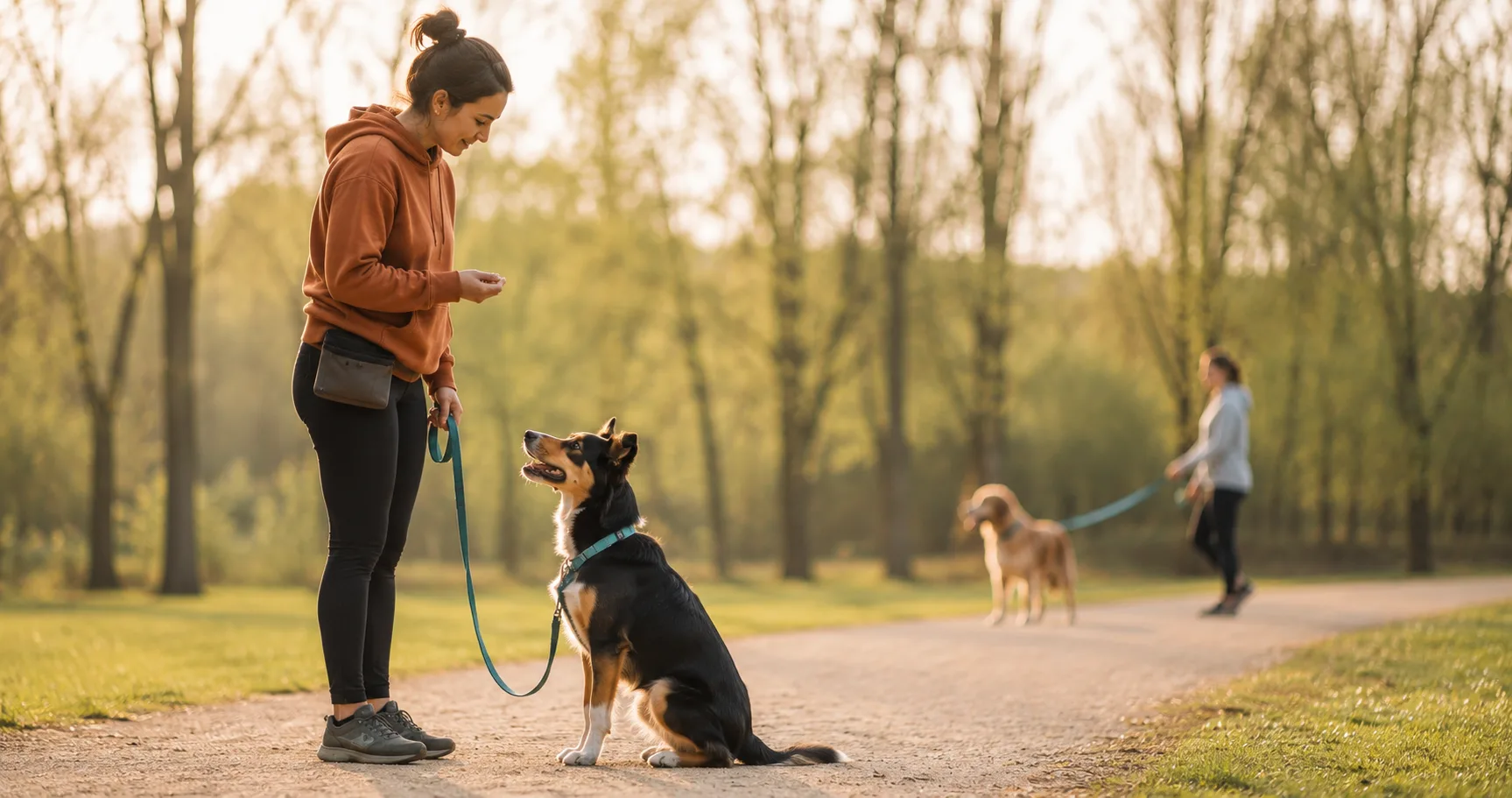
Every Walk Doesn’t Have to Feel Like a Gamble.
If your dog barks, lunges, or completely shuts down at the sight of another dog, a bike, or a stranger, you already know how exhausting and isolating it can feel. The good news: reactivity is one of the most well-studied behavior challenges in dog training, and positive reinforcement offers a genuinely effective, non-confrontational path forward.
This guide covers what reactivity actually is, why common corrective responses often make it worse, the specific techniques trainers use to build lasting change, the gear that genuinely helps, and a realistic picture of what progress looks like over time, because for most owners, the biggest source of frustration isn’t the reactivity itself, it’s not knowing what a normal recovery timeline actually looks like, or whether what they’re seeing counts as progress at all.
What’s Covered in This Article
- Section 1: What leash reactivity actually is (and isn’t)
- Section 2: Common reactivity triggers and what drives them. Is it fear, frustration, or overexcitement?
- Section 3: Why punishment makes reactivity worse
- Section 4: The ‘. Look at That’ (LAT) game
- Section 5: Managing triggers and distance thresholds
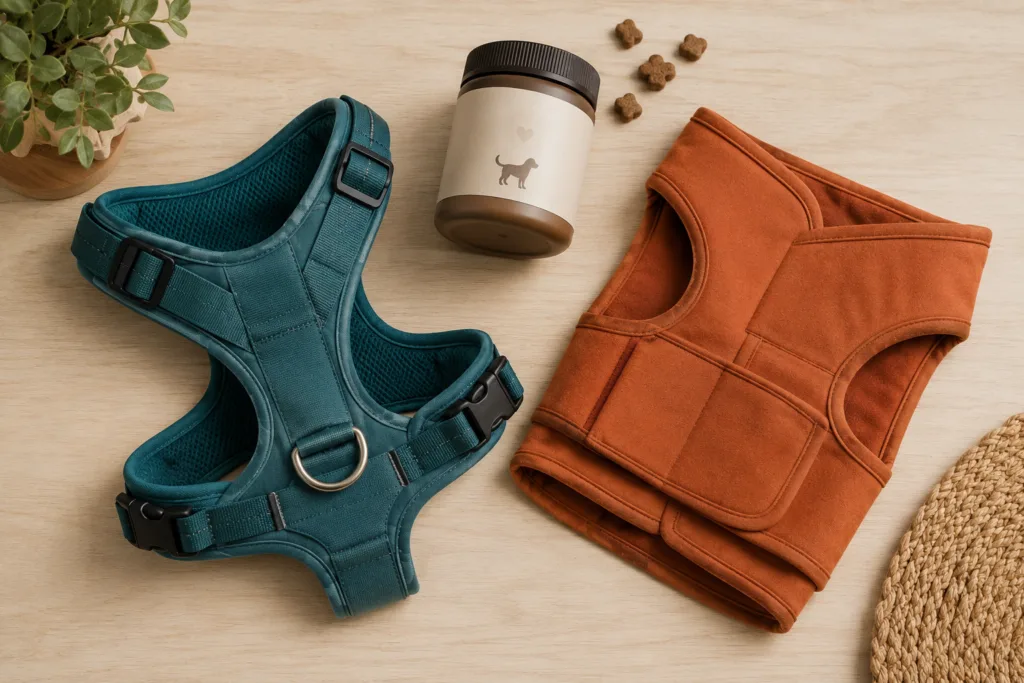
- Section 6: Gear that helps, 3 options compared
- Section 7: Building a realistic walk routine
- Section 8: What progress actually looks like over time
- Section 9: When to get professional help
Section 1: What Leash Reactivity Actually Is (and Isn’t)
Reactivity is an intense response, barking, lunging, growling, triggered by something in the environment, rooted far more often in fear, frustration, or overarousal than in genuine aggression. A reactive dog isn’t “bad” or dangerous by default; they’re overwhelmed and don’t yet have a better way to cope with the trigger.
It’s worth distinguishing reactivity from true aggression clearly, since the two get conflated constantly in casual conversation. Aggression implies intent to cause harm; reactivity is much more often about wanting to increase distance from something perceived as threatening or overly exciting. Most reactive dogs, given the chance, would rather the trigger simply go away than actually engage with it: the intense display is a distance-increasing strategy, not an attack in progress.
Section 2: Common Reactivity Triggers and What Drives Them
- Other dogs, often the most common trigger, frequently rooted in a lack of positive socialization during the critical window, or a past negative encounter
- Bikes, skateboards, joggers, fast, unpredictable movement can trigger a chase-and-alert response even in dogs with no history of aggression
- Strangers approaching directly, many dogs are comfortable with people at a distance but react strongly to direct, head-on approaches, which can feel confrontational in dog body language
- Specific sounds, delivery trucks, other dogs barking nearby, loud environmental noise
Understanding which category your dog’s reactivity falls into matters, because the underlying emotional driver (fear vs. frustration vs. overexcitement) can shift which techniques work best. A dog reacting out of fear typically needs more distance and a slower approach; a dog reacting out of frustrated greeting behavior (wanting to say hello but unable to) often needs impulse control work more than desensitization to the trigger itself.
Is It Fear, Frustration, or Overexcitement? How to Tell the Difference
Body language before and during a reactive episode often reveals which category is driving the behavior, which matters because the training emphasis shifts depending on the answer.
- Fear-based reactivity: body lowered, ears back, tail tucked, often trying to retreat before escalating to barking or lunging if retreat isn’t possible
- Frustration-based reactivity: body forward and loose, tail often wagging or neutral, whining or high-pitched barking, straining toward the trigger rather than away from it
- Overexcitement-based reactivity: similar forward body language to frustration, but often paired with a play-oriented posture, more common in dogs who are actually eager to engage rather than avoid
Fear-based reactivity generally responds best to a slower, more patient desensitization process with generous distance. Frustration-based reactivity often benefits from more direct impulse control work, teaching an alternative behavior (like a solid “look” or “leave it”) that the dog can perform instead of straining toward the trigger. Getting this distinction right early on tends to save significant time compared to applying a single generic protocol regardless of the underlying cause.
Section 3: Why Punishment Makes Reactivity Worse
Correcting a reactive outburst adds more stress to a dog who’s already over threshold emotionally, which tends to intensify the association between the trigger and something unpleasant, reinforcing the very fear driving the reaction. Positive reinforcement works in the opposite direction: gradually building a new, calmer association with the trigger instead of suppressing the visible symptom.
There’s also a practical timing problem with punishment-based approaches to reactivity: by the time a dog is fully reacting, they’re often already too aroused to process a correction as useful information. A correction delivered during a full reactive episode is more likely to simply add confusion and additional stress on top of an already overwhelmed nervous system, rather than teach anything constructive.
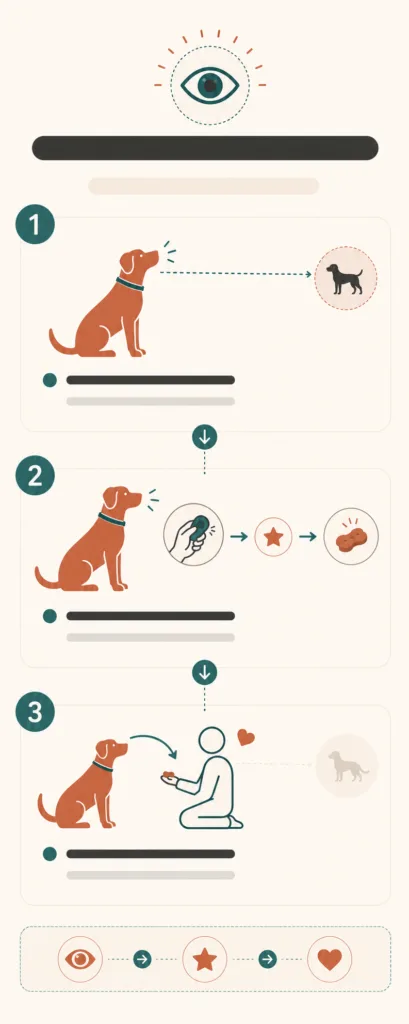
Section 4: The ‘Look at That’ (LAT) Game
The moment your dog notices a trigger at a distance where they can still stay calm, mark that moment (click or “yes”) and reward. Over time, your dog learns that noticing the trigger predicts something good happening, which shifts their emotional response from alarm to anticipation.
- Start far enough away that your dog can glance at the trigger without any visible tension
- The instant your dog looks at the trigger, mark and reward, timing matters more than perfect distance here
- Repeat several times per session, gradually allowing your dog to initiate more glances before needing to be redirected
- Over weeks, very gradually decrease distance, always staying below the point where your dog fixates or escalates
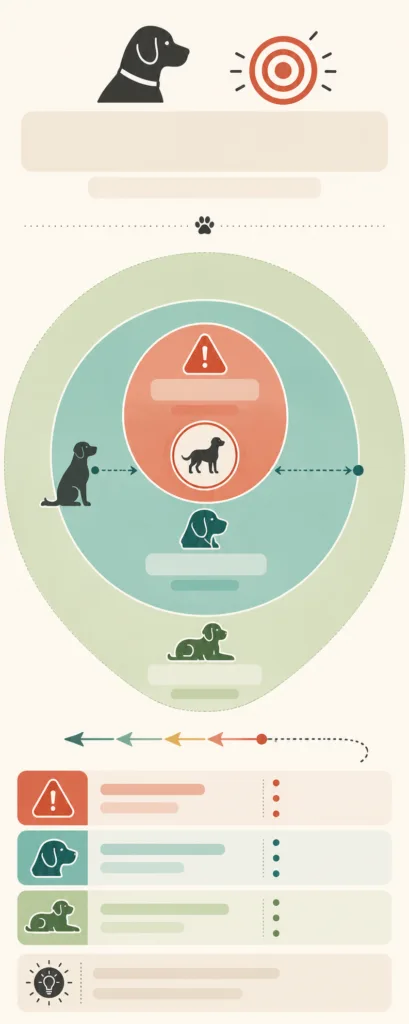
Section 5: Managing Triggers and Distance Thresholds
- Start training sessions at a distance where your dog can glance at the trigger and immediately look back to you
- If your dog fixates, freezes, or reacts, you’re too close, increase distance immediately, no exceptions
- Decrease distance in small increments only after consistent calm responses at the current distance
Threshold distance isn’t fixed, it can shift day to day based on your dog’s stress levels, how much exercise they’ve had, or even the weather. A distance that worked perfectly last week might be too close on a day your dog is already slightly on edge for unrelated reasons. Treat threshold distance as a moving target to reassess each session, not a fixed number to rely on permanently.
Section 6: Gear That Helps, 3 Options Compared
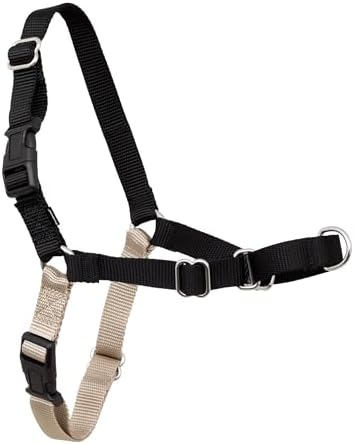
No product replaces the behavior work above, but the right gear supports it, more physical control during unexpected encounters, and some tools can take the edge off baseline stress.
| BEST FOR CONTROLDual-Clip Front & Back Harness$30–40 | 5/5Pros:Extra control during unexpected encounters, reduces physical strain during a reactionCons:Doesn’t address the emotional root cause on its ownBest for:Daily walks in unpredictable environments |
| BUDGET CALMING AIDPressure Wrap (Thundershirt-style)$35–45 | 4/5Pros:Drug-free, reusable, some dogs show noticeable calming effect within minutesCons:Effectiveness varies significantly by dog, not universalBest for:Dogs with a general anxiety component alongside reactivity |
| VET-DISCUSSED OPTIONCalming Supplements/Pheromone Diffusers$20–40 | 3.5/5Pros:Non-invasive, easy to combine with trainingCons:Should be discussed with a vet first, not a substitute for behavior workBest for:Dogs with mild, generalized anxiety alongside specific triggers |
| What Gear Won’t DoFix reactivity on its own, gear supports the training, it doesn’t replace itWork identically for every dog, test calming aids individually and watch for actual behavior change, not just hope |
IMAGE HERE: Flat-lay product photo, front-clip harness, pressure wrap, and calming supplement arranged together, clean neutral background.

Seasonal & Situational Training
Section 7: Building a Realistic Walk Routine
Many owners of reactive dogs unconsciously start avoiding walks altogether, which solves the immediate stress but doesn’t build any long-term progress. A more sustainable approach is restructuring walks around management and training simultaneously, shorter, more intentional outings during lower-traffic times, rather than fewer walks overall.
- Walk during quieter hours when possible, early morning or late evening often means fewer triggers to navigate
- Scout routes in advance for wide sightlines, so you can spot triggers early and adjust distance proactively rather than reactively
- Carry high-value treats every single walk, not just training-focused sessions, you never know when an unexpected trigger will appear
- Build in an exit plan for every route, knowing where you can turn off or create distance quickly reduces your own stress, which your dog can often sense
It also helps to separate “training walks” from “decompression walks” mentally. A training walk is shorter, more focused, and treat-heavy, deliberately seeking out controlled exposure to triggers at a safe distance. A decompression walk prioritizes calm, low-stimulation environments: a quiet trail, an empty field, purely to let your dog relax and sniff freely without any training agenda attached. Both have real value, and relying only on one type tends to produce less balanced progress than including both in a weekly routine.
Section 8: What Progress Actually Looks Like Over Time
Progress with reactivity is rarely linear, and it’s helpful to know what realistic milestones look like rather than expecting a dramatic single turning point. Early progress often looks like slightly faster recovery time after a reactive episode, rather than the episodes disappearing altogether. Mid-stage progress often looks like a dog managing triggers at a previously impossible distance. Later-stage progress often looks like occasional “near misses”, moments where the old reactive pattern almost happened but didn’t.
- Weeks 1–4: learning your dog’s specific triggers and threshold distances, building foundational LAT responses
- Months 2–3: noticeable improvement in recovery time and threshold distance in familiar environments
- Months 4–6+: generalizing calm responses to new environments and previously difficult triggers
Setbacks during this process: a bad walk after weeks of progress, are normal and don’t erase the underlying learning that’s happened. A single difficult encounter is data about that specific moment (perhaps your dog was more tired, more stressed from an unrelated event, or the trigger appeared unexpectedly at close range), not proof the whole approach has stopped working. Keeping a simple log of walks, noting distance, trigger type, and response, can help you see the overall upward trend even when individual days feel discouraging.
Section 9: When to Get Professional Help
If reactivity involves actual bite history, escalating intensity, or you feel unsafe managing walks at all, this is the point to bring in a certified professional trainer or veterinary behaviorist rather than working through it alone.
Will my dog ever be ‘normal’ on walks?
Many reactive dogs improve dramatically with consistent management and training, though the timeline varies widely, some dogs need months, others longer, especially with deeply ingrained triggers.
Should I avoid triggers completely while training?
Some management (avoiding peak times, choosing quieter routes) is helpful and reduces stress, but complete avoidance alone doesn’t build coping skills: a mix of management and gradual, controlled exposure works best.
Is reactivity the same as aggression?
No, reactivity is a fear or frustration-based response to a stimulus, while aggression implies intent to cause harm. Most reactive dogs are trying to increase distance from something scary, not attack it.
What’s my dog’s actual threshold distance?
It’s specific to your dog and can even vary by trigger type. Start wide (30+ feet for many dogs) and adjust based on whether your dog stays calm and responsive at that distance.
Can reactivity be fully ‘cured’?
Full elimination isn’t always realistic, but substantial, life-changing improvement is common, most owners aim for manageable, not perfect.
Does reactivity mean my dog was poorly socialized?
Not necessarily, while under-socialization is a common contributing factor, reactivity can also develop from a single negative experience, genetics, or medical factors like pain, even in dogs with otherwise solid early socialization.
Can two reactive dogs in the same household make each other worse?
It’s possible, dogs can pick up on each other’s arousal levels during walks, especially if walked together during a triggering event. Many trainers recommend working with reactive dogs separately, at least during the early stages of training.
Does muzzle training help with reactivity?
For dogs with a bite history or high-intensity reactions, muzzle training (done positively, as its own reward-based training project) can add a genuine safety margin while behavior work progresses, it doesn’t address the underlying reactivity, but it can reduce risk during the process.
My dog is fine with dogs off-leash but reactive on-leash. Why?
This is common and is sometimes called “leash frustration” or “barrier frustration”: the leash itself restricts a dog’s normal greeting or avoidance options, which can create tension that wouldn’t exist in an off-leash interaction where the dog has full freedom of movement.
The Bottom Line
Living with a reactive dog is genuinely hard, and there’s no quick fix, but with consistent, patient positive reinforcement work, most dogs make real, visible progress. Small wins count here more than almost anywhere else in training, and recognizing them along the way makes the process considerably more sustainable for you as the owner too.
If you’re in the middle of a particularly hard stretch right now, it’s worth remembering that reactivity is one of the most common reasons owners seek out professional training support, you’re far from alone in finding it exhausting, and that exhaustion doesn’t mean you’re doing anything wrong.
Solving Common Behavior Problems
| Download the Free 5 Training Mistakes Fix-It GuideWant a printable guide covering the most common training mistakes, including the corrections that make reactivity worse? Enter your email below and we’ll send it straight to your inbox. |
Resources & Series Links
Positive Reinforcement 101 Series
- Solving Common Behavior Problems
- Seasonal & Situational Training
- Loose-Leash Walking
- Best Dog Training Apps & Online Courses
- Leash and Harness Setup for a Reactive Dog
- Do Training Apps Actually Work for Reactive Dogs?
Where to Buy (Affiliate Links)
- Our full review: PetSafe Easy Walk Harness (No-Pull, Front-Clip)
- Our full review: PHOEPET Reflective No-Pull Harness
- Our full review: ThunderShirt Calming Anxiety Vest
- Amazon, Widest selection of harnesses and calming aids
- Chewy, Good for auto-ship on recurring calming supplements
Recommended Brands to Explore
- Harnesses:Freedom No-Pull,Ruffwear Front Range
- Calming aids:Thundershirt,Adaptil,VetriScience