
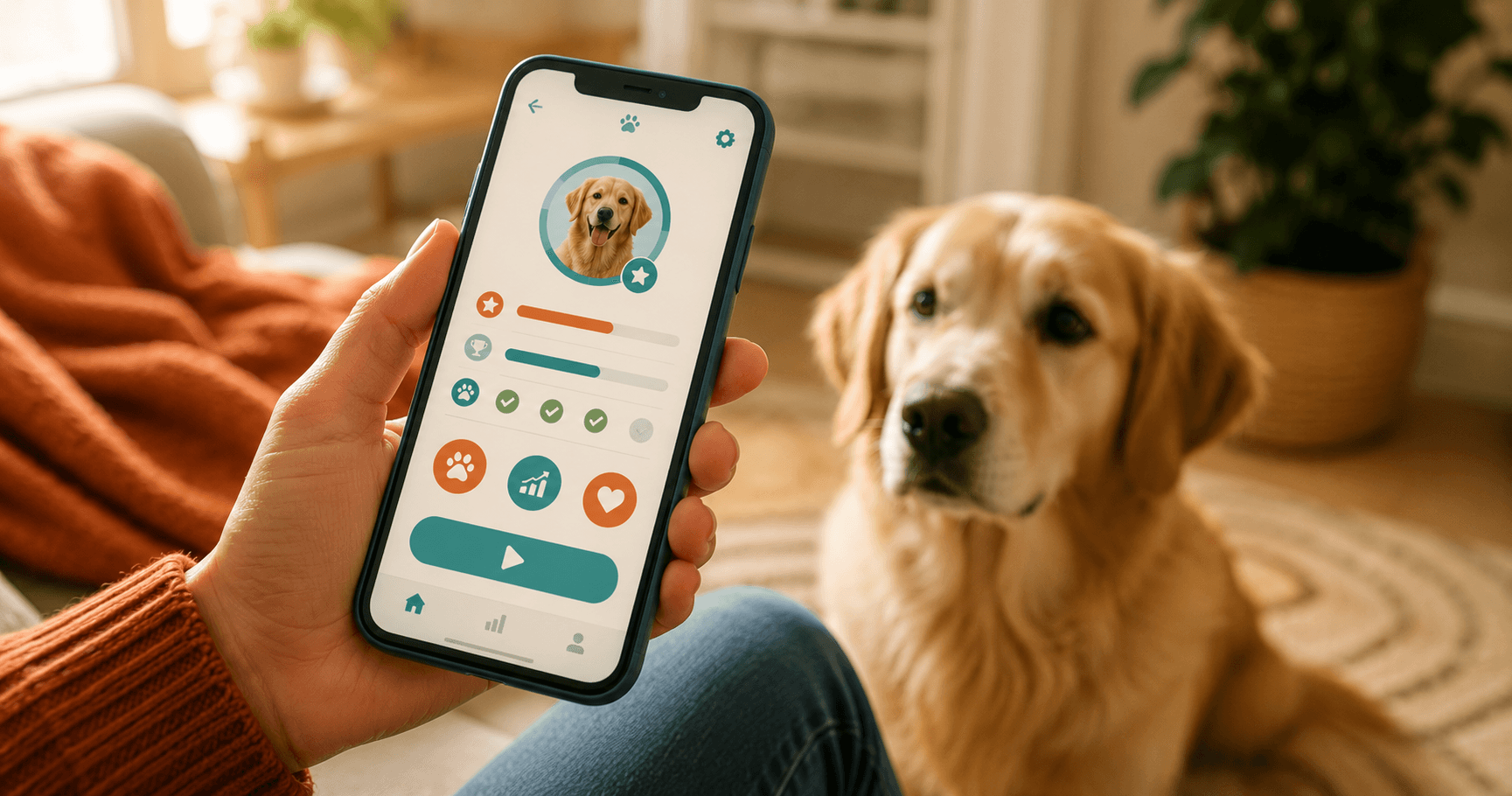
We Compared 6 Dog Training Apps So You Don’t Have To.
Dog training has gone digital, and the sheer number of apps promising to fix every behavior problem from your phone makes it hard to tell which ones are backed by real trainers and which are just a video library with a subscription attached. We compared the most talked-about apps and courses of 2026 across methodology, personalization, expert access, and pricing transparency.
This guide covers our evaluation criteria, six specific apps worth knowing about, the red flags that separate legitimate training resources from repackaged filler content, and an honest answer to the question every owner eventually asks: can an app replace a real trainer? We also cover the mistakes that quietly undermine app-based training, no matter which app you choose.
What’s Covered in This Article
- What’s Covered in This Article
- Section 1: How we evaluated these apps
- Section 2: Top picks compared, side by side
- Section 3: Best for new puppy owners, Zigzag
- Section 4: Best for all-around training, Dogo
- Section 5: Best free option, Pupford
- Section 6: Best for behavior issues, Good. Pup
- Section 7: Best for trick training, Puppr
- Section 8: Apps and courses worth approaching carefully
- Section 9: Is an app enough on its own?
Common mistakes when using a training app
Section 1: How We Evaluated These Apps
- Training methodology: does the app rely on positive reinforcement, consistent with current behavioral science?
- Personalization: does the plan adjust to your dog’s age, breed, and goals, or is it one-size-fits-all?
- Expert access: is there real support from certified trainers or behaviorists, not just pre-recorded video?
- Pricing transparency: are trial terms and renewal costs clear before you commit?
We weighted methodology and expert access most heavily, since these factors separate a genuinely useful training resource from a repackaged video library with little behind it beyond production value. An app can have polished video and still offer thin, generic advice. A less flashy app with real certified-trainer input often delivers better outcomes.
We also looked at how each app handles the transition from teaching a new behavior to maintaining it long-term. Many training resources skip this step entirely, leaving owners without guidance once the “learning the cue” phase ends.
Section 2: Top Picks Compared, Side by Side
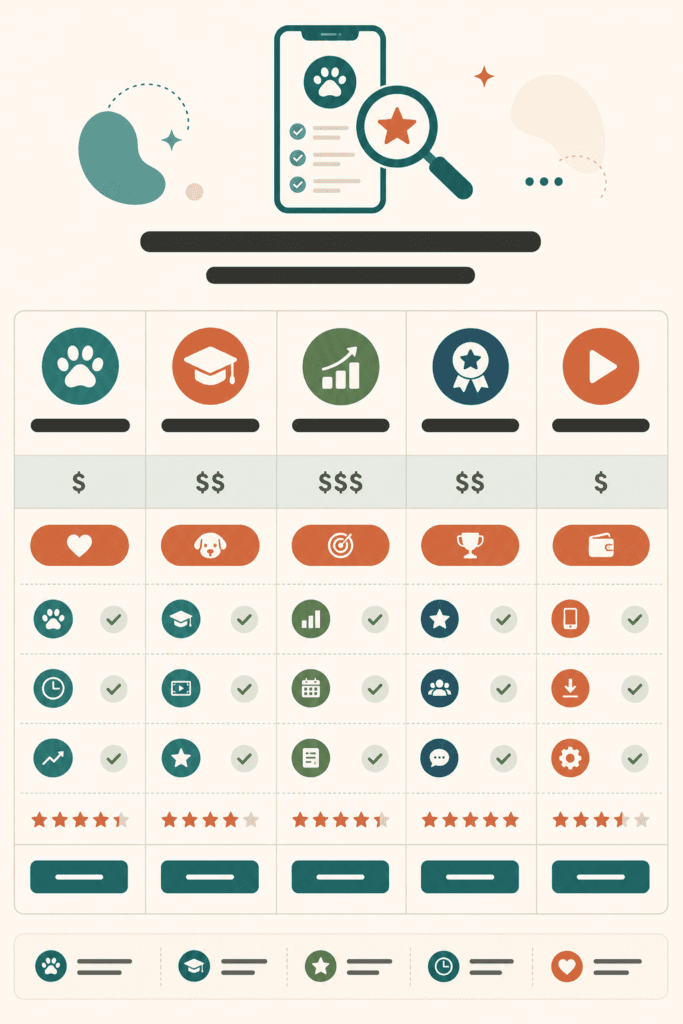
| BEST FOR NEW PUPPY OWNERS Zigzag ~$10–15/mo (verify current) | 4/5 Pros:Structured 12-week puppy plan built around certified-trainer methodology, covering socialization windows and house training in developmental sequence Cons:Less useful once past the puppy stage, narrower focus than all-around apps Best for:Brand-new puppy owners wanting a clear, sequenced plan |
||||
| BEST ALL-AROUND Dogo Free tier + paid subscription | 4/5 Pros:Large lesson library, built-in clicker function, video-review feature for trainer feedback on submitted footage Cons:Video feedback turnaround can vary, not real-time coaching Best for:Owners wanting breadth of content plus some expert feedback |
||||
| BEST FREE OPTION Pupford Free tier available | 4/5 Pros:A genuinely useful free video library rather than a stripped-down trial, a good starting point before paying for anything Cons:Free tier lacks the personalization and live support of paid competitors Best for:Budget-conscious owners, anyone wanting to try before committing |
||||
| BEST FOR BEHAVIOR ISSUES GoodPup Premium | ½ 4.5/5 Pros:Live sessions with certified trainers for real-time guidance, meaningfully different from pre-recorded content for behavior work Cons:Premium pricing reflects the live-coaching model Best for:Reactivity, anxiety, or other issues beyond basic obedience |
||||
| BEST FOR TRICK TRAINING Puppr Subscription | 4/5 Pros:Large trick library, step-by-step video breakdowns, 24/7 live trainer chat included on most plans Cons:Less focused on core obedience or behavior problems than trick content specifically Best for:Owners who’ve covered the basics and want to add fun, bonding-focused skills |
||||
| App / Course | Best For | Typical Price | Rating | |
| Zigzag | New puppy owners | ~$10–15/mo | 4/5 | |
| Dogo | All-around + video feedback | Free + paid tier | 4/5 | |
| Pupford | Budget-conscious learners | Free tier available | 4/5 | |
| GoodPup | Behavior issues, live coaching | Premium | 4.5/5 | |
| Puppr | Trick training | Subscription | 4/5 | |
Note: pricing and features in this category change frequently. Verify current details directly on each app’s site before subscribing.
Section 3: Best for New Puppy Owners, Zigzag
Zigzag structures its content around a 12-week developmental plan built specifically for puppyhood: socialization windows, bite inhibition, and house training in a sequence matched to a puppy’s actual developmental stages, rather than a generic command list. That week-by-week structure mirrors the framework in our puppy vs. adult training guide, which makes the two a natural pair. If you want a deeper look at how the puppy-focused apps in this roundup stack up against each other specifically, see our dedicated piece on choosing a dog training app for a puppy.
Section 4: Best for All-Around Training, Dogo
Dogo pairs a large lesson library with a video-review feature: you submit footage of your dog attempting an exercise and get feedback, which closes some of the gap between a static video course and live in-person coaching. That makes it a solid middle-ground option for owners who want more than a video library but aren’t ready for a premium live-coaching subscription.
The built-in clicker function is a small but useful detail. It removes the need to buy a separate physical clicker before starting clicker-based training, and that alone is enough friction to delay some owners from starting at all.
Section 5: Best Free Option, Pupford
Pupford stands out for offering a genuinely useful free tier rather than a stripped-down trial, which makes it a reasonable starting point before deciding whether a paid app is worth it for your situation. For owners testing whether digital training resources fit their learning style at all, this is a low-risk place to begin. Many find the free content alone covers basic obedience goals.
Section 6: Best for Behavior Issues, GoodPup
For problems beyond basic obedience, like reactivity, anxiety, or aggression, GoodPup’s live-coaching model connects owners directly with certified trainers. That matters more for behavior work than for teaching a simple “sit.” Real-time feedback catches timing errors a pre-recorded video can’t address, since behavior work depends heavily on precise timing that’s hard to self-assess from a video alone.
The premium price reflects genuine one-on-one time with a professional, a meaningfully different service than a self-guided video course. For owners dealing with reactivity or anxiety specifically, that support tends to justify the higher cost more than it would for straightforward obedience work. If your dog’s issue is specifically leash reactivity, we go deeper on whether an app like this is actually worth it in Do Training Apps Actually Work for Reactive Dogs?
Leash Reactivity 101: Managing a Reactive Dog with Positive Reinforcement
Section 7: Best for Trick Training, Puppr
Once the basics are solid, trick training is a great way to build your dog’s confidence and your bond. Puppr’s library leans heavily into this, with step-by-step video breakdowns for tricks ranging from simple to fairly advanced, plus live chat support if you get stuck on a step. This category gets overlooked, but keeping a trained dog mentally engaged with new skills has real value beyond novelty. It’s an easy way to keep reinforcement-based training active in a household once the core obedience work is done.
Section 8: Apps and Courses Worth Approaching Carefully
Some apps in this space offer little transparency about who wrote the training content, or don’t clearly state their methodology. That matters more than it seems: training advice not grounded in reward-based methodology can actively set back a dog’s progress, not just fail to help.
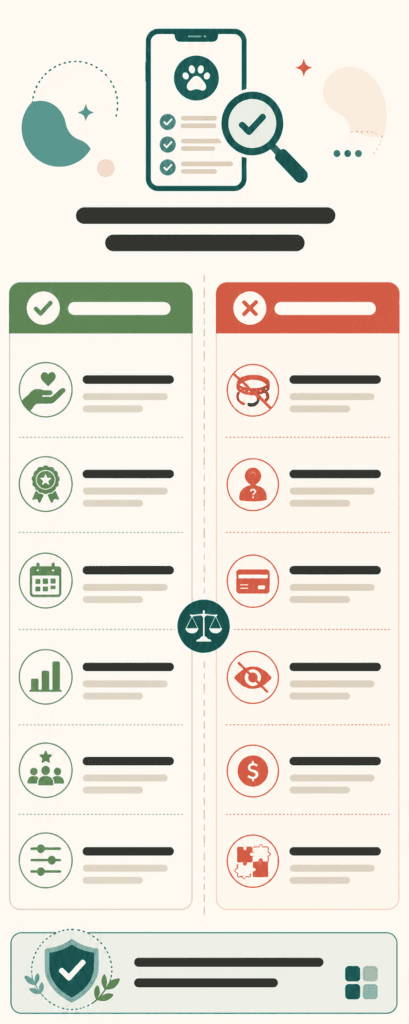
| Red Flags to Watch For No named, certified trainer behind the content, vague “expert-designed” claims without specifics No clear methodology described, if you can’t tell if it’s reward-based, be cautious Unclear trial terms, pricing that isn’t visible until after you enter payment details Overly broad promises, “fix any behavior in 3 days” style marketing is a reliable warning sign regardless of the app |
Before subscribing to any app, search the named trainer’s credentials independently instead of taking the app’s own marketing claims at face value. A legitimate certified trainer will have a verifiable, searchable professional history.
Section 9: Is an App Enough on Its Own?
For most basic obedience goals, like sit, stay, loose-leash fundamentals, and house training, a good app can carry the full process for a motivated owner willing to practice consistently. Apps hit their limits in situations needing real-time behavioral assessment: reading subtle body language, adjusting technique on the fly, or handling anything involving genuine aggression or bite history.
A reasonable rule of thumb: an app is often enough for teaching a new skill. For resolving an existing behavior problem with any safety component, pairing app-based learning with some live professional input tends to produce faster, better outcomes than either alone.
Common Mistakes When Using a Training App
Even an excellent app can underperform if it’s used the wrong way. A few patterns show up repeatedly among owners disappointed with app-based training, regardless of which app they chose.
- Skipping ahead to advanced content before the basics are solid undercuts a structure most apps build deliberately
- Treating video-watching as training: actual practice time with your dog matters far more than time spent consuming lessons
- Expecting an app to diagnose problems it can’t see: apps work from what you report, not direct observation, which limits how precisely they can troubleshoot
- Switching apps frequently before giving any one methodology time to work: most methods need consistent weeks of practice before meaningful change shows up
Owners who treat an app as a structured curriculum to work through consistently, rather than a reference to skim occasionally, get dramatically better results regardless of which app they’re using. The same is true of in-person training: the resource matters less than the consistency behind it.
FAQ: Honest Answers to Real Questions About Training Apps
“Can an app really replace an in-person trainer?”
For basic obedience and puppy foundations, often yes. For complex behavior issues, an app works best alongside professional support, not instead of it.
“Are free apps actually good enough?”
Several free tiers cover foundational training well. Paying typically buys personalization, live support, or more advanced behavior content.
“How do I know if an app’s methodology is legitimate?”
Look for named, certified trainers behind the content (CPDT-KA or IAABC credentials are good signs) and a clear description of reward-based methodology, rather than vague marketing language.
“Do these apps work for all dog breeds?”
Most general training content applies across breeds, though breed-specific traits (like herding instincts or high prey drive) may need supplemental resources beyond a general app.
“Is a live-coaching app worth the higher price?”
For behavior issues, often yes: real-time feedback catches timing errors a video course can’t. For basic obedience, a cheaper self-guided app is usually enough.
“Can I use more than one app at the same time?”
Yes, and many owners do: pairing a free video library for basic cues with a premium live-coaching app reserved for a specific behavior issue, rather than paying for one all-in-one subscription that may not excel at everything.
“What should I do if an app’s advice contradicts what my vet or trainer said?”
Defer to the professional who has actually observed your specific dog. Apps provide general guidance; a vet or trainer working with your dog directly can account for individual factors an app has no way of knowing about.
“Do training apps work for multi-dog households?”
Most apps are designed around training one dog at a time, even in a multi-dog home. Training two dogs simultaneously through the same app session usually works less well than dedicating separate practice time to each dog.
“How much daily time do these apps actually require?”
Most structured plans recommend 10 to 20 minutes a day of active practice, on top of whatever time you spend watching the lesson videos themselves.
The Bottom Line
Whichever app you choose, the principles are the same ones covered throughout this series: an app is a delivery method for positive reinforcement, not a replacement for it. Pick the one that matches your actual goal, whether that’s puppy fundamentals, an existing behavior problem, or trick training for a dog who already has the basics down.
If you’re still unsure where to start, the free tier of an app like Pupford is a reasonable, low-risk first step for almost any owner. You can always upgrade to a more specialized paid option once you know what your dog needs more support with.
The Complete Beginner’s Guide (Pillar)
| Download the Complete Training Library (Free) Prefer a free, self-paced alternative to a paid app? Our complete training library PDF bundles every printable in this series into one download. Enter your email below and we’ll send it straight to your inbox. |
Resources & Series Links
Positive Reinforcement 101 Series