
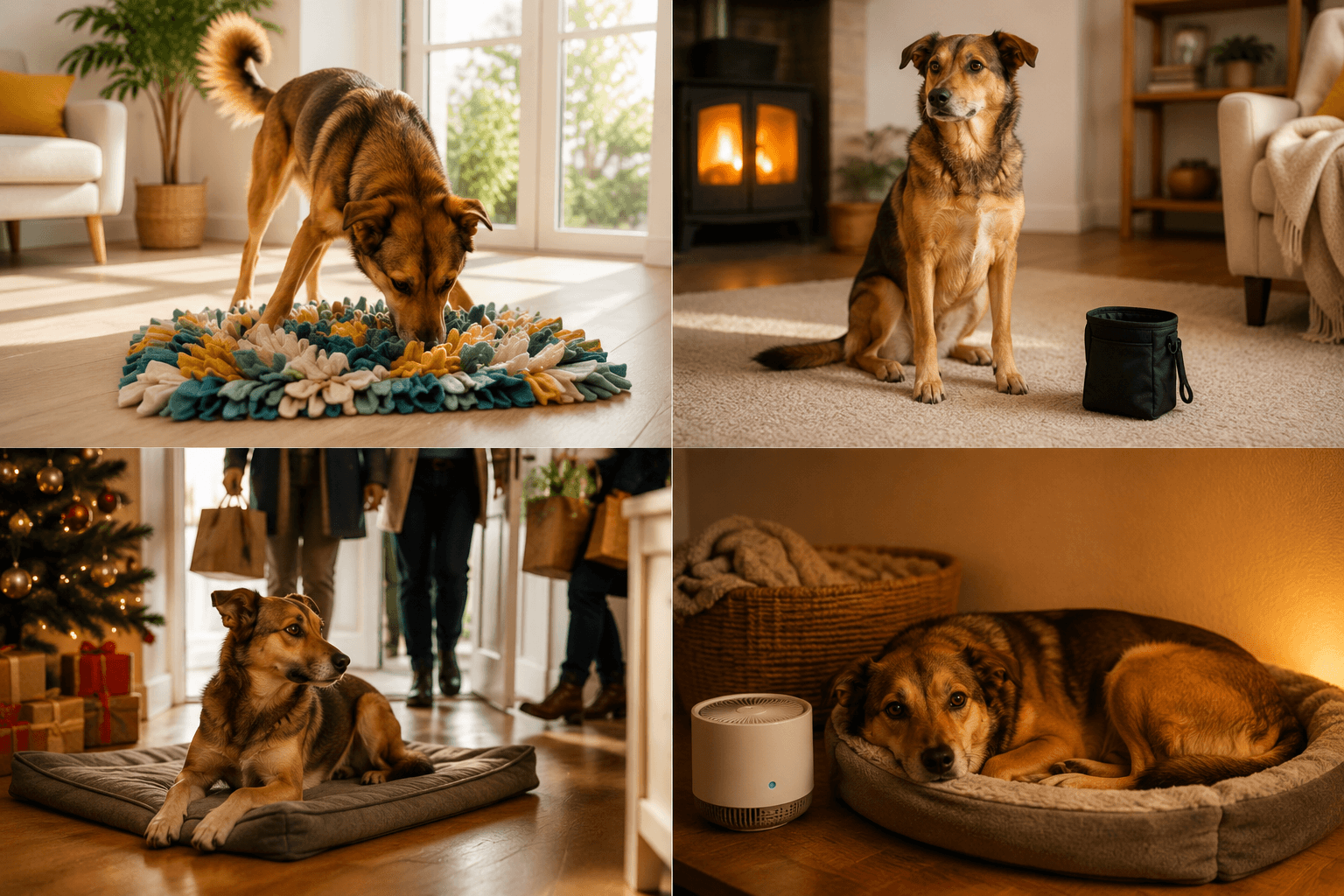
Affiliate Links
Seasonal and situational calming gear referenced in this article, all available on Amazon.





Your Training Was Going So Well. Then Everything Changed.
You’ve been consistent. Your dog sits on cue, walks on a loose leash, and responds to their name reliably. You feel like you’re finally getting somewhere. Then summer hits, and your dog is too hot to focus. Or the holidays arrive and your normally calm dog becomes a 40-pound cannonball every time the doorbell rings. Or you move to a new house and your housebroken adult dog starts having accidents.
Here’s what’s happening: dogs don’t generalize well. The ‘sit’ your dog knows perfectly in your living room is a different neural signal than the ‘sit’ they’re being asked for in a new environment, season, or routine. Any significant change, temperature, schedule, people, location, can feel like starting over. This article covers 7 of the most common seasonal and situational challenges, with positive, force-free strategies for each one.
Why Dogs Struggle with Change (And What to Do About It)
Dogs are creatures of habit. They thrive on predictability: same feeding time, same walk route, same smells, same routine. When any of that changes: a new season, a houseful of guests, a cross-country move, their stress systems activate. Cortisol goes up. Focus goes down. Behaviors that seemed solid disappear.
This isn’t disobedience. It’s neurobiology. A stressed dog literally cannot access the same cognitive state they need to recall trained behaviors. Understanding this makes setbacks feel less personal.
| 3 Principles for Any Seasonal or Situational Challenge Principle 1: Prepare in advance. Every section below has a timeline. Start weeks before the event, not the day of. You cannot desensitize a dog to fireworks while fireworks are going off. Principle 2: Lower your expectations temporarily. Your dog will regress. Their known behaviors will wobble. That is normal and temporary. Return to basics rather than pushing to maintain performance. Principle 3: Go back to basics. In any new or stressful context, reinforce the foundational behaviors, name recognition, sit, eye contact, at high rates. Build the new context’s reward history before expecting reliability. |
| Section 1: Summer Puppy Survival 5 Training Tips for Hot Weather, Positive Only |
Summer is one of the most challenging training seasons for first-time owners. Heat affects dogs’ focus, food motivation, and physical ability to exercise. The same dog who trained brilliantly in April may seem completely disengaged in July. It’s the heat, not the dog.
Why Summer Is Uniquely Hard:
- Dogs don’t sweat efficiently (heat dissipation is primarily through panting, not sweating)
- Hot pavement burns paw pads, burns can happen in under 60 seconds on surfaces above 130°F
- Dogs become lethargic in heat, exactly like humans, reduced motivation and shortened attention spans
- Summer brings more outdoor distractions (children, BBQs, wildlife, sprinklers) that compete with training cues
Tip #1: Train in the Morning or Evening, Never Peak Heat
- Best training windows: Before 9 AM or after 7 PM in most climates
- Pavement test: Press your palm flat on pavement for 5 seconds. If it’s uncomfortable for you, it’s burning your dog’s paws.
- On extreme heat days (90°F+): train entirely indoors, even for otherwise outdoor dogs
Tip #2: Replace Walks with Indoor Mental Enrichment
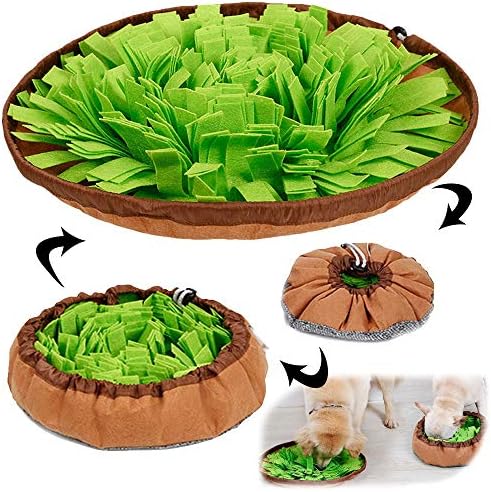
- When it’s too hot for outdoor exercise: snuffle mat (scatter kibble or treats), hide-and-seek (you hide, dog finds you), puzzle toys, indoor tug in air-conditioned space
- 15 minutes of nose work is the mental equivalent of 30 minutes of walking for most dogs
- Mental fatigue produces calm, settled behavior, even when physical exercise isn’t possible
Tip #3: Shorten Sessions (Heat Reduces Attention Span)
- Normal session: 5 minutes Summer session: 2-3 minutes in warm weather
- Replace one 6-minute session with three 2-minute sessions spread through the day
- End every session before your dog checks out, never train a dog who is panting heavily
Tip #4: Upgrade Treat Value (Heat Reduces Food Motivation)
- Dogs are less interested in food when overheated, use their hierarchy: kibble soft commercial treats boiled chicken freeze-dried liver
- Train before meals (hungry = more motivated even in heat)
- In severe heat: cold treat options work well, frozen chicken cubes, cold cheese pieces
Tip #5: Teach a ‘Place’ Cue (The Cool Zone Command)
Designate a specific spot as ‘place’: a cooling mat, a tile floor section, or a shaded outdoor area. Train the dog to go there on cue and settle. In summer, this spot becomes their comfort retreat, and the cue becomes genuinely reinforcing because the destination is cool and comfortable.
- How to train: Lure dog to mat say ‘Place’ treat on mat. Do 20 repetitions. Then add duration (stay 10 seconds, 30 seconds, 1 minute).
- Cooling mats with gel inserts ($20-40) amplify the reinforcing value of the place cue in summer
| Summer Safety Non-Negotiable Never leave your dog in a parked car during summer. Even with windows cracked in 75°F weather, interior temperatures reach 100°F within 10 minutes. A dog can suffer fatal heatstroke in 15 minutes. |
| Section 2: Winter Dog Training 4 Positive Methods for Indoor Days |
Winter presents the opposite challenge: too cold, too dark, too confined. Cabin fever in dogs produces destructive behavior, restlessness, and a return of behaviors that seemed well under control. The solution isn’t more discipline, it’s more mental stimulation.
Method #1: Indoor Obstacle Course
Use household items to create a navigable course: kitchen chairs to weave between, couch cushions to jump over, blankets draped over chairs to crawl under, a hula hoop to step through. This works the body and the mind without needing outdoor space.
- Teach: ‘Go around’ (circle the chair), ‘Over’ (hop the cushion), ‘Under’ (crawl the blanket tunnel)
- 10 minutes of indoor obstacle course produces the mental and physical fatigue of a 20-minute walk
- Rotate the course configuration weekly to maintain novelty
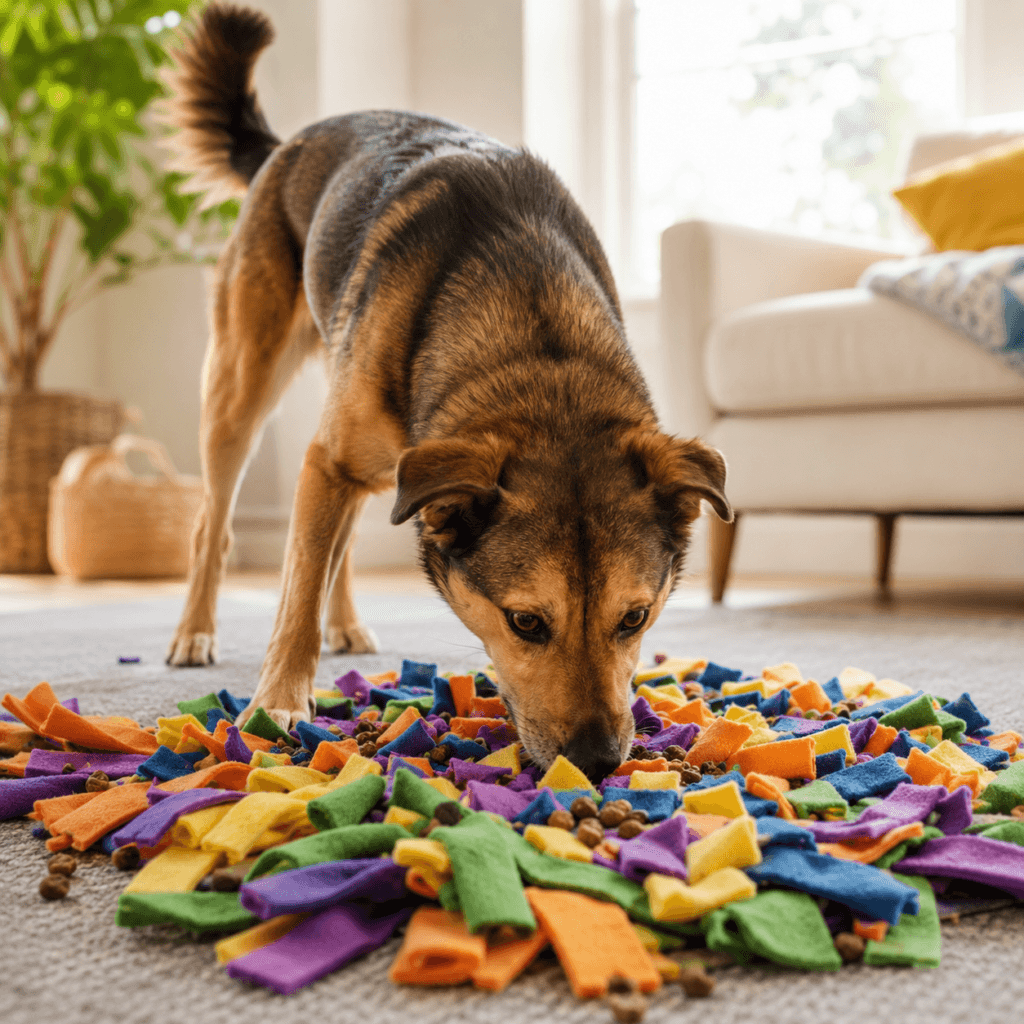
Method #2: Nose Work (The Most Underrated Winter Activity)
Sniffing is the most naturally calming activity a dog can do, it activates the parasympathetic nervous system and releases endorphins. Nose work channels this into a structured game that is deeply tiring.
- Easy: Scatter treats across the living room floor. Say ‘Find it!’ Dog sniffs and collects.
- Medium: Hide treats under pillows, behind chair legs, inside cardboard boxes.
- Hard: Hide treats in increasingly complex locations (inside a rolled towel, in a snuffle mat, in an empty paper bag).
| 15 minutes of nose work = 30 minutes of physical exercise for mental tiredness. Most dogs are visibly calmer and sleepier after a nose work session than after a regular walk. |
Method #3: Trick Training (Low Space, High Bond)
Winter is the perfect time to teach the tricks that don’t require movement or space. These also build confidence, deepen your bond, and improve focus for spring training.
- ‘Touch’, dog presses nose to your open palm
- ‘Look at me’, sustained eye contact on cue
- ‘Shake’, dog places paw in your hand
- ‘Spin’, dog turns a circle clockwise or counter-clockwise
- ‘Play dead’, dog drops to side on cue
Method #4: The Winter Walk Protocol (When You Must Go Outside)
For breeds with short coats, small bodies, or low cold tolerance: booties (prevents ice and salt burn), a fitted jacket or coat, and maximum 10-minute sessions in below-freezing temperatures. Watch for shivering, paw lifting, or reluctance to move, all signs to return indoors immediately.
- Supplement missed walk time with additional indoor enrichment (nose work, puzzle toys)
- Rinse paws after walks in areas salted for ice (salt causes chemical burns)
Winter Indoor Training Schedule:
| Time | Activity | Duration |
| Morning | Indoor obstacle course (weave chairs, hop cushions) | 10 min |
| Mid-day | Nose work: scatter treats, say ‘Find it!’ | 10 min |
| Afternoon | Trick training (touch, shake, spin, play dead) | 5 min |
| Evening | Short walk (above freezing) OR indoor tug game | 10 min |
| Section 3: Holiday Guest Preparation 3 Training Steps to Keep Your Dog Calm |
Holidays are overwhelming for dogs who aren’t prepared for them. Strangers arrive suddenly, children move unpredictably, food appears everywhere, and the dog’s normal schedule completely dissolves. Preparation begins weeks before the event, not the morning your family arrives.
Step #1: Train a ‘Go to Place’ Cue (Start 3–4 Weeks Before)
‘Place’ is a designated mat, bed, or crate your dog goes to and stays on cue. It gives your dog a clear job during the chaos of arrivals and gatherings.
- Lure dog to mat. Say ‘Place.’ Treat. Repeat 20 times in 2-minute sessions.
- Add duration: dog stays on place for 10 seconds, then 30 seconds, then 1 minute before treating.
- Add distance: send dog to place from across the room, from the doorway, from the hallway.
- Practice with mild distractions before the holidays: TV on, family moving around, doorbell sounds.
Step #2: Create a Designated Safe Room
Before guests arrive, set up one room as your dog’s safe zone: off-limits to guests, equipped with their bed, water, a frozen Kong, and calming music (classical or reggae work best).
- Condition the room before the holidays: feed your dog in there, do short training sessions in there, scatter treats in there. The room should already be associated with good things.
- During peak chaos (doorbell arrivals, kids running, group meals): your dog hangs out in the safe room
- This is not punishment. It is management that keeps your dog from practicing overwhelming, reactive behavior.
Step #3: Brief Your Guests (The Script That Works)
The most common holiday dog disasters happen because guests don’t know the rules. Give them one.
| The 30-Second Guest Brief: “We’re training [Dog’s Name] with positive reinforcement. When you arrive, please ignore him completely for the first 5-10 minutes, no eye contact, no talking to him, no reaching toward him. Once he settles, I’ll give you some treats and you can say hello. This makes him much calmer and helps him practice being calm around new people.” |
Holiday Training Prep Timeline:
- 4 weeks before: Teach ‘go to place’ from scratch
- 3 weeks before: Add duration to place (1 minute, then 3 minutes)
- 2 weeks before: Practice with doorbell sounds (ring bell treat before barking)
- 1 week before: Practice place with mild guests (a neighbor, a friend)
- Day of: Deploy safe room at first sign of overwhelm
| What NOT to Do: Never force a dog to interact with guests who frighten them Don’t let well-meaning guests say ‘Oh, I’m a dog person, they always like me’ and reach for a nervous dog Don’t feed table scraps through the holidays (disrupts dietary balance and reinforces begging) Never punish holiday misbehavior (your dog is overwhelmed, not defiant) |
| Section 4: Post-Move Adjustment 4 Positive Routines for a Stressed Dog |
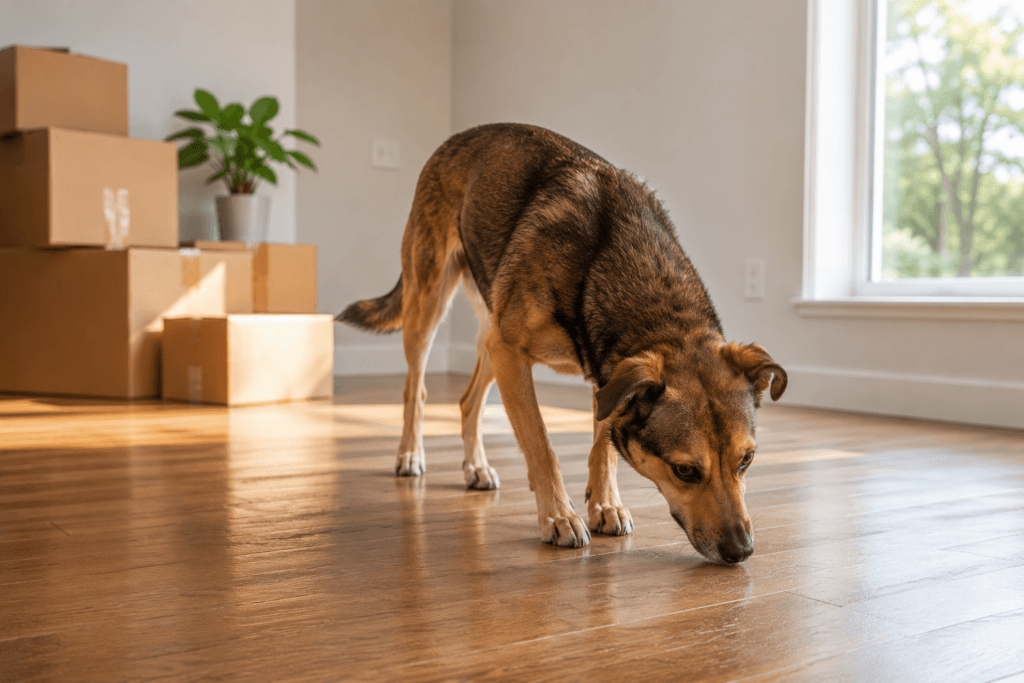
Moving is genuinely disorienting for dogs. Every scent marker they’ve built over months, on the floors, the walls, the yard, is gone. The sounds are different. The layout is different. Even the light through the windows is different. Behavioral regression after a move is almost universal and almost always temporary.
Routine #1: The Sniffari, Structured Exploration Time
For the first 24-48 hours after moving: no training. Just exploration. Let your dog sniff every room, every corner, every piece of furniture at their own pace.
- Scatter small treats in each room as you introduce them (builds positive associations with new spaces)
- Follow your dog’s lead, don’t hurry them through rooms or force them toward things they’re uncertain about
- Let them roll, mark, investigate: this is their way of taking ownership of the space
Routine #2: Restart the Potty Schedule from Scratch
Even a fully housebroken adult dog may have accidents in the first week of a new home. Don’t be alarmed, don’t punish. New environment = new rules in the dog’s brain. Restart potty training protocol as if they were a puppy.
- Take out every 60-90 minutes for the first week, even for adult dogs
- Reward outdoor potty with high-value treats (re-establish the outdoor = reward association)
- Clean indoor accidents with enzyme cleaner, regular cleaners leave scent traces that attract repeat accidents
Routine #3: Unpack Your Dog’s Things First
Before your own furniture, before kitchen boxes, before electronics: get your dog’s bed, crate, blankets, and toys into the new home. These objects carry familiar scents that act as olfactory anchors in an unfamiliar space.
- If possible, bring an unwashed blanket from the old home (maximum scent retention)
- Set up the crate or dog bed in the same relative position as in the old home if possible
- Familiar toys in new spaces communicate: this unfamiliar place contains familiar things
Routine #4: Maintain the Same Daily Schedule
Same feeding time. Same walk time. Same training time. Same pre-bedtime routine. Every consistent element of the familiar schedule reduces the cognitive load of the new environment.
- If your schedule changed because of the move (different commute, new job), transition gradually: shift feeding and walk times by 15 minutes per day rather than all at once
- Predictability is the single most powerful anti-anxiety tool available for dogs
| ⏱ Realistic Adjustment Timeline Most dogs: 1–2 weeks to feel comfortable and resume normal behaviorAnxious or nervous dogs: 3–4 weeksSigns of successful adjustment: Playing independently, eating normally, relaxed body language, voluntary snuggling, tail wagging at familiar cues If your dog is still showing significant stress signs (refusing food, hiding constantly, vocalizing excessively) after 4 weeks, consult your vet to rule out medical causes and discuss anxiety support options. |
| Section 5: Dogs Scared of Fireworks 5 Positive Reinforcement Tips, Repair + Comfort |
Fireworks are one of the most common and most severe anxiety triggers in dogs. Loud, unpredictable, vibrating explosions that seem to come from every direction with no warning and no pattern, from a dog’s perspective, this is terrifying. The most important thing to understand: you cannot prepare for fireworks the night of. Start weeks in advance.
Tip #1: Set Up a Fireworks Safe Room (Weeks Before)
- Choose an interior room: bathroom, walk-in closet, basement, anywhere with no windows or minimal outside sound
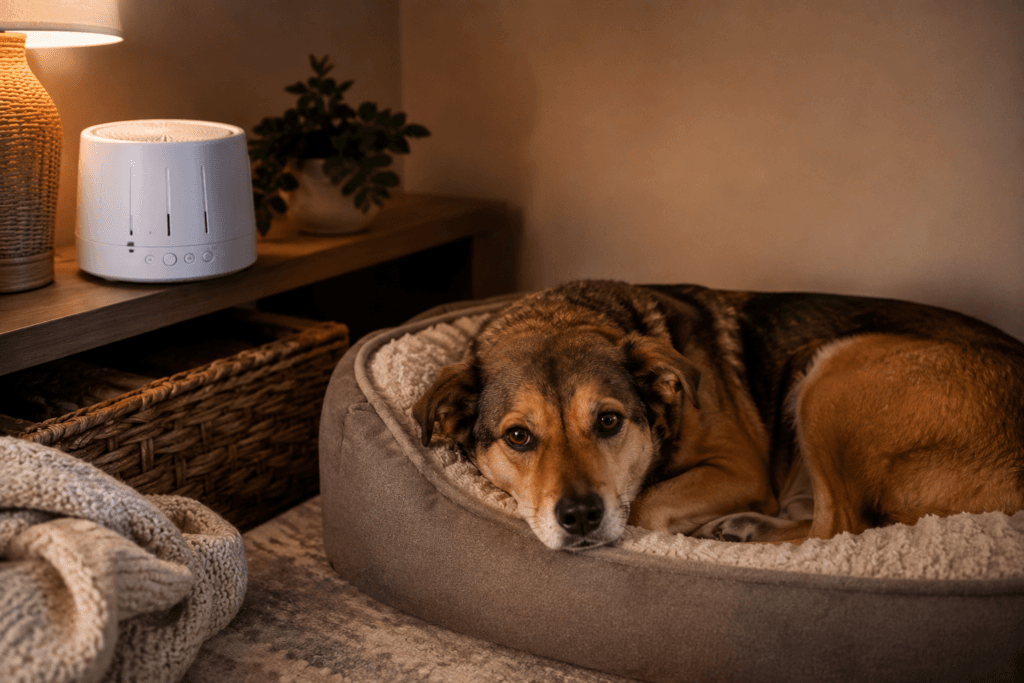
- Set up: dog bed or crate, loud fan or white noise machine, classical music or reggae playlist
- Condition the room weeks before fireworks: feed your dog in there, train in there, hide treats in there. The room should already mean “amazing things happen here.”
- On fireworks nights: your dog has a pre-conditioned safe space that already feels good
Tip #2: The Candy Bar Protocol (Counterconditioning)
This is the most effective positive reinforcement intervention for fireworks fear. The goal: pair the sound of fireworks with an immediate, high-value food reward so the brain begins to associate fireworks with good things.
- Start weeks before with recorded fireworks sounds at very low volume (YouTube: ‘fireworks sounds for dog training’).
- Play the sound at near-inaudible level. The moment you play it, give a high-value treat (chicken, cheese, hot dog). Every time.
- Gradually increase volume across sessions over 2-3 weeks. Never increase until your dog is calm and eager at the current level.
- Goal: Dog hears fireworks looks toward you expectantly for the treat.
| If your dog is already in a full panic during active fireworks, the counterconditioning window has closed for tonight. Focus on comfort, not training. Stay calm, sit near them (without fussing excessively), and let them lead where they want to go. |
Tip #3: White Noise and Calming Music
- Studies in animal behavioral science have found classical music and reggae most effective for canine stress reduction
- Turn on a loud fan or white noise machine to muffle the lower-frequency vibrations of fireworks (which dogs feel physically as well as hear)
- Play calming music at baseline for weeks before fireworks season, not just during events, to build positive association
Tip #4: Calming Aids That Actually Work (With Vet Approval)
- Thundershirt (pressure wrap, $30-40): works well for many dogs with mild-to-moderate anxiety: the gentle pressure has a calming physiological effect
- Adaptil pheromone diffuser: releases synthetic dog appeasing pheromones; works best when used consistently for several weeks before the event
- Calming supplements (L-theanine, L-tryptophan, melatonin): VetriScience Composure, Solliquin, allow 4-6 weeks for full effect
- Prescription medication: for dogs with severe phobias, a vet can prescribe situational anxiety medication. This is not shameful, for severely affected dogs, it may be the most humane intervention available
Tip #5: You CANNOT Reinforce Fear by Comforting Your Dog
One of the most persistent myths in dog training is that comforting a scared dog “reinforces” their fear. This is false. Fear is not a voluntarily offered behavior that can be reinforced. Comforting your scared dog does not make the fear worse. Stay calm, sit near them, let them lean into you if they want to.
| What NOT to Do: Do NOT take your dog to fireworks displays (‘they seem fine’ is not a reliable indicator in dogs who mask stress) Do NOT leave your dog outside during fireworks (lost dogs spike massively on July 4th and New Year’s Eve) Do NOT use shock collars, citronella spray, or startle devices to ‘distract’ them from fireworks (adds aversive experience to existing terror) Do NOT force them to stay in a specific location if they want to hide elsewhere |
| Section 6: Back-to-Work Transition 3 Routines for Separation Anxiety |
After a vacation, extended WFH period, parental leave, or summer break, your dog has learned that you are always there. The return to regular office hours is a genuine shock, and for dogs with existing anxiety tendencies, it can trigger separation anxiety responses that weren’t present before.
Routine #1: Practice Departures (The Week Before)
Desensitization means making departures feel like non-events through gradual, non-scary repetition. Start the week before you return to work.
- Days 1–2: Put on your coat and shoes. Sit on the couch. Don’t leave. Do this 10 times per day. Your dog learns: coat + shoes ≠ you leaving.
- Days 3–4: Walk to the door, touch the doorknob, sit back down. 10 times per day.
- Days 5–6: Step outside, close the door for 1 second, come back. Work up to 10, 30, 60 seconds.
- Day 7: Leave for 1 minute. Then 2. Then 5. Return BEFORE your dog becomes anxious at each level.
- Critical rule: Never advance to the next duration until your dog is fully calm at the current one. the full separation anxiety protocol inSolving Common Behavior Problems
Routine #2: Frozen Kongs (The Counterconditioning Tool)
Give your dog a frozen Kong or lick mat exclusively when you leave. Never at other times. After consistent repetitions, the sound of the freezer opening starts to predict your departure, and your departure starts to predict something wonderful.
- Fill with: peanut butter (check label, must be xylitol-free), plain yogurt, wet food, mashed banana, or a combination
- Freeze overnight for a session that lasts 20-30 minutes
- Pick up the Kong when you return, exclusivity is what makes the association work
Routine #3: Mid-Day Check-In
- If your dog cannot hold their bladder for 8+ hours: hire a dog walker for a mid-day visit (or ask a neighbor, family member, or friend)
- The check-in should include: 10 minutes of potty + brief walk + 2 minutes of training (name recognition, sit) to rebuild confidence and connection
- For dogs with full separation anxiety: dog walker doesn’t fix the anxiety (the dog needs the desensitization protocol above), but the mid-day visit reduces the total alone time to more manageable increments
| If Your Dog Already Has Separation Anxiety Full separation anxiety requires the systematic desensitization and counterconditioning protocol detailed inSolving Common Behavior Problems. For severe cases involving injury risk or no response to 4+ weeks of protocol: CSAT (Certified Separation Anxiety Trainer) at csats.com, or veterinary behaviorist for medication evaluation alongside behavior modification. |
| Section 7: Road Trip Ready 4 Training Prep Steps for a Calm Car Dog |
Car anxiety in dogs is almost always learned, either from motion sickness, from early trips that ended at the vet, or from never being conditioned to the car gradually. All of it can be unlearned. The 4-step protocol below takes 4 weeks and produces a dog who loads up voluntarily and settles on cue.
Step #1: Condition the Car as a Happy Place (Week 1-4)
- Week 1: Sit in parked car with engine off. Open the treats, feed your dog, and get out. That’s it. Do this 5 times. Go nowhere.
- Week 2: Sit in parked car with engine on. Same thing: treats, positive experience, get out. 5 times. Go nowhere.
- Week 3: Drive around the block (1-2 minutes). Treats at the end. Return home. 5 times.
- Week 4: Drive somewhere fun (park, pet store, drive-thru). Not the vet. End every trip with high-value reward.
| Chick-fil-A grilled chicken nuggets are technically on the ‘safe human foods for dogs’ list and are effective as a jackpot reward for excellent car behavior. No judgment. |
Step #2: Use a Crash-Tested Harness or Travel Crate
- Unrestrained dogs become projectiles in a car accident (dangerous for the dog AND for passengers)
- Crash-tested harnesses: Sleepypod Clickit Terrain, Kurgo Tru-Fit, both have passed independent crash testing
- Travel crates: Gunner G1 (expensive but genuinely crash-tested), Ruffland Kennel (widely used by working dog handlers)
- An additional benefit: the harness or crate provides physical containment that reduces the car-sliding anxiety many dogs feel on turns
Step #3: First Trips Go to Fun Places Only
- For the first 5-10 car trips: never go to the vet, never go to a groomer, never go anywhere your dog associates with stress
- Drive to the park and walk. Drive to a pet store and get a treat. Drive to a friend’s house.
- You’re building a travel history where car = adventure + reward. The vet can wait until this association is solid.
Step #4: Pack a Complete Road Trip Kit
- Water + collapsible bowl (stop every 2-3 hours, maximum 4 hours between stops for adult dogs)
- High-value treats for calm behavior during the drive
- Chew toy or long-lasting chew (for anxious chewers, occupies and calms)
- Familiar-scented blanket from home (reduces novelty anxiety in new destinations)
- Frozen Kongs for each leg of a long journey
- Potty bags, paper towels, enzyme cleaner (for motion sickness or accidents)
| Motion Sickness Solutions Puppies often outgrow car sickness as their inner ear matures (usually by 6-9 months). For persistent motion sickness in older dogs: • Cerenia (maropitant), prescription anti-nausea medication, works within 1-2 hours, very effective • Ginger capsules (natural option), ask your vet about appropriate dosing • Drive on an empty stomach (reduces nausea) • Increase airflow (crack windows, turn on AC vent toward dog) Call your vet before using any medication. |
FAQ: Situational Training Real Questions
“My dog loves snow. Is it safe to let him play for hours?”
It depends on the dog. Northern breeds (Huskies, Malamutes, Samoyeds) are genuinely built for extended cold and often prefer it. Short-coated breeds, small dogs, puppies, and senior dogs need time limits (10-20 minutes maximum in freezing temperatures) and may need coats and booties. Watch for shivering, paw lifting, or reluctance to move, those are clear signals to go inside regardless of breed.
“How do I know if the pavement is too hot for my dog’s paws?”
The 5-second hand test: press the back of your hand flat on the pavement. If you can’t hold it there for 5 full seconds, it’s too hot for your dog’s paws. Asphalt retains heat significantly longer than concrete, it can remain dangerously hot 3-4 hours after the air temperature has cooled. When in doubt, walk on grass, walk in early morning, or use booties.
“My dog hides under the bed during holidays. Should I force him out?”
No. A dog who chooses to hide is using a self-soothing strategy that is working for them. Forcing them out removes their coping mechanism and increases stress. Leave them access to their hiding spot, scatter treats near (not under) it to build positive association with the periphery of the stressful space, and let them emerge when they’re ready. Monitor for eating, drinking, and bathroom behavior, if they stop doing all three, that’s a sign of more severe anxiety that warrants vet attention.
“How long does it take for a dog to adjust to a new home?”
Most dogs: 1-2 weeks. Anxious, fearful, or rescue dogs: 3-4 weeks. Signs of adjustment include resuming normal eating, playing independently, seeking contact with you voluntarily, and relaxed body language. The commonly referenced ‘3-3-3 rule’ for rescue dogs (3 days of shock, 3 weeks of learning, 3 months of settling) is a rough guideline, individual variation is enormous.
“Can I desensitize my dog to fireworks by playing videos of them?”
Yes, with important caveats. Recorded fireworks sounds work for the auditory component but cannot replicate the low-frequency vibrations and pressure waves of real fireworks. Counterconditioning with recordings will help, it’s a standard protocol used by behavior consultants, but expect some additional stress response when the real thing begins. Videos are a starting point, not a complete solution for severely affected dogs.
“My dog has severe separation anxiety and destroys the crate. What do I do?”
Stop using the crate immediately for a dog with severe separation anxiety. A dog in a genuine panic state will injure themselves trying to escape a crate, broken teeth, bloody paws, and psychological trauma are documented outcomes. This dog needs the systematic desensitization protocol fromSolving Common Behavior Problemsor direct work with a CSAT (Certified Separation Anxiety Trainer, csats.com). Crating is not the answer for SA.
“My dog throws up in the car every time. Is there anything that helps?”
Yes: Cerenia (prescription anti-nausea from your vet) is highly effective and usually eliminates car sickness within 1-2 doses. Additionally, try: driving with windows slightly open, driving on an empty stomach, keeping the car temperature cool, and starting with very short trips (around the block). Most puppies outgrow motion sickness by 6-9 months as the inner ear matures. For adult dogs with persistent sickness, see your vet.
“Should I medicate my dog for fireworks or travel?”
For mild anxiety, start with non-medication approaches (counterconditioning, calming supplements, Thundershirt, white noise). For moderate-to-severe anxiety that interferes with eating, self-care, or produces injury risk, talk to your vet about situational medication. Modern anti-anxiety medications for dogs are safe, well-tolerated, and can make the difference between a traumatic experience and a manageable one. Medicating your anxious dog is not “cheating”, it’s compassionate care.
Every Season. Every Situation. One Dog. You’ve Got This.
Here’s the seasonal training summary: Summer needs morning timing, indoor enrichment, shorter sessions, and upgraded treats. Winter needs nose work, obstacle courses, and trick training. Holidays need a ‘place’ cue, a safe room, and a guest brief. Moving needs familiar scents, a restart of the potty schedule, and schedule consistency. Fireworks need a pre-conditioned safe room, counterconditioning weeks in advance, and comfort (not correction) in the moment. Back-to-work needs departure practice and frozen Kongs. Road trips need 4 weeks of gradual car conditioning and safety equipment.
You can’t prepare for everything simultaneously. That’s okay. Pick the situation you’re facing right now. Use that section’s strategies. Start earlier than you think you need to. Your dog will adapt, with wobbles and setbacks along the way, because dogs are remarkably resilient when their humans are consistent, patient, and kind. You’ve got this. And so does your dog.
| Download the Free Seasonal & Situational Training Checklist Want a printable guide for every season and situation in this article, with timelines, key steps, and what to avoid? Enter your email below, we’ll send the Seasonal & Situational Training Checklist straight to your inbox. One checklist. Every situation. Print it and use it when you need it. |
Resources & Series Links
Related Articles
- Solving Common Behavior Problems (separation anxiety, fear, and nervous dogs in depth)
- Daily Training Routines (working owner and hyperactive dog schedules)
- Budget vs. Premium Gear (treat pouches and enrichment tools)
Recommended Products (Affiliate Links)
- Thundershirt (anxiety wrap): $30-40
- Adaptil pheromone diffuser/collar: $20-40
- VetriScience Composure calming supplement: $20-30
- Snuffle mat (winter and summer indoor enrichment): $15-25
- Cooling mat (summer ‘place’ cue destination): $20-40
- Sleepypod Clickit Terrain car harness (crash-tested): $60-90
- Kong Classic (for frozen Kong departures): $10-15
Professional Resources
- Certified Separation Anxiety Trainer (CSAT): csats.com
- IAABC Behavior Consultant Directory: iaabc.org/referral
- Spotify playlist: ‘Calming Music for Dogs’ (search on Spotify, several well-curated options)
YouTube: ‘Fireworks sounds for dog training’ (for counterconditioning prot
4 Comments