
Affiliate Links
The crates and crate accessories referenced in this article, all available on Amazon.


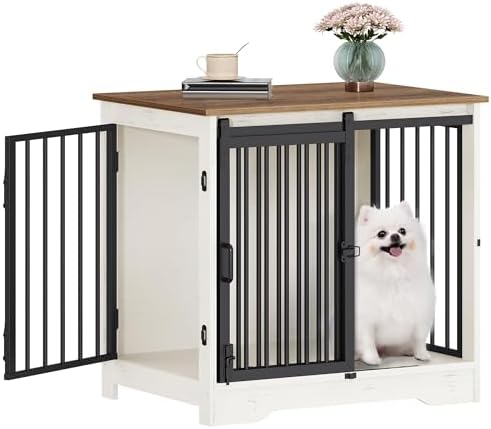


Stop Forcing the Crate. Start Building a Space Your Dog Actually Wants.
If you’ve ever shoved a resistant dog into a crate and closed the door, you already know how badly that goes for both of you. The crate itself was never the problem. It’s how most people introduce it: too fast, with too much pressure, before the dog has any reason to trust the space.
Done with positive reinforcement, crate training looks completely different. Every interaction with the crate is voluntary and rewarded, so your dog builds the association themselves, on their own timeline, not yours. This guide walks through exactly how to get there, including the gear that makes it easier, the mistakes that quietly sabotage progress, and what to do when things don’t go according to plan.
Whether you’re bringing home a brand-new puppy, working with a rescue who’s never seen a crate before, or troubleshooting a dog who’s suddenly started resisting one they used to love, the same core principles apply. Here’s why this works.
What’s Covered in This Article
- What’s Covered in This Article
- Section 1: Why crate training works with positive reinforcement
- Section 2: Understanding your dog’s perspective, why crates feel scary at first
- Section 3: Choosing the right crate, 5 options compared
- Section 4: Where to put the crate (and why placement matters more than people think)
- Section 5: The 7-day positive reinforcement crate training plan
- Section 6: Common crate training mistakes to avoid
- Section 7: What to do if your dog cries in the crate
- Section 8: Crate training in apartments and small spaces
- Section 9: Crate training puppies vs. adult dogs
- Section 10: Transitioning out of the crate long-term
Section 1: Why Crate Training Works With Positive Reinforcement
A crate only becomes stressful when it’s introduced through force. Positive reinforcement flips that completely: every single interaction with the crate is voluntary and rewarded, so the dog builds the association themselves, on their own timeline. The goal isn’t to make your dog tolerate the crate. It’s to make the crate one of the best-feeling places in the house.
This matters because dogs, like most animals, form strong associations quickly, and those associations run in both directions. A dog who’s forced into a crate learns that the crate predicts a loss of control and possibly fear. A dog who’s rewarded for choosing to enter learns the opposite: that the crate predicts good things. Once that second association is solidly built, most dogs will walk into their crate on cue, without any coaxing at all. Some will even retreat there voluntarily when they want quiet time.
Section 2: Understanding Your Dog’s Perspective, Why Crates Feel Scary at First
Dogs are descended from den animals, and many trainers point to this as part of why crates can work so well once properly introduced: a small, enclosed space taps into a genuine instinct to seek shelter. But that instinct only kicks in if the space feels safe, not confining. To a dog who hasn’t built trust in the crate yet, a closed door removes their ability to leave, and loss of escape options is one of the most reliable triggers for anxiety in any animal, including humans.
This is exactly why the open-door phase in the plan below isn’t a nice-to-have. It’s the entire foundation. Every day you skip in that phase gets paid back later in the form of whining, resistance, or a dog who associates the crate with helplessness rather than safety.
Section 3: Choosing the Right Crate, 5 Options Compared
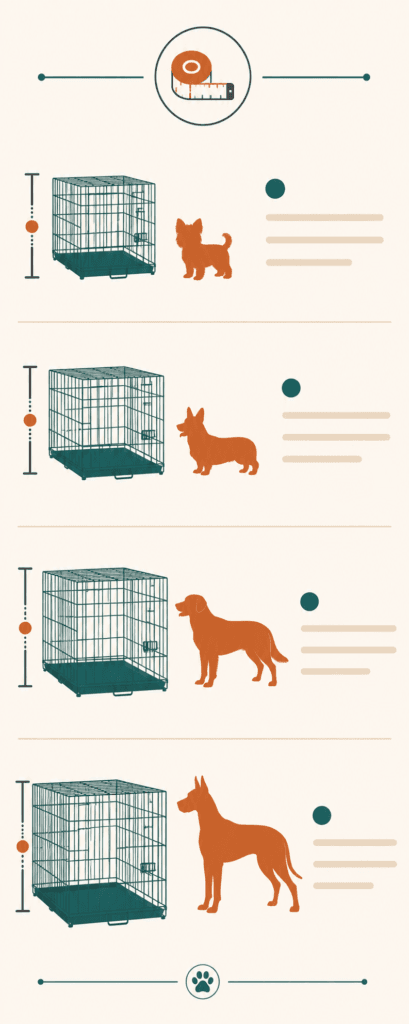
Size matters more than most people expect. Your dog should be able to stand up, turn around, and lie down fully stretched out, but a crate that’s too large can actually undermine potty training, since dogs won’t avoid soiling a space if there’s room to move away from it. For growing puppies, look for models with a divider panel so you’re not buying a new crate every few months.
| BEST OVERALL Mid-Size Double-Door Wire Crate (MidWest-style) $45–65 | 4/5 Pros:Sturdy wire construction, two doors for flexible placement, folds flat for storage, widely available in every size, usually includes a removable tray for easy cleaning Cons:Wire can feel exposed to anxious dogs until covered with a blanket or crate cover Best for:Most first-time owners, medium to large breeds, anyone wanting a reliable all-purpose crate |
| BUDGET PICK Basic Single-Door Wire Crate (Frisco-style) $25–35 | 4/5 Pros:Affordable, functional, easy to find in every size, good starting point before upgrading Cons:Only one door limits placement options in smaller rooms Best for:Tight budgets, first-time crate training, temporary or trial use |
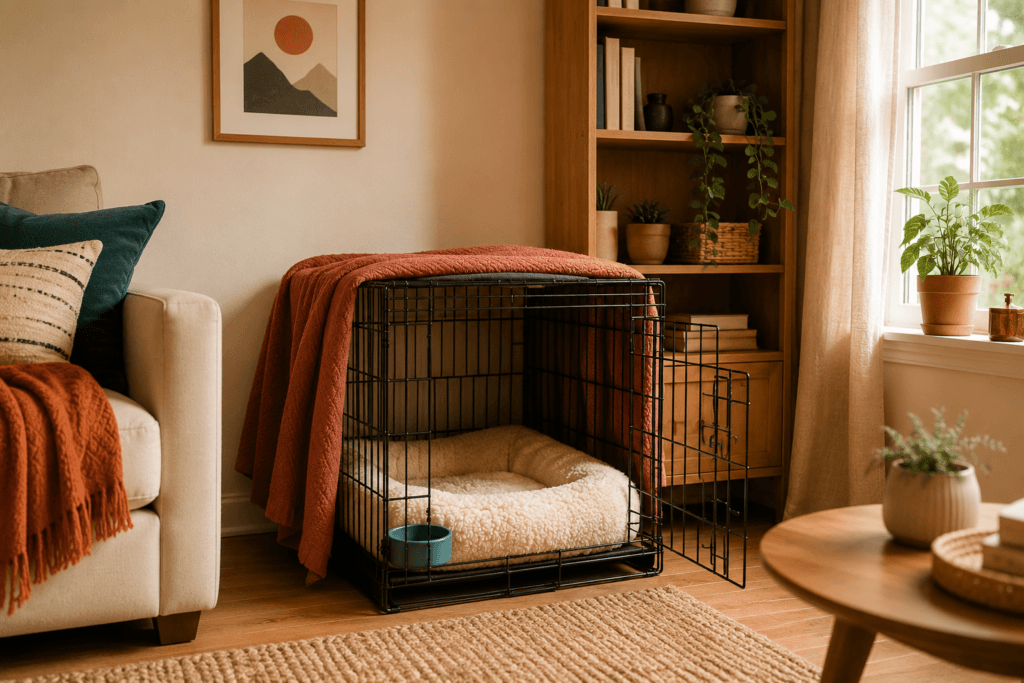
| PREMIUM PICK Modern Furniture-Style Crate (Diggs Revol-style) $250–300 | ½ 4.5/5 Pros:Doubles as furniture, expandable panels grow with a puppy, easier on the eyes in a living space, often includes better ventilation design than basic wire Cons:Significant price jump over a standard wire crate Best for:Owners wanting the crate to blend into home decor long-term, growing puppies |
| TRAVEL PICK Airline-Approved Hard-Sided Kennel (Petmate Sky Kennel-style) $60–90 | 4/5 Pros:Airline and car-travel approved, more den-like enclosed feel, secure for transport Cons:Bulkier to store at home than a foldable wire crate Best for:Frequent travelers, dogs who find enclosed spaces calming |
| SOFT-SIDED PICK Lightweight Soft-Sided Crate $35–55 | 3.5/5 Pros:Very lightweight, easy to transport, good for calm, already-trained dogs at events or travel Cons:Not suitable for dogs who chew or scratch, can be damaged or escaped from Best for:Well-trained, calm dogs needing a portable option for trips or events |
| Crate | Price | Best For | Rating |
| Mid-Size Wire (Best Overall) | $45–65 | Most first-time owners | 4/5 |
| Basic Wire (Budget) | $25–35 | Tight budgets, trial use | 4/5 |
| Furniture-Style (Premium) | $250–300 | Long-term home decor fit | 4.5/5 |
| Hard-Sided Kennel (Travel) | $60–90 | Frequent travelers | 4/5 |
| Soft-Sided (Portable) | $35–55 | Calm, already-trained dogs | 3.5/5 |
| What to Avoid in a Crate A crate too large for the dog’s current size, this undermines potty training benefits. Thin, flimsy latches on budget models, check reviews for durability before buying. Fully solid-sided crates with poor ventilation, airflow matters, especially in warm rooms. Soft-sided crates for dogs who haven’t been fully crate trained yet, save these for later, once the crate is already a trusted space. |


Section 4: Where to Put the Crate (and Why Placement Matters More Than People Think)
Many crate training struggles trace back to placement, not method. A crate stuck in an isolated laundry room or garage tells a new dog they’re being banished, which works against the safety association you’re trying to build. For the first few weeks, placing the crate in a family area, a corner of the living room, for example, lets your dog settle inside it while still feeling included.
Once the crate is a trusted, positive space, you can gradually move it to a quieter spot for nighttime sleeping if you prefer. Avoid placing it in direct sunlight, right next to a heating vent, or in a high-traffic walkway where people are constantly stepping around it. Both discomfort and constant disruption make it harder for a dog to relax inside.
Section 5: The 7-Day Positive Reinforcement Crate Training Plan
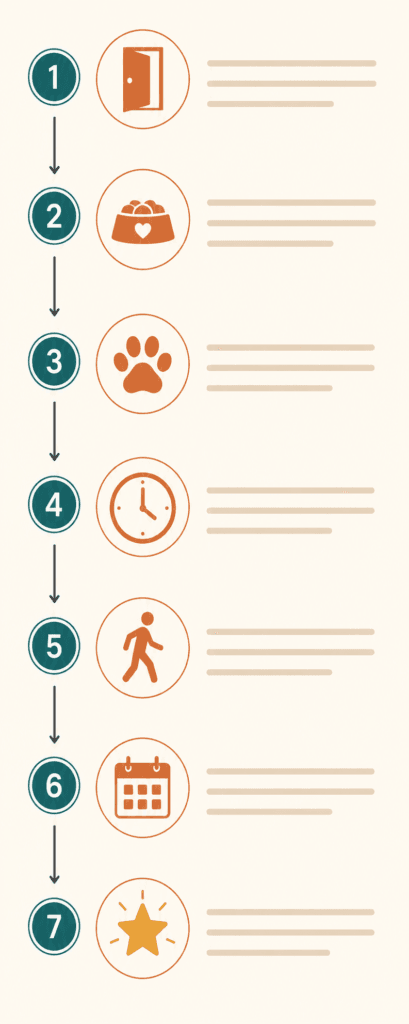
- Days 1–2: Leave the door open. Toss treats inside throughout the day so your dog wanders in and out freely, with zero pressure. Don’t call your dog to the crate yet, let them discover it themselves.
- Days 3–4: Start feeding meals inside the crate with the door open, gradually closing it for a few seconds while your dog eats, then opening it again before they finish.
- Day 5: Close the door for short periods (1–2 minutes) while you’re in the room, rewarding calm behavior the moment you open it. If your dog whines, wait for a pause before opening, even a one-second pause counts.
- Day 6: Extend crate time to 10–15 minutes, still with you nearby, using a stuffed chew toy to keep your dog settled and occupied.
- Day 7: Practice leaving the room briefly while your dog is calmly crated, returning before any whining starts, never after.
This timeline is a guide, not a rule. Some dogs move faster; anxious dogs or rescues may need double the time at each stage. The rule that never changes: only progress to the next stage once your dog is relaxed at the current one. If you notice regression at any point, more whining than the day before, refusal to enter, that’s a signal to repeat the previous day rather than push forward.
Section 6: Common Crate Training Mistakes to Avoid
Most crate training failures come down to a small handful of repeated mistakes, all of which are easy to fix once you know to look for them.
| Mistakes That Undo Your Progress Using the crate as punishment, this destroys every positive association you’ve built, sometimes in a single incident. Letting your dog out while whining, this accidentally rewards the exact behavior you’re trying to reduce, even if you don’t mean to reinforce it. Moving too fast, closing the door for long stretches before your dog is truly comfortable is the single most common setback. Skipping the open-door phase entirely, this is the step most guides rush, and it’s the one that matters most. Inconsistent household rules, if one family member forces the dog in while another follows the positive method, progress stalls or reverses. Crating for excessively long stretches, even a well-loved crate isn’t a substitute for exercise, bathroom breaks, and attention. |
Section 7: What to Do If Your Dog Cries in the Crate
Crying usually means one of a few things: you moved too fast through the stages, your dog genuinely needs a bathroom break, or, less commonly, there’s a deeper separation anxiety component that needs more specialized support. Rule out the bathroom need first, since it’s the simplest explanation and the easiest to miss when you’re focused on training technique.
If it’s pace-related, go back one full stage and slow down. This isn’t a setback, it’s information about where your dog actually is in the process, not where the calendar says they should be. If crying happens specifically when you leave the room or the house, rather than simply being crated while you’re home, this may point toward separation-related distress rather than simple crate discomfort, and may benefit from a slower desensitization protocol around departures specifically, alongside the crate work itself.


Section 8: Crate Training in Apartments and Small Spaces
Apartment living adds a few extra variables: thinner walls mean whining is more noticeable to neighbors, there’s often less space to place the crate away from high-traffic areas, and dogs may have had less opportunity to burn off energy before a crating session, especially without a private yard.
- Exercise before crating whenever possible, a short walk or play session makes settling into the crate significantly easier
- Consider a crate cover to reduce visual stimulation from hallway noise or neighbors passing by
- Practice crate time during the day first, in short bursts, before relying on it for extended alone-time stretches
- If noise complaints are a concern, prioritize the open-door phase even longer than usual, since a well-conditioned dog rarely vocalizes in the crate at all
Section 9: Crate Training Puppies vs. Adult Dogs
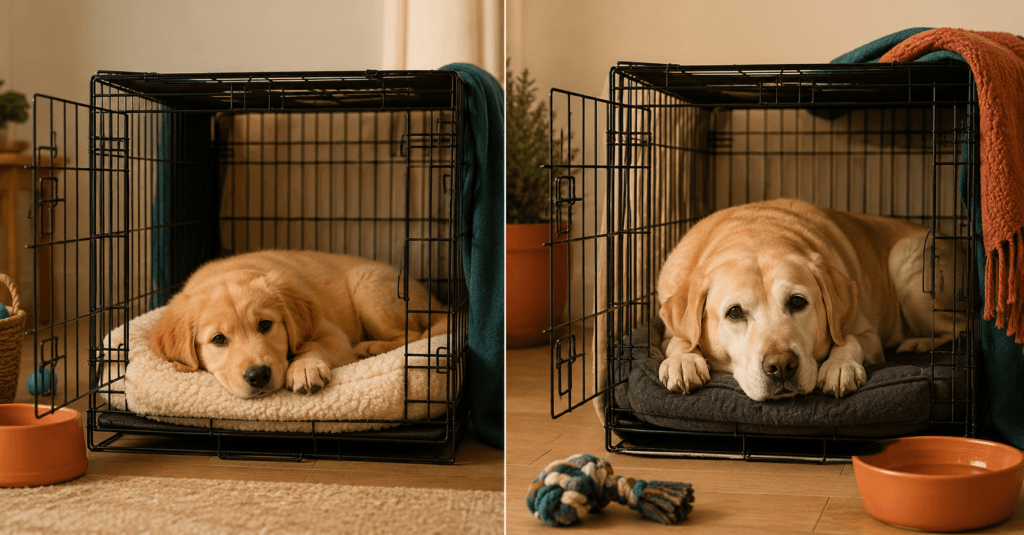
Puppies typically take to crate training faster simply because they haven’t built up any negative associations yet. Adult dogs and rescues may carry baggage, a previous crate used as punishment, or long stretches of confinement without breaks, which means the open-door phase should be stretched even longer for them.
Adult dogs also tend to have stronger established habits around where they prefer to rest, which can either help (if that spot is near where you place the crate) or complicate things (if they’ve already claimed a couch or bed as their spot). Patience here pays off. Most adult dogs, even ones with a rocky prior history with crates, can build a genuinely positive association with consistent, unhurried exposure.
Puppy vs. Adult Dog Training: What Changes and What Stays the Same
Section 10: Transitioning Out of the Crate Long-Term
Many owners eventually reach a point where the crate is no longer strictly necessary for management, the dog is reliably house-trained and doesn’t destroy things unsupervised. At that stage, the crate can transition from a management tool to a voluntary retreat: leave the door open permanently and let your dog choose whether to use it. Most dogs who’ve had a genuinely positive crate training experience continue visiting the crate on their own long after it’s no longer required, simply because it’s become a comfortable, familiar space.
FAQ: Honest Answers to Real Crate Training Questions
“How long can I actually crate my dog?”
As a general guide, puppies can handle roughly one hour per month of age between bathroom breaks (a 3-month-old puppy: about 3 hours max). Adult dogs can typically manage 4–6 hours, but a crate should never replace exercise, attention, or bathroom access.
“Should I cover the crate?”
Many dogs find a partially covered crate calming since it mimics the enclosed feel of a den, just make sure airflow isn’t blocked on more than 2–3 sides.
“Will my dog need the crate forever?”
Not necessarily. Many owners leave the crate door open permanently once a dog is reliably house-trained and doesn’t destroy things unsupervised. At that point, the crate becomes a voluntary retreat rather than a management tool.
“My dog won’t go near the crate at all. What now?”
Go back to square one: door open, treats tossed inside, zero pressure, several times a day for as long as it takes, even a week or two. Forcing it at this stage sets the whole process back further than starting slow ever would.
“Is it cruel to crate a dog at night?”
For a properly sized crate introduced positively, no. Many dogs sleep more soundly in a den-like space than loose in a room. The concern is duration and introduction method, not the concept of a crate itself.
“Can I crate train an older rescue dog who’s never seen a crate before?”
Yes, though expect the open-door phase to take longer, sometimes two to three weeks instead of two days, especially if the dog has any history of confinement used punitively.
“What if my dog is fine in the crate during the day but panics at night?”
This is common and often relates to the household going quiet and dark, which can feel more isolating than daytime crating with activity nearby. Try leaving a soft light on nearby and placing the crate closer to where you sleep initially, then gradually relocating it if desired.
“Do I need to use a crate at all if my dog is already house-trained?”
Not necessarily, crates are a tool, not a requirement. Many fully house-trained, non-destructive adult dogs do fine with an open crate, an exercise pen, or simply a dog-proofed room instead.
Your 2026 Crate Training Starter Kit
Here’s what you need and what to spend: a properly sized wire crate ($25–65 depending on size), a comfortable crate mat, a stuffed chew toy or lick mat for settling time, and patience for a 1–3 week process depending on your dog’s history. You don’t need the premium furniture-style crate to succeed. A basic wire crate done right works just as well, and the training method matters far more than the price tag on the crate itself.
| Download the Free 5-Step Positive Reinforcement Starter Kit Want a printable step-by-step tracker that covers crate training alongside your other early training priorities? Enter your email below and we’ll send the Starter Kit straight to your inbox. |
Resources & Series Links
Positive Reinforcement 101 Series
Where to Buy

Recommended Brands to Explore