
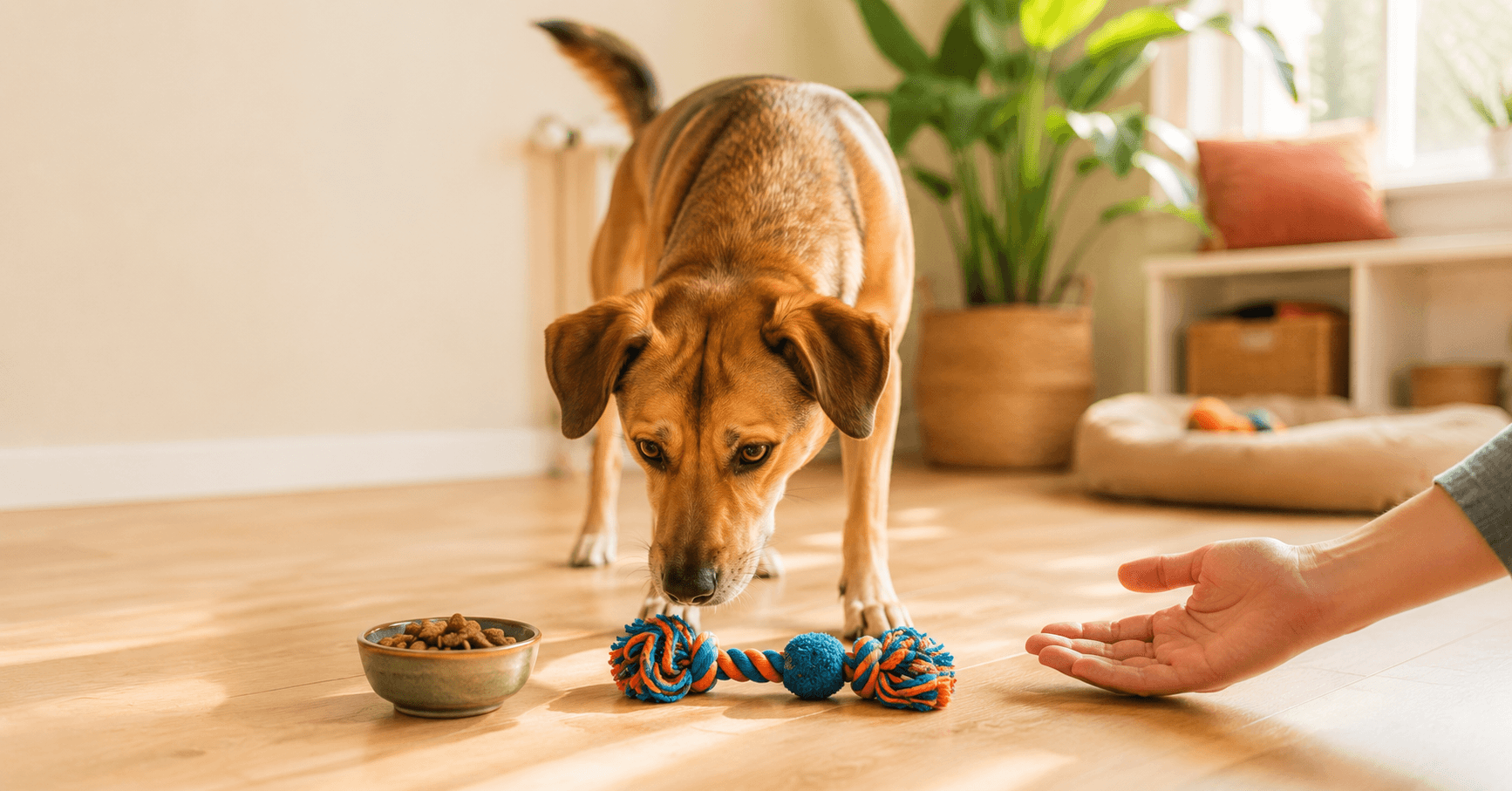
I Thought My Dog Was Stubborn. He Wasn’t. I Was Just Using the Wrong Currency.
I tried treats. He ignored them. I upgraded to better treats. He sniffed, took them politely, and immediately went back to chasing leaves. Every training video made it look effortless, and here I was, holding a pouch full of boiled chicken while my dog stared at a pigeon.
Here’s what nobody told me: every dog has a different currency. Some dogs would walk through fire for a piece of freeze-dried liver. Some go absolutely haywire for a tennis ball. And some just need you to tell them they did something right with a voice that sounds like you genuinely mean it. This article helps you figure out what YOUR dog finds most rewarding, and exactly how to use each reinforcer to get the training results you’ve been working toward.
What Is a Reinforcer? (And Why It Matters More Than Your Technique)
A reinforcer is anything that increases the likelihood a behavior will happen again. Sounds simple. But here’s the part most training guides skip: a reinforcer is only a reinforcer if YOUR dog finds it reinforcing. Boiled chicken is a reinforcer for most dogs. For your specific dog, it might be nothing compared to a squeaky ball.
This is why two owners can follow exactly the same positive reinforcement training steps and get completely different results. One has found her dog’s currency. The other is still looking.
Reinforcers exist on a hierarchy: high-value (what your dog would sell you out for), medium-value (what they like but won’t work hard for), and low-value (what they’ll accept if nothing better is available). The goal isn’t to find ONE reinforcer and use it forever, it’s to understand your dog’s hierarchy and use the right level for the right moment.
| The Reinforcer Hierarchy High-value: The dog would work hard, resist distractions, and try repeatedly to earn this (boiled chicken, favorite tug toy, enthusiastic play) Medium-value: The dog likes this but won’t work especially hard for it (commercial treats, belly rub, mild praise) Low-value: The dog will take this if nothing better is available (kibble, a pat on the head, a quiet “good”) The rule: Match the reinforcer value to the difficulty of what you’re asking. Easy behavior in quiet room = low-value. New behavior in a park = high-value. |
Section 1: Treats vs. Toys vs. Praise, 5 Differences Every Beginner Should Know
Before you decide which reinforcer to reach for, you need to understand how they actually differ in practice:
| Factor | Treats | Toys | Praise |
| Speed | Very fast (1–2 sec) | Slower (play takes time) | Instant |
| Satiety | Fills dog up over time | Zero calories | No satiety |
| Best for | Teaching new behaviors | Building drive, effort | Maintaining known behaviors |
| Portability | Easy (treat pouch) | Bulky | Always available |
| Risk | Overfeeding | Over-arousal | None |
| Engagement level | Medium | High | Low to medium |
| Learning speed | Fastest (new behaviors) | Good (duration/impulse) | Slower (less concrete) |
Difference #1: Speed of Delivery
Treats win on speed. Mark (“Yes!”) treat delivered in 1 second. The marker-to-reward gap is small enough that your dog connects them clearly. Toys require a mark throw chase retrieve sequence that takes 10-60 seconds. Praise is instantaneous but has less reinforcing power for most dogs.
| Beginner tip: Use treats for high-repetition training (20+ reps). Use toys as a jackpot after a genuinely exceptional rep. Praise works best for reinforcing known, already-solid behaviors. |
Difference #2: Calorie Impact
Fifty training treats can add up to 50-150 calories depending on the treat: a significant portion of a small dog’s daily needs. Toys and praise add zero calories, which makes them genuinely important tools for dogs who need to manage their weight without sacrificing training quality.
| Beginner tip: If your dog is overweight or on a restricted diet, swap half your treat rewards for toy play or enthusiastic praise on behaviors they already know well. |
Difference #3: Engagement Level
Toys produce the highest engagement, especially for working and herding breeds who have been bred over generations to chase, retrieve, or tug. A dog who takes treats passively and wanders off will often become laser-focused the moment a tug toy appears. That focus and drive is the engagement level treats often can’t match.
| Beginner tip: If your dog loses interest mid-session and treats aren’t helping, introduce a tug toy for 30 seconds between repetitions. Most dogs come back to training with significantly higher drive. |
Difference #4: Learning Speed
Treats produce the fastest learning for brand-new behaviors because they can be delivered precisely, repeatedly, and quickly. Toys are excellent for building duration and impulse control, your dog learns to hold a position or perform a difficult behavior because the toy release is coming as a result. Praise alone is the slowest way to build a new behavior but the best way to maintain one that’s already solid.
Difference #5: Practicality in Real Life
Treats travel in your pouch and stay quiet in a group class. Toys are bulky, create excitement that can disturb other dogs in classes, and require space to use properly. Praise is always in your throat, completely silent, free, and available on a crowded street corner at 7am in the rain.
| Beginner tip: Build a “training kit” that covers all three: treats in your pouch, a small flat tug toy clipped to your bag, and an enthusiastic praise voice ready at all times. Rotate based on the situation. |
Section 2: 5 Best High-Value Treats for Distracted Puppies (2026 Updated)
A distracted puppy isn’t ignoring you because they don’t respect you. They’re ignoring you because whatever you’re offering isn’t more interesting than the environment. The fix is simple: upgrade your treat value. Here’s what “high-value” actually means and which five treats deliver it.
The 4 Qualities of a High-Value Treat:
- Smelly, scent is how dogs experience the world; a strong-smelling treat competes with environmental distractions at a neurological level
- Soft, eaten in under 2 seconds, keeps training rhythm intact
- Small, pea-sized or smaller; you’ll be giving dozens of them
- Rare, something they don’t get every day; novelty maintains motivation
| Pick #1: Boiled Chicken Breast ~$3 for a week’s supply Why it works: Smelly, soft, irresistible, very low fat. The absolute gold standard for distracted puppy training, dogs who ignore every commercial treat will work hard for chicken. How to use: Boil plain chicken breast (no seasoning), shred into pea-sized pieces, refrigerate in sealed container. Lasts 5 days. Best for: Any distracted puppy. This is your default first choice before anything else. |
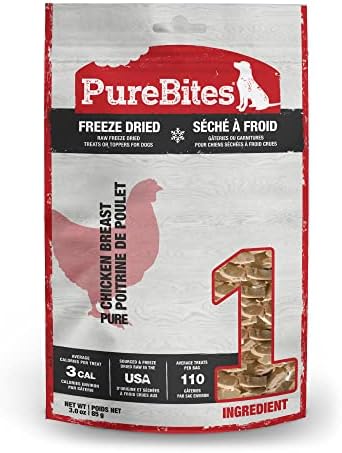
| Pick #2: Freeze-Dried Liver (Single Ingredient) $8–12 for small bag Why it works: Intensely smelly, crumbles into tiny pieces easily, extremely high motivation level. Dogs respond to freeze-dried liver with a level of excitement that most commercial treats simply don’t produce. How to use: Break into tiny pieces before your session (they crumble easily). Store in airtight container. Can go in your treat pouch without refrigeration. Best for: Dogs with chicken allergies (use beef liver or salmon). Distraction training in challenging environments. Note: Brands: PureBites, Vital Essentials, Stewart Pro-Treat |
| Pick #3: Low-Fat String Cheese $3–4 for a pack of 12 Why it works: Soft, tears into tiny pieces easily, dogs love the dairy fat content, holds up well in a treat pouch for long sessions without getting slimy. How to use: Tear each stick into quarters, then cut each quarter into 4 pieces. Refrigerate before session, carry in a small zip bag. Best for: Training sessions longer than 10 minutes where you need consistency without crumbling. |
| Pick #4: Commercial Soft Training Treats (High-End) $6–10 per bag Why it works: Convenient, portion-controlled, shelf-stable, and dogs generally enjoy them. Best option for beginners who want training treats without food prep. How to use: Use straight from the bag. Break larger treats in half for pea-sized pieces. Store in pouch. Best for: Beginners who don’t want to prep food. Home training in low-to-moderate distraction environments. Note: Brands: Zuke’s Mini Naturals, Vital Essentials Minnows, PureBites Mini Trainers |
| Pick #5: Hot Dog Slices (Use Sparingly) $2–3 per pack Why it works: Extremely high value, very smelly, most dogs respond with maximum effort. The emergency reinforcer, deploy it for your hardest behaviors. How to use: Slice into 1/8-inch pieces. Microwave for 45 seconds on paper towel to dry slightly and reduce mess. Use only for ultra-hard behaviors. Best for: Recall training, reactivity desensitization work, any behavior where your dog needs maximum motivation. Note: High sodium and fat. Limit to 5-10 pieces per session. Not for daily use. |
The 5-Pick Summary:
| Treat | Price | Calorie Level | Best For |
| Boiled Chicken Breast | ~$3/week | Very low | Any distracted puppy: the gold standard |
| Freeze-Dried Liver | $8–12/bag | Low–medium | Chicken-allergic dogs, intense distraction work |
| String Cheese (Low-Fat) | $3–4/pack | Medium | Sessions over 10 minutes, holds up well |
| Commercial Soft Treats | $6–10/bag | Medium | Beginners who don’t want to prep food |
| Hot Dog Slices | $2–3/pack | High, use sparingly | Recall, reactivity work, ultra-hard behaviors |
| The Distracted Puppy Protocol Step 1: Start with boiled chicken or freeze-dried liver as your treat. Step 2: Train before meals (hungry dog = motivated dog). Step 3: Begin in a quiet, low-distraction room. Build to outdoor environments only after indoor reliability. Step 4: In new/distracting environments, always step up treat value by one level from what worked indoors. |
Section 3: 3 Low-Calorie Training Treats That Won’t Cause Weight Gain
Training treats add up. A small dog (under 15 lbs) with daily calorie needs of 200-300 calories can easily consume 50-80 treat calories in a single session, 25-40% of their daily intake. The solution isn’t to stop training. It’s to train smarter with lower-calorie options.
Pick #1: Frozen Green Beans (Plain, No Salt)
- Calories: 10-15 calories for a generous 1/4 cup training supply
- Why it works: Crunchy texture is novel and engaging, dogs enjoy the cold, easy to cut into small pieces
- Best for: Dogs who need to lose weight, dogs who enjoy crunchy textures, long sessions where calorie accumulation is a concern
- Prep: Buy frozen, thaw for 20 minutes before session, cut into fingernail-sized pieces
Pick #2: Plain Unsalted Rice Cakes (Broken into Tiny Pieces)
- Calories: 5-10 calories per small piece
- Why it works: Low calorie, light and easy to carry, novel texture holds attention briefly
- Best for: Dogs who are treat-motivated but need calorie restriction, home training sessions
- Caution: Crumbles significantly, best in a treat pouch with a liner. Avoid flavored varieties (salt, butter, herbs)
Pick #3: Reserved Kibble from Daily Meal (Zero Extra Calories)
- Calories: 1-2 calories per piece, and because you’re subtracting it from their daily meal, the net addition is zero
- Why it works: No extra calories, dogs who are food-motivated will work for kibble in low-distraction environments
- Best for: Highly food-motivated dogs, easy behaviors in quiet home environments
- Limitation: Not high-value enough for distracted dogs or challenging environments. Use chicken for hard stuff.

The Calorie Math for Small Dogs (Under 15 lbs):
- Daily calorie needs: 200-300 calories
- Training treat budget (10% of daily intake): 20-30 calories
- That’s roughly 10-15 pea-sized commercial treats, OR a 1/4 cup of green beans, OR 20-30 pieces of kibble removed from their meal
| Pro strategy: Use kibble for easy behaviors your dog already knows well (sit, down, name). Save boiled chicken for hard behaviors, new environments, or recall. This keeps calories low and maintains the value hierarchy that makes high-value treats work. |

Section 4: Treats vs. Praise vs. Play, 3 Winners for 3 Dog Personalities
Before you can use reinforcers effectively, you need to know which category your dog falls into. Most dogs lean toward one primary reinforcer, and training becomes dramatically easier once you identify it.
| The Foodie Most common personality type Signs: Eagerly takes treats, works for kibble, licks the floor for crumbs, makes direct eye contact when you have food Best reinforcer: Treats (especially high-value). Work up the value hierarchy as needed. Strategy: Use treats for new behaviors. Build value for praise by pairing it with treats (treat first, then praise) over hundreds of repetitions. Gradually phase treats to intermittent reinforcement. |
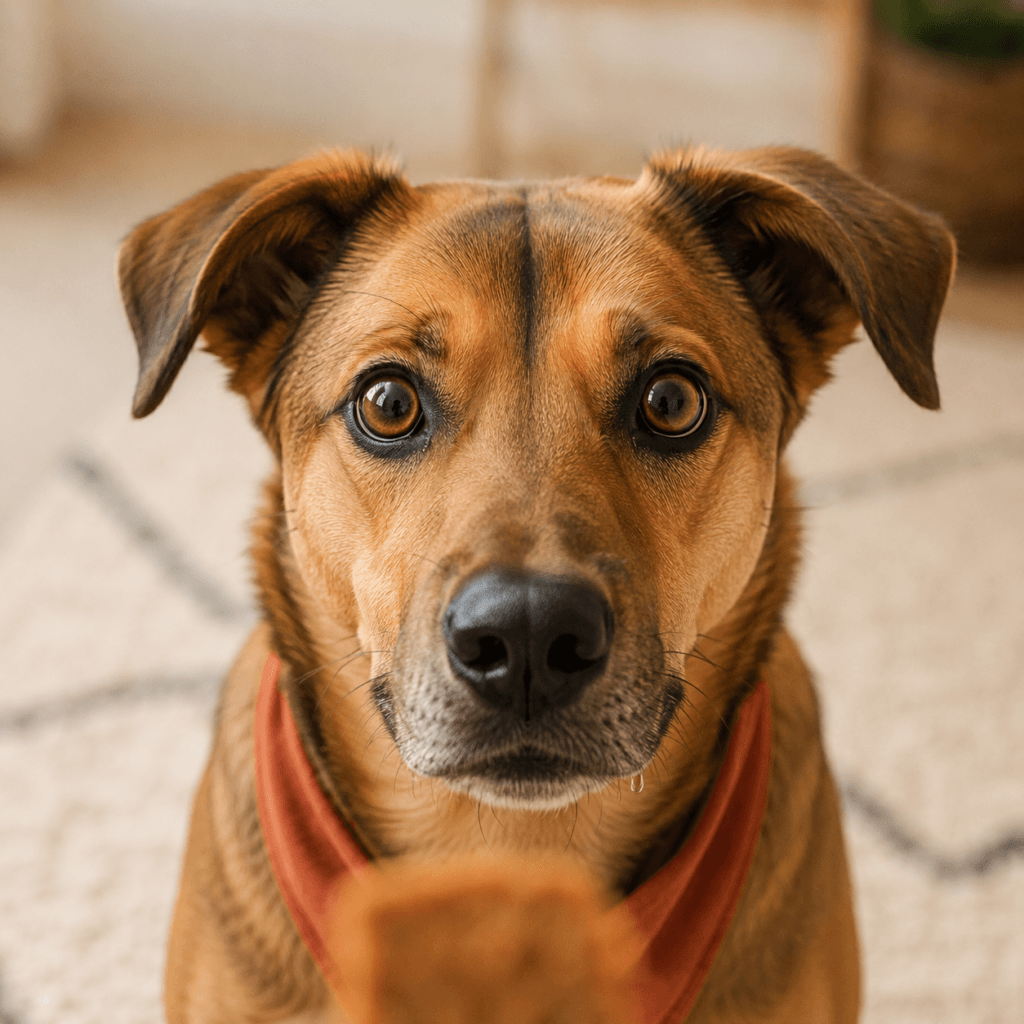
| The Toy Maniac Less common but extremely easy to train Signs: Spits out treats to chase a ball, ignores food entirely to tug, eyes light up at the sight of a specific toy, goes quiet and focused when toy appears Best reinforcer: Toys (tug, fetch, squeaky). Toys are this dog’s highest-value reinforcer by a significant margin. Strategy: Teach new behaviors with treats (for speed). Once behavior is reliable, mark the behavior and throw the toy. Within a few sessions, the toy becomes the standard reward and motivation skyrockets. |
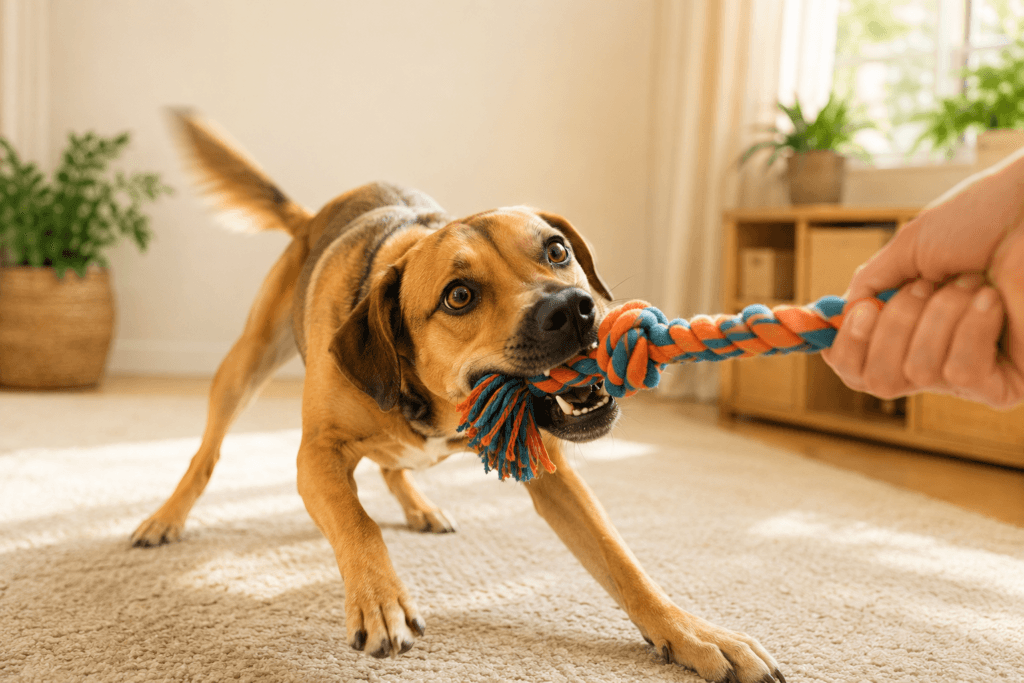
| The People-Pleaser Rare but wonderful to train Signs: Lives for your attention, stares at you for direction, belly crawls for pets, follows you room to room, visibly distressed by your disappointment Best reinforcer: Enthusiastic praise and physical affection. For this dog, your emotional response is the reward. Strategy: Use genuine, enthusiastic praise (“YES! Good boy!” with real energy) as your primary reinforcer. Back it up with treats for hard behaviors or high-distraction environments. Over time, praise alone maintains all known behaviors. |
What About Combination Dogs? (Most Dogs Are This)
The majority of dogs lean toward one category but respond to all three. The practical approach: start with treats (they work for everyone to some degree), add toys as a jackpot reward after exceptional reps, and build the value of praise by consistently pairing it with treats over many repetitions.
Over time, praise gains reinforcing value through association, your dog learns that hearing “Yes! Good boy!” in that specific tone is a reliable predictor of good things. Eventually, for familiar behaviors in familiar environments, praise alone maintains the behavior.
| The “Find Your Dog’s Currency” Test (5 Minutes) Step 1: Put three options on the floor in front of your dog: a pile of treats, their favorite toy, and your outstretched hand (for petting). Step 2: Release your dog without any cue. Watch which one they go to first. Step 3: Repeat this on 3 different days at 3 different times. Step 4: The option they choose most consistently across all 3 tests is their primary reinforcer, their currency. This is the reinforcer you build your training around. Use it as your jackpot reward for the most important behaviors. |
Section 5: The Best Training Toys for High-Energy Dogs, 2 Top Picks
High-energy dogs, Australian Shepherds, Border Collies, Belgian Malinois, working terriers, are often described as “difficult to train with treats” because treats don’t channel their energy. Toy reinforcers do. Here are the two toy types that work best in training contexts.

Pick #1: Tug Toy (Rope or Rubber)
- Why it works: Dogs naturally pull against resistance. Tug builds engagement specifically WITH you, you control the toy, so you control the fun. A dog who tugs with you is a dog who is focused on you.
- What to look for: Soft enough not to hurt teeth during extended play, long enough to keep your hands at safe distance from teeth (12+ inches of playing length), handles on both ends for easy grip
- Top picks: Kong Tug Toy, West Paw Bumi Tug, braided fleece rope
- Price range: $8–15
- Training protocol: Teach “take it” and “drop it” as separate behaviors first. Tug then becomes the reward for “drop it,” and every other trained behavior becomes the prerequisite for tug.
- Best for: Medium to large dogs, herding breeds, terriers, any dog who pulls on leash
Pick #2: Fetch Toy (Ball on a Rope or Soft Ball)
- Why it works: Chase and retrieve is self-reinforcing for many dogs, built into their predatory sequence. A behavior that earns a throw becomes a behavior the dog offers eagerly and repeatedly.
- What to look for: Easy to throw with one hand, easy to pick up cleanly (no crouching to fish it off the ground), bounces unpredictably to maintain excitement
- Top picks: Chuckit! Sport Ball, Kong Ball on Rope, West Paw Zisc
- Price range: $5–12
- Training protocol: Mark behavior immediately throw toy dog chases and retrieves ask for the behavior again to earn the next throw. Within sessions, most dogs develop an eager, anticipatory response to training because they know what’s coming.
- Best for: Retrievers, herding dogs, any dog who loves chase, long-distance recall training
Toy Training Protocol for High-Energy Dogs:
- Teach the behavior with treats first (lower arousal, faster repetitions).
- Once behavior is reliable with treats, introduce the toy: mark the behavior, then immediately throw the toy instead of delivering a treat.
- Dog chases, retrieves, and returns (or you retrieve together). Dog learns: this behavior = this game.
- Over time, the anticipation of toy play produces extraordinary focus and effort in high-energy dogs who weren’t especially treat-motivated.
What to Avoid in Training Toys:
- Plush toys with stuffing, destroyed in minutes, creates a mess and a training interruption
- Treat-dispensing puzzle toys, too slow for training; dog engages with the toy, not with you
- Squeaky toys in group class settings: the squeak creates arousal in nearby dogs

Section 6: Why I Switched from Treats to Toys, 4 Reasons (A First-Dog Confession)
| This is a first-person story framework based on a realistic first-time owner experience. Adapt the details to your own story or use it as written for relatability with your audience. |
Like almost every first-time dog owner, I started with treats. My dog was a high-drive Australian Shepherd, and the treats worked fine at home. He’d sit, look at me, wait at the door. I thought we were doing great. Then I took him outside.
He’d take the chicken, chew it in 1.5 seconds, and go right back to tracking a squirrel three properties away. Every outdoor session ended with me frustrated and him mildly enriched but not trained. Something wasn’t landing.
Reason #1: Treats Didn’t Channel His Energy
Training sessions left him mentally alert but physically amped. His body still had more energy than the treats gave him an outlet for. Toy play during training: a 30-second tug session as his reward, provided the physical release the treats never could. He came back to training after a tug break calmer, more focused, and more motivated than after a treat break.
Reason #2: Toys Built Engagement With Me Specifically
With treats, his focus was on the treat pouch. With a tug toy, his focus was on me, because I was the one controlling the toy. I was the fun. The moment I understood that, the whole dynamic of our training shifted. He wasn’t watching for a treat to fall from my hand. He was watching me for the cue that would release the game.
Reason #3: Toy Play Built Impulse Control
To earn the tug game, he had to wait for my release cue. He had to hold his sit while the toy was in my hand. He had to drop it on cue to start the game again. Every piece of tug training also happened to be teaching him duration, self-control, and cue discrimination, skills that transferred directly to his behavior in challenging real-world scenarios.
Reason #4: Training Became Fun for Both of Us
I’ll be honest, treat training had started to feel like work. Repetitive, predictable, and only exciting when he hit a new milestone. Toy training felt like play. He ran to his training spot when he saw the tug toy. I actually looked forward to sessions again. That enthusiasm is contagious in both directions.
| The Honest Caveat I didn’t abandon treats. I still use treats for teaching brand-new behaviors (faster, cleaner, better timing). I switched to toys for proofing, adding duration, distance, and distraction to behaviors he already knew. For the first month of any new behavior, always use treats. Introduce toys as a reward in Month 2 once the behavior is solid. |
Section 7: 3 Travel-Friendly Training Reinforcers (The Treat + Toy + Praise Combo)
You’re on vacation. Your dog is in a new environment, slightly stressed, mildly over-stimulated. This is exactly when maintaining your training routine matters most, and exactly when most owners drop it entirely because they didn’t bring their gear.
Here’s what to pack for training that fits in any bag:
Reinforcer #1: Travel Treats (Pre-Portioned, Travel-Ready)
- What: Small sealed bag of freeze-dried liver OR pre-boiled chicken in a ziplock container
- Why freeze-dried wins for travel: No refrigeration needed, doesn’t crumble badly in a bag, highly motivating in novel environments where your dog needs maximum incentive
- Packing tip: Pre-portion into daily snack bags so you can’t accidentally overfeed across a travel day
- Why this matters in travel: New environments = higher distraction = need for higher treat value. Don’t downgrade to kibble when you’re somewhere new.
Reinforcer #2: Travel Toy (Compact and Forgettable)
- What: Flat braided fleece tug toy OR a small rubber fetch ring
- Why it works: A flat fleece tug takes up almost no space, can clip to a carabiner on your bag, and gives high-energy dogs a physical outlet in hotel rooms, friend’s yards, or rest stops
- Packing tip: Don’t bring their absolute favorite toy, choose a dedicated “travel toy” you don’t mind leaving behind or losing
- Why this matters in travel: High-energy dogs in new environments need physical release, not just mental engagement. A 2-minute tug session calms arousal and refocuses attention.
Reinforcer #3: Travel Praise (Your Voice, Always Packed)
- What: Your enthusiastic “Yes! Good dog!” in a tone that genuinely means it
- Why it works: Always with you, zero weight, works in any environment, builds the value of your relationship as a reinforcer itself
- Packing tip: Genuinely practice your excited praise voice. It sounds silly, but the tone of your voice is the information your dog receives. A flat “good boy” has almost no reinforcing value. A bright, excited “YES! Good DOG!” is genuinely motivating.
- Why this matters in travel: Low-distraction moments (hotel room, friend’s quiet backyard) are perfect for reinforcing known behaviors with praise alone, which builds its value for when you need it most.
| The Travel Training Trio: The 3-2-1 Rule 3 types of reinforcers: treats + one compact toy + enthusiastic praise 2 minutes maximum per session (new environments increase stress, keep it short) 1 goal per day: just practice name recognition or ‘sit.’ Travel isn’t the time for new behaviors. This keeps your dog mentally engaged, your training consistent, and the whole exercise small enough that you’ll actually do it even on vacation. |
FAQ: Real Questions About Reinforcers
“My dog ignores treats but goes crazy for toys. Can I only use toys?”
Yes, absolutely. If toys are your dog’s primary reinforcer, use them as your primary reinforcer. The method is: teach the behavior with treats first (for precision and speed), then as soon as the behavior is reliable, mark it and throw the toy as the reward. Within a few sessions, toys become your standard currency and training usually improves dramatically.
“How do I phase out treats without losing my dog’s attention?”
Move to variable (intermittent) reinforcement. Instead of treating every sit, treat every second sit, then every third, then randomly. Variable reinforcement is actually more resistant to extinction than consistent reinforcement, it’s the same psychology behind slot machines. Simultaneously, start pairing praise with every treat so that praise gains reinforcing value on its own over time.
“My dog isn’t motivated by food OR toys. What do I do?”
First, check for underlying factors: Is your dog stressed or anxious in the training environment? Has food motivation dropped because they’re always full? Are they in pain? A dog who truly ignores all reinforcers in a training context is often a dog who is over-threshold (too stressed to engage). Simplify the environment dramatically, work at a distance from triggers, and try higher-value treats (boiled chicken for a food-indifferent dog is worth trying before giving up on treats).
“Can I use praise as my only reinforcer?”
For fully trained behaviors in familiar environments with a dog who has been specifically conditioned to find praise reinforcing, yes. For teaching new behaviors or working in challenging environments, no. Praise needs to be built up over time through consistent pairing with treats or toys. It’s not naturally reinforcing for most dogs; it becomes reinforcing through association.The Science Behind Positive Reinforcement
“How many different reinforcers should I use in one session?”
One primary, one jackpot. Use treats as your primary reinforcer throughout the session, and keep the toy as an occasional jackpot for an especially good rep. Mixing too many reinforcer types unpredictably creates confusion about what the dog is working toward. Consistency in reinforcer choice speeds up learning.
“My dog gets too excited when I bring out the toy. How do I calm him down?”
This is actually a good problem, it means the toy is highly reinforcing. The training fix is to teach a calm behavior as a prerequisite for the toy. Put the toy on the ground. When your dog is all four feet on the floor and looking at you calmly, pick up the toy and play. Over repetitions, your dog learns that calm behavior is what triggers toy access, not barking, jumping, or spinning.
“What reinforcer should I use for recall (coming when called)?”
Your absolute highest-value reinforcer, period. Recall is a life-safety skill and should be reinforced like it. Boiled chicken and hot dogs are the go-to for recall work. A tug game immediately upon arrival is an excellent jackpot. Never use recall for something your dog dislikes (nail trim, bath, coming inside). Recall should predict that something extraordinary always happens.
“My dog is old and doesn’t play with toys. What should I use?”
Treats, specifically soft high-value options that are easy on older teeth (shredded chicken, soft commercial treats, small cheese pieces). For older dogs who have strong relationship bonds with their owners, enthusiastic genuine praise can also be a meaningful reinforcer. The key is matching the treat texture and value to what your senior dog can comfortably process and still finds motivating.Puppy vs. Adult Dog Training
Your Dog Isn’t Broken, You Just Haven’t Found Their Currency Yet
Here’s the takeaway: treats are the fastest way to teach any new behavior for most dogs. High-value treats beat low-value treats every time in challenging environments. Low-calorie options keep training sustainable for dogs who need to watch their weight. Toys are the right primary reinforcer for toy-obsessed, high-energy, or treat-indifferent dogs. Praise works best for people-pleasers and for maintaining already-solid behaviors across all dogs.
Most dogs are a combination. Start with treats. Add toys as a jackpot in Month 2. Build value for praise throughout. Over time you’ll have a complete reinforcement toolkit that lets you train anywhere, in any environment, without running out of currency. Your dog is trying to figure out what earns rewards. Your job is to make that answer clear, and genuinely exciting.
| Download the Free “Find Your Dog’s Currency” Worksheet Want a printable 5-minute test designed to identify your specific dog’s primary reinforcer? Enter your email below, we’ll send the worksheet straight to your inbox along with a reinforcer hierarchy chart you can put on your fridge. Free. Printable. Takes 5 minutes. Changes everything. |
Once you’ve nailed down what motivates your dog, the natural next question is how to rely on it less over time. Our guide on how to wean your dog off treats walks through that fade-out process step by step.
Resources & Series Links
Positive Reinforcement 101 Series
- 5 Reasons Positive Reinforcement Works Better Than Punishment
- What Is Positive Reinforcement? 3 Simple Examples
- The Beginner’s Toolkit: Essential Gear
- First Commands & Daily Routines
- Best Training Gear Reviews 2026
Recommended Toy Brands (Affiliate Links)
Recommended Treat Brands (Affiliate Links)
5 Comments