
Reading time: 12–16 minutes | Series: Positive Reinforcement 101, Article 5 | Updated: 2026
Stop Buying Gear You Don’t Need. Start With What Actually Works.
Walk into any pet store planning to buy “training supplies” and you’ll leave $150 poorer, still unsure if you bought the right things. The wall of treat pouches alone has a dozen options, and the treat aisle rivals a grocery store. None of the labels tell you which ones are worth buying.
You don’t need to spend $200 to start positive reinforcement training. You do need a few core items that work, and knowing which ones saves you money, time, and frustration. This article reviews the best training gear for 2026, tested and ranked by a real owner, with budget options included throughout.
What Makes Gear ‘Positive Reinforcement Friendly’?
Your gear doesn’t train your dog. You do. A $50 treat pouch and a $2 treat pouch both hold treats. A $2 clicker and a $12 clicker both make a click sound. Equipment supports good training. It never replaces it.
Bad gear does make training harder, though. A treat pouch that takes four seconds to open costs you critical marking moments. Low-motivation treats produce a distracted, disengaged dog. An uncomfortable harness creates negative associations with walks. These problems compound over weeks of training.
I bought and tested every product in this review myself. Some were great. Some went straight in the bin. Here’s exactly which is which, and why.
| What’s Reviewed in This Article Section 1: 5 treat pouches ranked (budget to premium) Section 2: Budget vs. premium training treats, 3 price points Section 3: Best training treats for sensitive stomachs under $10 Section 4: 3 clickers compared for beginners Section 5: 30-day pouch test, 2 winners and 1 to avoid Section 6: The one treat I recommend for daily use Section 7: 4 harnesses ranked for positive reinforcement training |
Section 1: Treat Pouches, 5 That Make Training Easier
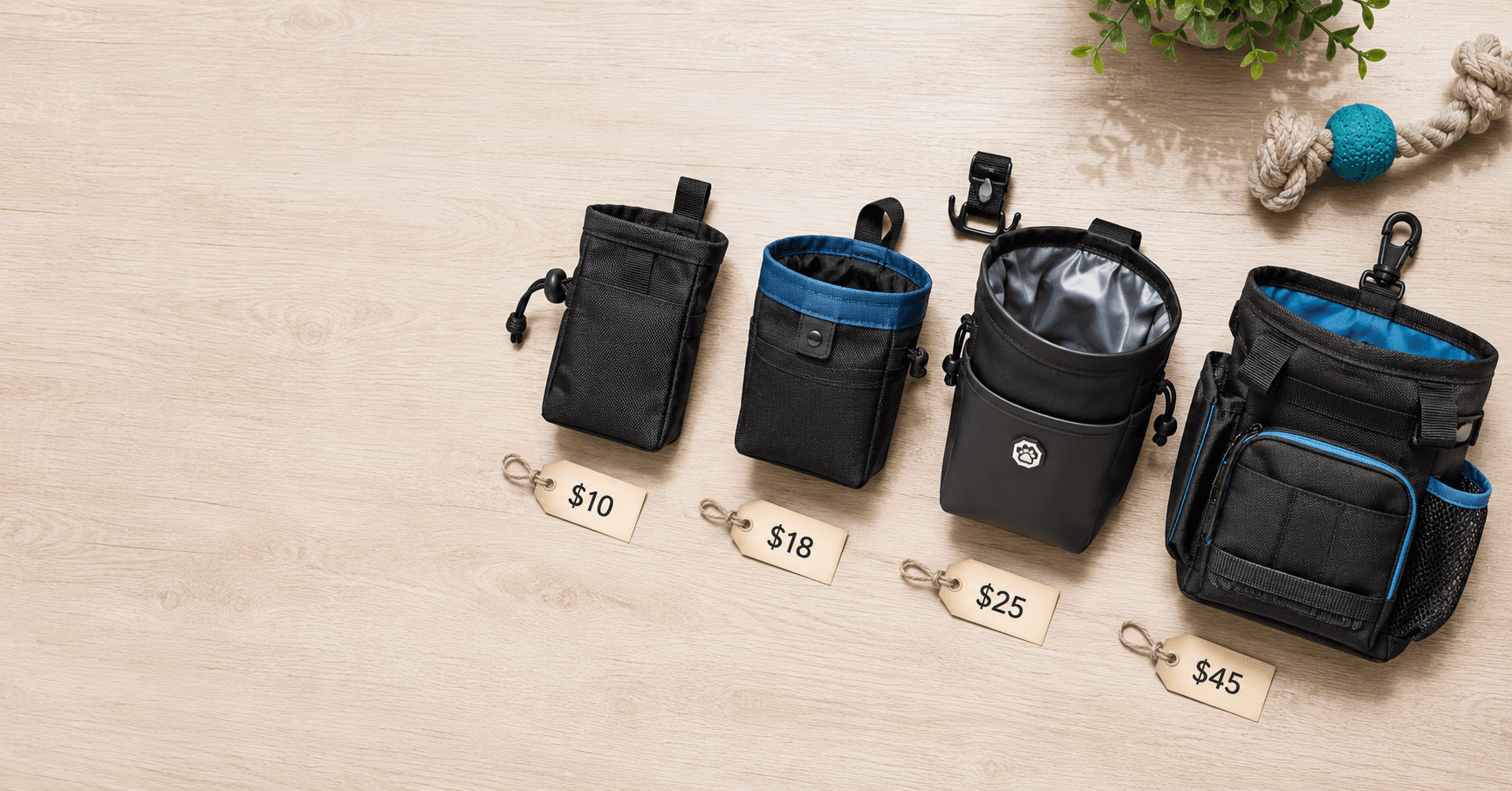
Your treat pouch is the most-used piece of equipment you own. You reach into it 50 to 100 times per session, so it needs to open fast, stay clean, and clip securely without bouncing. Here are the five best options across every budget.
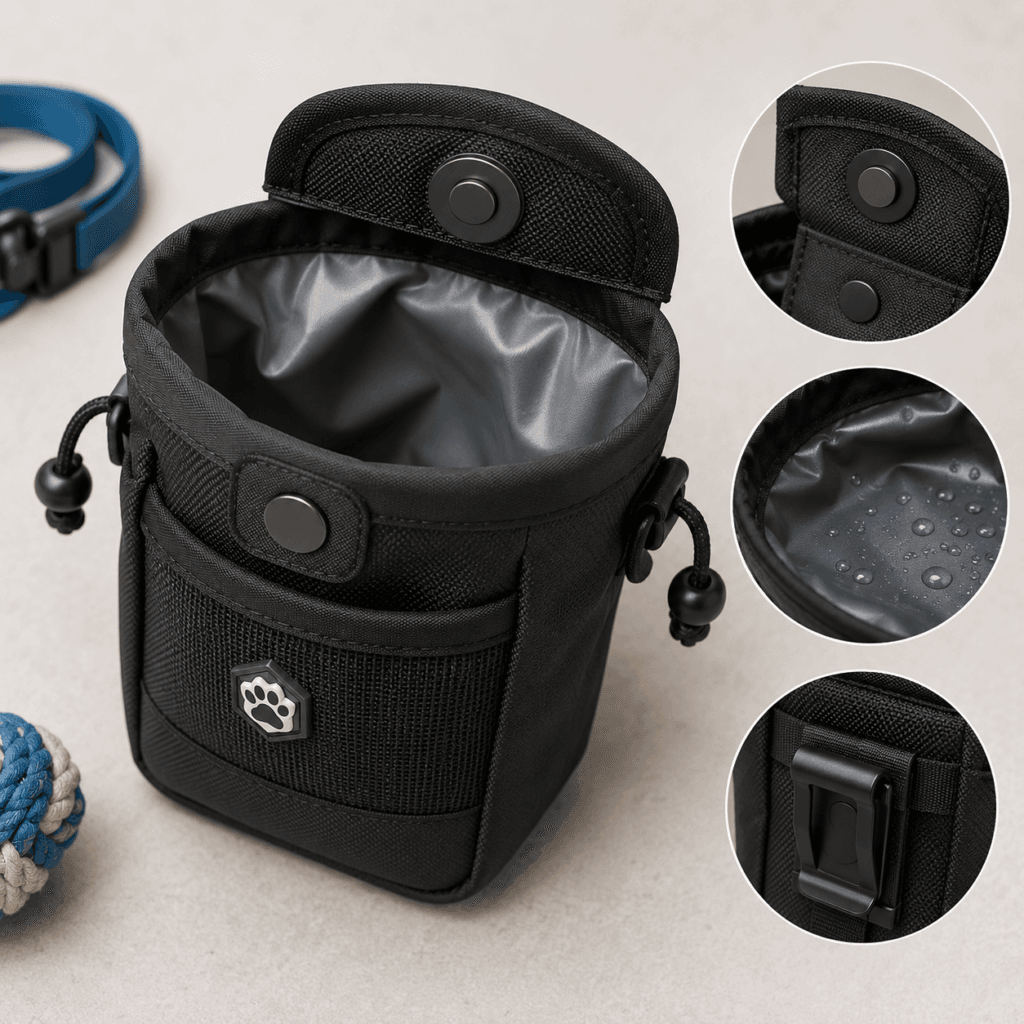
| BEST OVERALL Training Buddy Pro (Mid-Range Magnetic Pouch) $25–30 | 4/5 Pros: Waterproof liner, one-handed magnetic closure, multiple compartments, sturdy metal clip, machine washable Cons: Slightly bulkier than the budget option, noticeable on slim waistbands Best for: Daily trainers, dedicated beginners, anyone who trains outdoors |
| BUDGET PICK Basic Magnetic Closure Pouch $10–15 | 4/5 Pros: Magnetic one-handed opening, belt clip, lightweight, widely available in pet stores and online Cons: Basic nylon fabric absorbs moisture over time, may show wear at 6-12 months of daily use Best for: Beginners, occasional trainers, owners who want to try before committing |
| PREMIUM PICK Pro Handler Bait Bag $40–50 | ½ 4.5/5 Pros: Full waist belt (not just clip), professional-grade magnetic closure, reinforced lining, holds larger treat quantities Cons: Overkill for casual training, the waist belt adds bulk for everyday use Best for: Competition handlers, professional trainers, owners who train 30+ minutes daily |
| MINIMALIST PICK Simple Clip Treat Pouch $8–10 | ½ 3.5/5 Pros: Cheap, lightweight, does the essential job of holding treats and clipping to a waistband Cons: No-frills design may unclip during vigorous movement, no waterproofing, slower to access Best for: Tight budget, short indoor sessions only |
| BEST FOR LONG WALKS 2-in-1 Convertible Fanny Pack Pouch $15–20 | 4/5 Pros: Wearable as waist pack or crossbody, holds treats + phone + keys + poop bags, good for walks Cons: Slightly slower treat access than dedicated magnetic pouches, not ideal for rapid repetitions Best for: Owners who carry phone and keys during training walks, multi-purpose users |
Treat Pouch Summary:
| Product | Price | Best For | Rating |
| Budget Magnetic Pouch | $10–15 | Beginners | 4/5 |
| Training Buddy Pro (Best Overall) | $25–30 | Daily trainers | 5/5 |
| Pro Handler Bait Bag (Premium) | $40–50 | Competition/pro use | ½ 4.5/5 |
| Simple Clip Pouch (Minimalist) | $8–10 | Tight budget | ½ 3.5/5 |
| 2-in-1 Convertible Fanny Pack | $15–20 | Long walks | 4/5 |
| Our Recommendation Start with the Budget Magnetic Pouch ($10–15). If you’re still training daily after 6 months and the pouch shows wear, upgrade to the Best Overall. You don’t need a premium pouch to start getting excellent results. |
Section 2: Budget vs. Premium Training Treats, 3 Price Points Compared
The treat debate is real: does spending more actually produce better training? We tested budget commercial treats, premium freeze-dried options, and DIY boiled chicken across multiple training contexts. Here’s the honest comparison.
Price Point #1: Budget ($5–10 for 1–2 lbs)
What you get: commercial soft training treats like Zuke’s Mini Naturals, Pup-Peroni, or Cloud Star Tricky Trainers. These are convenient, easy to carry, and most dogs enjoy them.
- Pros: Affordable and widely available, suitable for everyday home training, long shelf life
- Cons: Multiple ingredients with occasional fillers, moderate motivation level, may contain artificial preservatives
- Best for: Everyday low-distraction training at home, easy behaviors in familiar environments
| Recommendation: Perfectly fine for beginners. Use these as your everyday treats and save your heavy artillery for harder moments. |
Price Point #2: Mid-Range ($10–20 for premium bags)
What you get: single-ingredient or minimal-ingredient freeze-dried treats, like PureBites, Vital Essentials, or Stewart freeze-dried liver. These smell stronger, have less filler, and most dogs respond to them with noticeably higher motivation.
- Pros: Highly motivating, minimal ingredients (great for sensitive stomachs), strong scent
- Cons: More expensive per treat, can be crumbly without a bag to catch pieces
- Best for: Distraction training, recall practice, proofing behaviors in challenging environments
Price Point #3: DIY (Under $5 for a Full Week’s Supply)
What you get: boiled chicken breast ($3-4 for a week’s training supply), string cheese, or hot dog slices. This is, without exception, the highest-value treat category for the vast majority of dogs.
- Pros: Unbeatable motivation, no mystery ingredients, cheapest per-treat cost, customizable for allergies
- Cons: Requires 15-20 minutes of prep, must be refrigerated, messier in the pouch
- Best for: Teaching brand-new behaviors, recall work, any high-distraction environment
| Price Tier | Examples | Motivation Level | Best For |
| Budget ($5–10) | Zuke’s Mini Naturals, Pup-Peroni | Medium | Home training, easy behaviors |
| Mid-range ($10–20) | PureBites, Vital Essentials | High | Distraction work, proofing |
| DIY (under $5/week) | Boiled chicken, cheese, hot dogs | Highest | New behaviors, recalls, hard environments |
| The Honest Truth About Treats Start with budget treats for home training. Use DIY chicken for anything hard: recall, distraction work, new behaviors in new places. Premium freeze-dried treats are genuinely useful but not necessary. Your dog’s motivation level matters more than the treat price. A motivated dog with $5 treats outperforms a bored dog with $20 treats every time. |
Section 3: Best Training Treats for Sensitive Stomachs Under $10
If your dog gets loose stool, gas, or skin reactions from commercial training treats, you’re not alone. Many mass-market treats contain multiple proteins, artificial colors, and preservatives that sensitive dogs react to. The good news: the most effective treats for sensitive dogs are also some of the cheapest.
What to Look For:
- Single ingredient (one protein, nothing else on the label)
- No artificial colors: no blue, red, or yellow dye numbers
- No corn, wheat, or soy (the three most common allergens in dog food)
- Short ingredient list: 5 ingredients or fewer is ideal
Pick #1: Single-Ingredient Freeze-Dried Liver ($8–10 for a small bag)
- Best brands: PureBites, Stewart Pro-Treat, Vital Essentials
- Ingredients: 100% beef liver (or chicken liver, salmon, or duck liver)
- Why it works: One ingredient means nothing to react to. Extremely motivating. Breaks into tiny pieces easily.
- Best for: Dogs with multi-protein sensitivities, choose one protein you know they tolerate
Pick #2: Single-Ingredient Dehydrated Sweet Potato ($5–8)
- Best brands: Any single-ingredient dehydrated sweet potato treat (widely available)
- Ingredients: 100% sweet potato
- Why it works: Completely grain-free, very gentle on the digestive system, naturally sweet
- Best for: Dogs with protein sensitivities who react to all meats
Pick #3: DIY Boiled Chicken Breast ($3–5 for a week)
- How to make: Boil one plain chicken breast (no seasoning), shred into pea-sized pieces, refrigerate in a sealed container
- Ingredients: 100% chicken, you know exactly what went in
- Why it works: Most dogs tolerate plain boiled chicken extremely well, even dogs with commercial treat sensitivities
- Best for: Any dog with GI sensitivities, dogs on elimination diets, budget-conscious owners
| TO AVOID What to Avoid for Sensitive Stomachs Treats with corn, wheat, or soy as ingredients. Treats with artificial dye numbers (Red 40, Blue 2, Yellow 5). Any treat with more than 10 ingredients. Pig ears or rawhide (difficult to digest and high fat). Hard biscuits with multiple mystery proteins. |
| Allergy Note If your dog has a confirmed chicken allergy, use beef liver, salmon, duck, or sweet potato as your training treat. Always confirm protein allergies with your vet before experimenting, especially if your dog has a history of skin reactions or GI upset. |
Section 4: 3 Clickers First-Time Owners Swear By
A clicker makes a precise, consistent sound that marks the exact moment your dog did something right. It’s not magic. It’s a communication tool. And you don’t need to spend more than $5 to get one that works perfectly.
Important Note Before You Buy:
A marker word (“Yes!”) works equally well for most owners and is always with you. Buy a clicker if you want extra precision in your training, but don’t let the absence of one delay your first session.
| BEST FOR MOST BEGINNERS Standard Box Clicker $2–5 | ½ 4.5/5 Pros: Loud, clear sound, easy button to press, widely available, compatible with wrist coil attachment Cons: Can startle sound-sensitive dogs, slightly bulky in hand alongside a leash and treats Best for: Most beginners, outdoor training where a loud click carries over distance |
| BEST FOR SENSITIVE DOGS Wrist or Keychain Clicker $5–8 | 4/5 Pros: Always on your wrist so you can’t forget it, softer quieter sound, hard to lose Cons: Quieter sound harder to hear in outdoor environments, smaller button requires more deliberate press Best for: Indoor training, sensitive or fearful dogs, owners who lose handheld objects |
| FOR ADVANCED TRAINERS ONLY Multi-Sound i-Click Clicker $8–12 | ½ 3.5/5 Pros: Two distinct sounds (useful for two dogs or two behaviors), quieter option available, premium button Cons: Overkill for beginners, requires practice to switch sounds reliably during sessions Best for: Training two dogs simultaneously, advanced shaping work, experienced trainers |
| Clicker Verdict Buy the standard box clicker ($2–5). It works as well as any option on this list for 95% of training scenarios. If your dog is sensitive to the sound, switch to a wrist clicker or simply use “Yes!” as your marker. Both work. Save your money. |
Section 5: I Tested 6 Treat Pouches for 30 Days, 2 Winners and 1 to Avoid
Testing Methodology:
Each pouch was used for 30 consecutive days of daily training sessions (15-20 minutes per session). I tracked one-handed access speed, belt clip security, interior smell after use, ease of cleaning, and overall durability across the full test period. Price range tested: $8 to $50.
Winner #1: Best Overall, Training Buddy Pro (Mid-Range Magnetic Pouch)
- Why it won: The waterproof liner survived weeks of wet chicken without absorbing odor. The magnetic closure opened reliably every single time with one thumb. The clip held through bending, crouching, and running without slipping.
- What it costs: $25–30
- Who should buy it: Anyone who trains daily or in variable weather conditions
- Verdict: Worth every cent of the price difference over the budget option. If you’re serious about daily training, start here.
Winner #2: Best Budget, Basic Magnetic Closure Pouch
- Why it won: Magnetic closure works reliably for the price. Lightweight enough that you barely notice it. Did the job across the full test period without a single failure.
- What it costs: $10–15
- Who should buy it: Beginners, occasional trainers, anyone who wants to test a pouch before committing to a premium option
- Verdict: Buy this first. Upgrade to the mid-range only if you’re training daily and outgrow it.
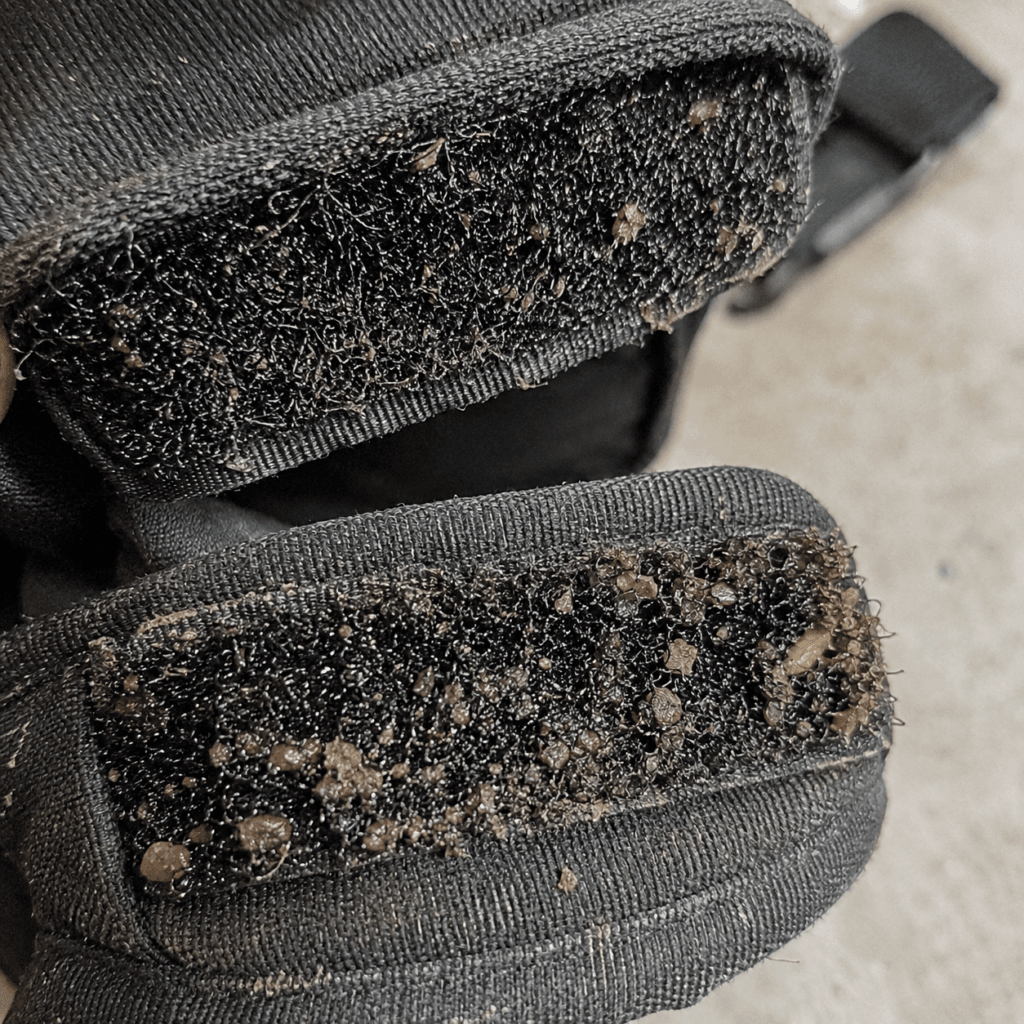
| TO AVOID 1 to Avoid: The Cheap Velcro Closure Pouch ($8–12) Not worth it at any price. The velcro closure clogged with treat residue by day 2, making one-handed access unreliable by day 3. The clip was plastic and creaked under tension from day 1. The fabric absorbed moisture from soft treats and developed a smell by day 4 that hand-washing didn’t fully remove. I bought this so you don’t have to. Spend $2-3 more and get the magnetic closure version instead. |
Section 6: The Only Training Treat I Recommend for Daily Use
The Recommendation: Boiled Chicken Breast
After testing commercial treat after commercial treat across multiple dogs and training scenarios, the single treat type I return to for daily use is boiled plain chicken breast. Here are the three reasons why.
Reason #1: It’s the Highest-Value Option for Almost Every Dog
Dogs who completely ignore commercial training treats will work their hearts out for boiled chicken. The protein smell is irresistible, the soft texture is easy to chew in under 2 seconds, and it never loses its motivational edge the way commercial treats can. Even finicky eaters respond.
Reason #2: It Costs Less Than Any Commercial Treat Per Training Session
- A chicken breast ($2–3) yields enough training treats for 5–7 full days of sessions when cut into pea-sized pieces
- Commercial training treats cost $8–18 per bag and often last less than 2 weeks of daily training
- Annual savings switching to chicken: $150–$250 for a daily trainer
Reason #3: You Control Every Ingredient
- No artificial preservatives, no mystery fillers, no undisclosed proteins
- Safe for virtually every dog: plain boiled chicken is one of the most digestible proteins available
- Adaptable for allergies: sub in boiled turkey, beef, or salmon for the same method
| Alternative: Freeze-Dried Liver If prep time is a barrier, single-ingredient freeze-dried liver is the closest commercial equivalent. It’s shelf-stable, extremely motivating, and has one ingredient. Expect to spend $8–10 per bag vs. $3–4 for a week of chicken, but you save the prep time. |
Section 7: 4 Harnesses That Pair Perfectly with Positive Reinforcement (No Pulling)
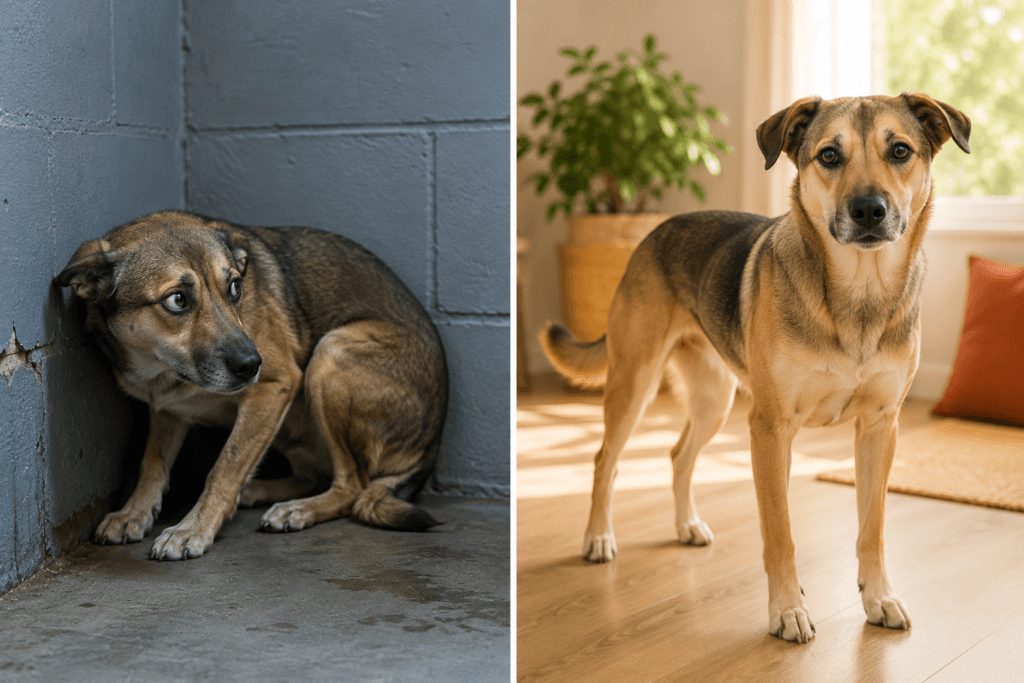
A harness is arguably the most impactful piece of equipment on this list for dogs who pull on leash. A back-clip harness gives your dog mechanical leverage to pull harder. A front-clip harness redirects their forward momentum toward you, making force-free loose-leash training significantly easier without any corrections.
What to Look For in a Training Harness:
- Front clip option: the most important feature for reducing pulling
- Padded chest and back panels: prevents chafing on long walks
- Easy to put on (if it takes 30 seconds to harness your dog, you’ll stop using it)
- Adjustable straps on at least 3 points for a secure custom fit
| BEST OVERALL Freedom No-Pull Harness (or equivalent dual-clip style) $30–40 | 5/5 Pros: Dual front and back clip, padded chest panel, martingale loop for extra security, durable hardware Cons: More expensive than budget option, sizing can take one return to get right Best for: Pullers, reactive dogs, daily walkers, anyone prioritizing loose-leash training |
| BUDGET FRONT-CLIP Basic Front-Clip Harness $15–20 | 4/5 Pros: Includes front AND back clip, lightweight, widely available, does the essential job affordably Cons: Less padding than premium options, may chafe on dogs with sensitive skin during long walks Best for: Beginners, small to medium dogs, owners starting loose-leash training |
| ADVENTURE PICK Lightweight Trail Harness (Ruffwear Front Range style) $25–35 | ½ 4.5/5 Pros: Extremely durable, padded, excellent for running and hiking, multiple attachment points on most models Cons: Some adventure harness models omit the front clip, check before purchasing if pulling is a concern Best for: Active dogs, trail runners, hiking companions, high-activity owners |
| BASIC OPTION (Not Recommended for Pullers) Basic Step-In Back-Clip Harness $10–15 | 3/5 Pros: Cheap, very easy to put on, fine for calm adult dogs who don’t pull Cons: No front clip means zero pulling reduction, actually makes pulling worse for some dogs by giving leverage Best for: Non-pullers only, well-trained adult dogs, short casual outings |
Harness Comparison at a Glance:
| Harness | Price | Front Clip | Best For | Rating |
| Budget Front-Clip | $15–20 | Yes | Beginners, small-medium dogs | 4/5 |
| Best No-Pull (Freedom style) | $30–40 | Yes | Pullers, daily walkers | 5/5 |
| Adventure/Lightweight | $25–35 | Varies | Active dogs, hiking | ½ 4.5/5 |
| Basic Back-Clip Only | $10–15 | No | Non-pullers only | 3/5 |
| What to Avoid in a Harness No front clip: you’ll get no pulling reduction and may make it worse. Straps that cross over the shoulder joint: this restricts natural movement and can cause long-term gait issues. Anything that takes more than 15 seconds to put on: if it’s complicated, you won’t use it consistently. |
FAQ: Honest Answers to Real Gear Questions
“Do I really need a treat pouch? Can’t I just use my pocket?”
You can start with a pocket. Most owners do. You’ll switch to a pouch within a week once you’ve fumbled for a treat and lost your marking moment three times in one session. A $10 pouch solves that permanently, and it’s the most cost-effective upgrade in this entire article.
“My dog is bored of his treats. What do I do?”
Upgrade the treat value immediately. If kibble was working, try commercial soft treats. If commercial treats were working, try boiled chicken or freeze-dried liver. The treat hierarchy runs: kibble, commercial soft treats, freeze-dried single ingredient, boiled meat. Most dogs who seem “bored” simply haven’t been offered something exciting enough for the difficulty of what you’re asking.
“How do I clean my treat pouch?”
After every few sessions, empty completely and rinse with warm water. For deeper cleaning, hand-wash with mild dish soap, rinse thoroughly, and air-dry completely before the next use. Never put a treat pouch in the dryer, it warps clips and degrades magnets. Pouches with waterproof liners (like the mid-range pick above) are significantly easier to clean and worth the price difference for this reason alone.
“Clicker vs. marker word, which is better for a fearful dog?”
Marker word, always, for fearful dogs. The click sound can startle anxious dogs and create a negative association with training. A calm, consistent “Yes!” in a warm tone is equally effective and far less likely to cause a stress response. If you later want to introduce a clicker, do it separately from training: click once, treat, repeat 10x, and watch your dog’s body language for any sign of stress before proceeding.
“My dog pulls even with a front-clip harness. What am I doing wrong?”
The harness alone doesn’t train anything, it just changes the physics. Pair the front-clip harness with the Engagement Walk method (reward every voluntary eye contact during the walk) and the stop-and-wait technique (stop dead when the leash tightens, resume only when it loosens). The harness and the training method together produce results. Either one alone produces limited change. Our complete loose-leash walking guide covers both techniques in full detail.
“Can I use regular human food as training treats?”
Yes, with limits. Safe human food treats: plain boiled chicken or turkey, small cubes of plain cheese, small pieces of cooked beef, plain cooked egg. Avoid grapes, raisins, onions, garlic, macadamia nuts, xylitol (found in some peanut butters), chocolate, or anything with heavy seasoning. When in doubt, plain and unseasoned is the rule.
“How many treats can I give my dog per day?”
Treats should not exceed 10% of your dog’s daily caloric intake. For a 25 lb dog eating approximately 500-600 calories per day, that’s 50-60 treat calories maximum, roughly 30-40 pea-sized pieces of boiled chicken. If you’re training heavily, subtract the treat calories from their regular meal to keep total intake balanced.
“My dog has a chicken allergy, what treats do you recommend?”
Single-ingredient freeze-dried beef liver, salmon, duck, rabbit, or venison. These are available at most pet stores and online retailers. Avoid anything with chicken by-products in the ingredient list, since they appear in many commercial treats under various names. Confirm the protein allergy with your vet first, then choose one novel protein your dog has never eaten before for the clearest allergy management.
Recommended Harnesses
Here are the 4 harnesses referenced above, all available on Amazon.


Your 2026 Training Gear Starter Kit
Here’s what you need and what you should spend: a magnetic closure treat pouch ($10–15 to start, upgrade to $25–30 if you train daily), high-value treats starting with boiled chicken or budget soft treats for home training, a standard box clicker ($2–5) or simply your voice, and a front-clip harness ($20–40) if your dog pulls on walks.
You don’t need all of this before your first session. Treats and a pouch are enough to start training today. Add gear as you develop habits and identify what’s holding you back. Every owner starts with too little or too much. This guide exists so you can start with exactly the right amount.
| Download the Free Training Gear Checklist Want a printable version of every gear recommendation in this article, organized by category, price, and priority? Enter your email below and we’ll send the Training Gear Checklist straight to your inbox. Print it, check off what you have, and shop for only what you actually need. |
Resources & Series Links
Positive Reinforcement 101 Series
- 5 Reasons Positive Reinforcement Works Better Than Punishment
- What Is Positive Reinforcement? 3 Simple Examples
- The Beginner’s Toolkit: Essential Gear
- First Commands & Daily Routines
Where to Buy
- Amazon: widest selection, best for comparing prices quickly
- Chewy: best for auto-ship on treats and regularly restocked items
- Local independent pet stores: often carry mid-range and premium harnesses you can fit in person
Recommended Brands to Explore
- Treats: Zuke’s, PureBites, Vital Essentials, Stewart Pro-Treat
- Pouches: PetSafe, Doggone Good!, Ruffwear (for trail use)
- Clickers: Karen Pryor (i-Click), PetSafe, any standard box clicker
- Harnesses: Freedom No-Pull, Ruffwear Front Range, EzyDog, PetSafe 3-in-1
9 Comments