
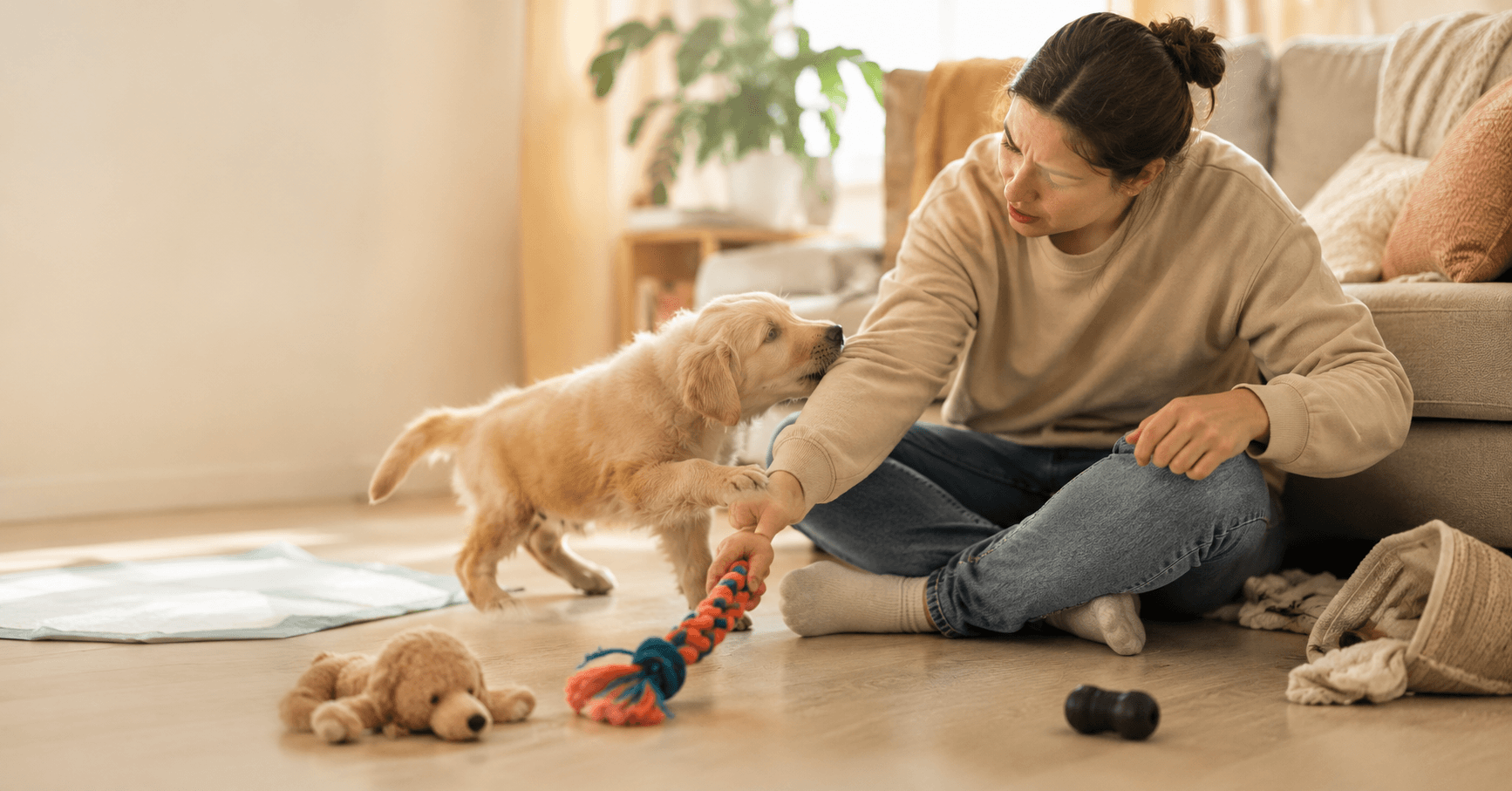
You Didn’t Sign Up for This.
You brought home your puppy dreaming of peaceful mornings, gentle walks, and quiet evenings on the couch with your dog curled up at your feet. Then the biting started. Then the leash pulling. Then the howling every time you left the room. Now you’re exhausted, slightly embarrassed, and googling “puppy aggressive biting” at midnight.
Here’s the truth: every single behavior problem on your list is normal. Your dog is not broken. You are not failing. You just haven’t had the right solutions yet. This article covers 7 of the most common behavior challenges first-time dog owners face, with positive, force-free solutions for every single one.
Why Positive Reinforcement Works for Behavior Problems
Punishment suppresses behavior temporarily. Positive reinforcement changes behavior permanently. That’s not sentiment, it’s what the research on applied animal behavior consistently shows. A dog who stops biting because they’ve been yelled at is a dog waiting for you to look away. A dog who stops biting because redirecting to a toy has been rewarded is a dog who has genuinely learned something different.
Three principles apply to every problem in this article:
| The 3 Principles of Positive Behavior Modification Principle 1: Manage the environment first. Prevent rehearsal of the unwanted behavior while you build the replacement. A dog who never practices the bad behavior can’t get better at it. Principle 2: Reinforce what you want. Don’t just stop the bad thing, actively reward the good alternative. Redirection only works when the redirection is rewarded. Principle 3: Be patient. Behavior change takes weeks, not days. Every time you implement a solution consistently, you’re making a deposit. The results are compounding, even when they don’t feel like it. |
| How to Use This Article Find your problem in the sections below. Read that section completely. Implement for 2 full weeks before deciding whether it’s working or trying something different. Most behavior change timelines are 1–4 weeks of consistent practice, not 2 days. |
| Section 1: Puppy Biting 3 Positive Strategies That Work |
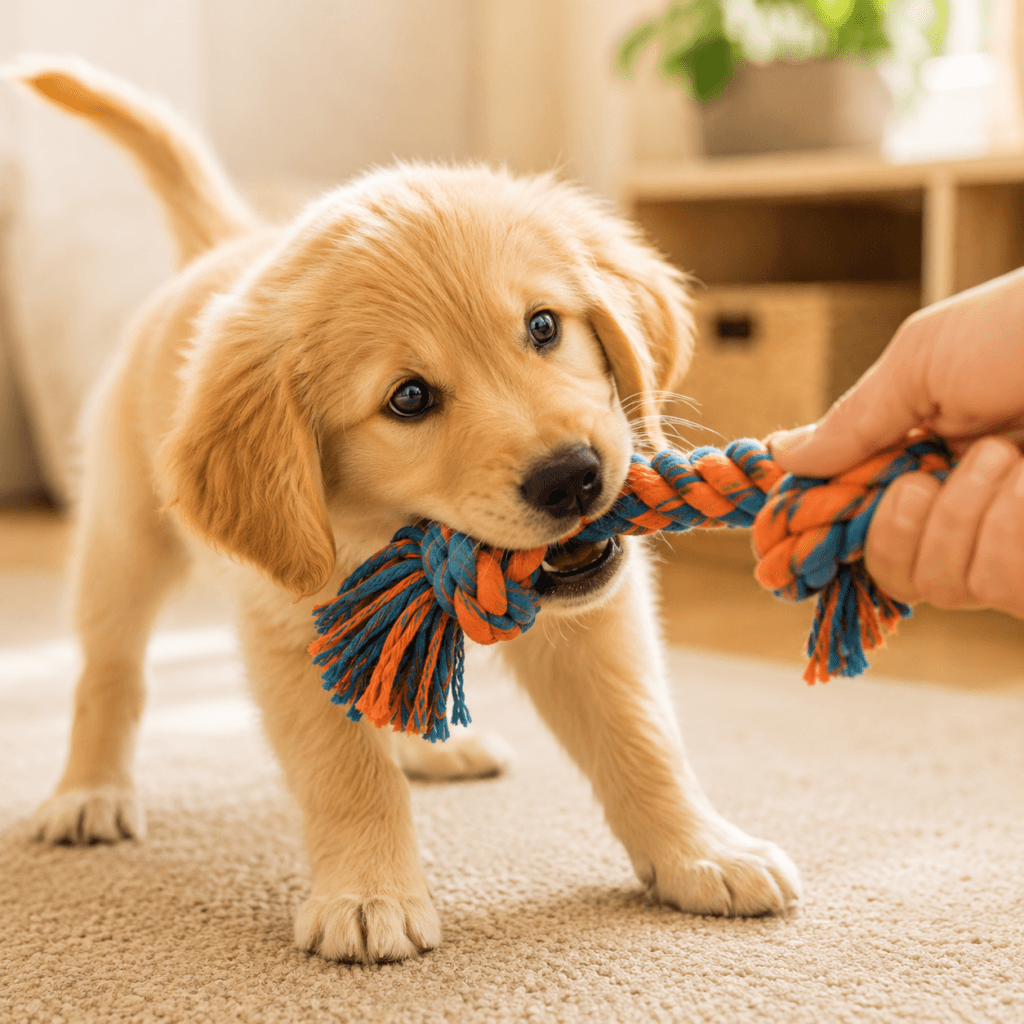
Puppy biting is the #1 complaint we hear from first-time owners, and the most important thing to know is: it is not aggression. Puppies explore the world with their mouths. Biting is how they play, how they communicate, and how they learn about pressure and force. Your job is not to stop the behavior through fear, it’s to redirect it to appropriate outlets consistently.
Before the strategies: punishment for puppy biting typically makes it worse. Yelling, tapping the nose, pushing the puppy away, or squeezing the muzzle increases arousal and triggers play escalation in most puppies. Your reaction is the gasoline, not the extinguisher.
| Strategy #1: Redirect to an Appropriate Toy How it works: When your puppy bites your hand, freeze immediately, don’t pull away (pulling triggers the chase instinct). Say “Oops!” in a calm, flat tone. Then calmly place a toy against your puppy’s mouth and let them take it. Why it works: Puppies bite because biting feels good. Your job is to redirect where the biting goes, not eliminate the biting urge. Over hundreds of repetitions, puppies learn: hands are not for biting, toys are for biting. ⏱ Duration: 1–2 weeks of consistent redirection Pro tip: Keep a toy in every room you spend time in. When the puppy bites, you’re never more than a step away from the redirect. |
| Strategy #2: Reverse Time-Outs (Losing Your Company) How it works: The moment any teeth touch skin, even lightly, say “Too bad.” calmly, stand up, turn your back, and walk away for 10–20 seconds. No eye contact. No talking. No reaction. Why it works: Puppies want your attention more than almost anything. When biting = attention immediately stops, the puppy learns that biting is the least effective way to get what they want. Social isolation is the natural consequence the puppy actually cares about. ⏱ Duration: 3–5 days to see meaningful reduction, if done every single time Pro tip: Consistency is the entire strategy. If you apply this 9 out of 10 times, it won’t work. Every exception teaches the puppy that persistence pays off. |
| Strategy #3: Enforced Naps (The Most Underrated Strategy) How it works: Puppies need 18–20 hours of sleep per day. After 60–90 minutes of being awake, bring the puppy to their crate for a nap, regardless of how awake they seem. This is non-negotiable. Why it works: The majority of intense puppy biting: what owners describe as “shark mode”, happens when puppies are overtired. An overtired puppy cannot regulate their impulses, cannot respond to redirection, and becomes increasingly frantic the more they’re kept awake. This is the same biology as a toddler meltdown. ⏱ Duration: Immediate improvement within 1 day, once nap schedule is in place Pro tip: Look for the overtired signals: more intense biting, less responsive to redirection, glazed look in eyes, frantic movement. At that point, no amount of training helps. The only fix is sleep. |
| What NOT to Do: Yelping loudly (triggers prey drive in terriers and herding breeds, makes biting more intense)Holding the muzzle closed (teaches the puppy that hands near their face are threatening)Using bitter apple spray (doesn’t address the cause, and many puppies enjoy it)Yelling “No!” (increases arousal, creates a game) |
| ⏱ Realistic Timeline Biting reduces significantly in 1–2 weeks with consistent redirection and nap schedules. Puppy biting stops entirely around 5–6 months when teething ends. If biting is escalating rather than improving after 2 weeks of consistency, consult a force-free trainer. |
| Section 2: Training Treats That Won’t Cause Allergies 5 Sensitive Puppy Picks |
Many commercial training treats contain chicken, beef, wheat, corn, and soy: the five most common dog food allergens. If your dog develops loose stool, gas, itchy skin, or recurring ear infections after training sessions, the treats may be the culprit. The good news: the most effective allergy-friendly treats also happen to be some of the most motivating.
What to Look For in Allergy-Friendly Training Treats:
- Single ingredient, one protein, nothing else on the label
- Limited ingredient label, 5 or fewer total ingredients
- No artificial colors, preservatives, or fillers
- Novel protein: a protein your dog has never eaten before (fish, rabbit, venison, kangaroo)
Pick #1: Freeze-Dried Salmon (Single Ingredient), $8–12
- Best brands: PureBites Salmon, Vital Essentials Minnows
- Why it works: Novel protein that most dogs have never eaten, single ingredient, intensely motivating scent
- Best for: Dogs with chicken and beef allergies, salmon is rarely an allergen
Pick #2: Freeze-Dried Rabbit or Venison (Single Ingredient), $10–15
- Best brands: Vital Essentials Rabbit, Stella & Chewy’s Venison
- Why it works: Extremely novel proteins that very few dogs have encountered; hypoallergenic by nature
- Best for: Dogs with multiple protein allergies including chicken, beef, and fish
Pick #3: Dehydrated Sweet Potato (Single Ingredient), $5–8
- Any single-ingredient dehydrated sweet potato treat works
- Why it works: No protein at all, grain-free, very gentle on the digestive system, naturally sweet
- Best for: Dogs with severe protein allergies who react to all meat sources
Pick #4: Freeze-Dried Beef Liver (Use With Caution), $8–10
- Single ingredient, highly motivating
- Caution: Beef is a common allergen. Only use if you’ve confirmed your dog tolerates beef.
Pick #5: DIY Boiled Novel Protein, $3–5 for a week
- Options: Boiled turkey, boiled tilapia or cod, boiled rabbit (if available at your butcher)
- Why it works: You control every ingredient. Nothing hidden. Cheapest per-treat cost.
- Prep: Boil plain, no seasoning, shred into pea-sized pieces, refrigerate in sealed container
- Best for: Dogs on elimination diets, dogs with severe or undiagnosed allergies
| The Allergy Dog Training Protocol Step 1: Start with one novel protein (salmon or rabbit). Step 2: Feed only that treat for 2 weeks, no other treats, no table scraps. Step 3: Monitor stool quality, itching, and ear health throughout. Step 4: If symptoms improve, you’ve found a safe treat. Step 5: Once stable, introduce a second safe protein slowly, monitoring for reactions. Always consult your vet if allergy symptoms are severe or you’re starting an elimination diet. |
| Section 3: Leash Pulling 3 Positive Techniques That Solve a Double Problem |
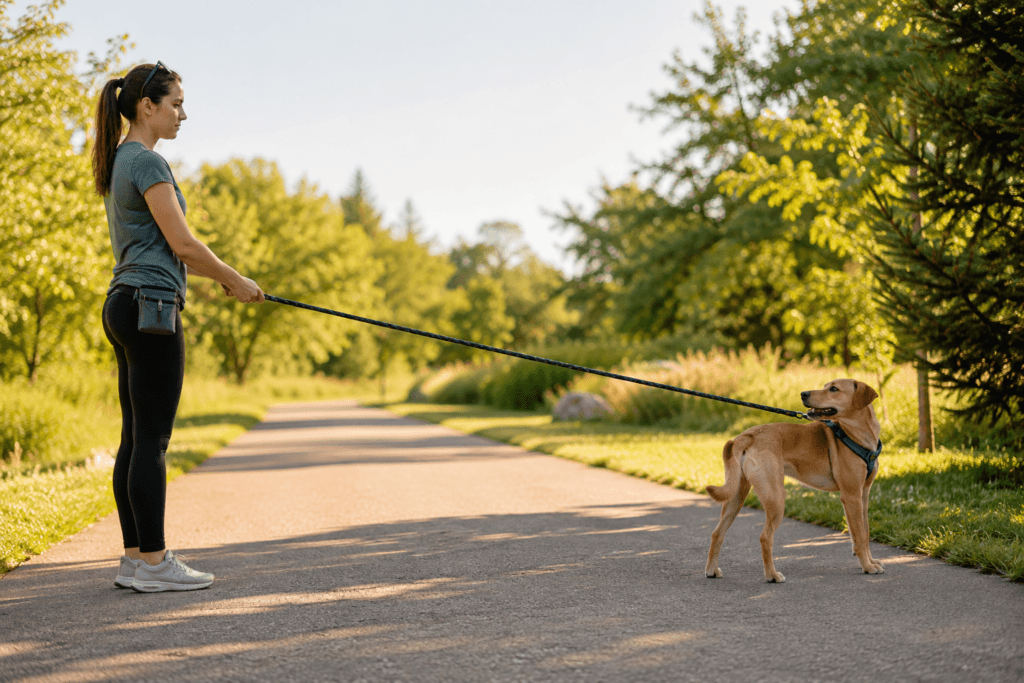
Dogs pull on leash because pulling has always worked. They pull, they move forward, they get to sniff. That reinforcement history is powerful. Corrections (prong collars, leash pops, choke chains) interrupt pulling without teaching the dog where to be instead: which is why dogs trained with corrections still pull the moment the collar changes.
The positive approach teaches a simple, clear rule: loose leash = forward movement, tight leash = everything stops. Here are the three techniques that accomplish this, and how to layer them. (Note: if your dog pulls because they’re barking or lunging at other dogs, people, or cars, that’s leash reactivity, not just pulling — see our full leash reactivity guide for a training plan.)
| Strategy #1: The Be a Tree Method How it works: The moment the leash goes tight, you stop. Stand completely still. Say nothing. Do nothing. Wait. The moment the leash loosens even slightly, your dog looks back, takes one step toward you, mark (“Yes!”) and walk forward. Why it works: Pulling = forward movement stops. Loose leash = forward movement resumes. Dogs learn this rule extremely quickly because movement is inherently reinforcing on a walk. ⏱ Duration: 1–2 weeks for solid improvement with every-walk consistency Pro tip: Do the first 5 minutes of every walk as Be a Tree only. This builds the behavior before distractions escalate. Don’t skip the first 5 minutes because you’re running late. |
| Strategy #2: The Turn and Go How it works: The moment the leash goes tight, you turn 180 degrees and walk in the opposite direction. Say “This way!” cheerfully as you turn. Your dog follows (because being left behind is worse than any correction). The moment they catch up and the leash is loose, mark and treat. Why it works: Your dog learns to monitor your direction constantly, because you’ve established that you’re unpredictable and worth watching. This builds attention to you specifically. ⏱ Duration: 3–5 days to see meaningful improvement Pro tip: Use this for persistent pullers who have started ignoring the Be a Tree method. The unpredictability of direction change keeps the dog more alert. |
| Strategy #3: The Engagement Walk (Focus-Building) How it works: Throughout the walk, every time your dog voluntarily looks up at your face, without being asked, immediately mark (“Yes!”) and give a treat at your hip. That’s it. Why it works: Your dog learns that checking in with you is the most rewarding thing they can do on a walk. Over one week, most dogs begin walking beside their owner and glancing up regularly, waiting for the reward. (seeTreats vs. Toys vs. Praisefor the Engagement Walk origin) ⏱ Duration: 1 week for a reliable check-in pattern Pro tip: Reward at your hip, not at your hand. If you hold treats in front of your face, your dog learns to stare at your face only when you’re holding food. |
| The 3-Technique Protocol First 5 minutes: Engagement Walk only (build attention before distractions peak) Middle of walk: Be a Tree + Turn and Go as needed for pulling Last 5 minutes: Free sniff time, sniffing is a natural reinforcer for the good walking that came before For harness recommendations that support these techniques, seeBest Training Gear Reviews 2026. A front-clip harness significantly amplifies all three methods. |
| ⏱ Realistic Timeline Visible improvement in 1 week. Solid loose-leash walking in 4–6 weeks of daily practice with all three techniques applied consistently. |
| Section 4: Training Deaf Dogs 2 Best Clicker Alternatives (Positive Only) |
Deaf dogs are absolutely trainable using positive reinforcement, they simply need a different marker system. The marker’s purpose is to tell the dog: “Yes, that exact behavior, right now, earned a reward.” That communication can happen through sight and touch just as effectively as through sound.
Alternative #1: Visual Marker (Hand Signal)
Choose one distinct hand gesture: a thumbs up, open palm flash, or peace sign. Use it exactly like a clicker: the moment your dog does the correct behavior, show the signal + deliver the treat within 1 second.
- Condition the visual marker first: Show the hand signal give treat. Repeat 20 times. Do nothing else.
- Your dog will quickly learn that this specific hand signal predicts a treat. The signal IS the marker.
- Use it to mark every correct behavior from this point forward.
| Advantage: Works at any distance your dog can see you. Disadvantage: Your dog needs to be looking at you when you mark. For behaviors where their back is turned, use the tactile marker below. |
Alternative #2: Tactile Marker (Gentle Tap or Vibration Collar)
A gentle tap on the dog’s shoulder blade works as a tactile marker for deaf dogs who are nearby. For dogs at a distance, a vibration collar (vibration only, never shock) can mark behavior when the dog isn’t facing you.
- Vibration collar protocol: Vibrate treat (repeat 10-15 times before any training). The vibration becomes a conditioned marker identical to a click or “Yes!”
- Critical: Condition slowly. Start at the lowest vibration setting. Watch your dog’s body language, any startle means the setting is too intense.
- Never use the shock function. Vibration collars have a vibrate mode and a shock mode. Only ever use vibrate.
| 3 Rules for Training Deaf Dogs Rule 1: Always have treats. Without a verbal backup marker, treats are your only bridge between behavior and reward. Rule 2: Get their attention first. Stomp on the floor (they feel vibration), wave in their peripheral vision, or use a gentle shoulder tap before asking for anything. Rule 3: Use hand signals for all commands. Sit, down, stay, come, every cue becomes a hand signal. This is actually a significant advantage: hand signals are visible across distances and through glass. |
| Section 5: Separation Anxiety 4 Positive Reinforcement Fixes (Science-Backed) |
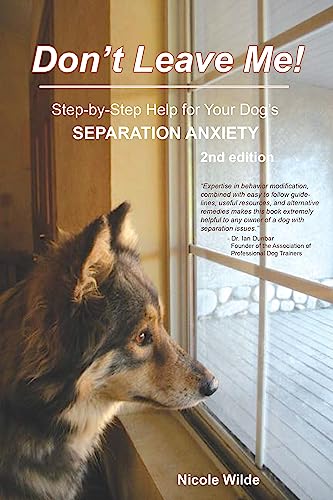
Separation anxiety is a genuine panic response, not disobedience, not spite, not bad manners. A dog with separation anxiety is not destroying your couch to punish you for leaving. They are in a state of acute distress. Punishment in this context makes anxiety worse, not better.
The treatment is systematic desensitization and counterconditioning, gradually teaching the dog that departures are safe, predictable, and even associated with positive things.
| Signs Your Dog Has True Separation Anxiety (vs. Boredom Destruction) Separation anxiety: Destructive behavior ONLY when alone. Vocalization begins within minutes of departure. Potty accidents in a housebroken dog. Video footage shows pacing, panting, salivation, or attempting to escape. Boredom destruction: Happens across a long period alone (after hours, not minutes). Dog appears relaxed in departure footage for the first hour. No vocalization. No escape attempts. |
Fix #1: Desensitization, Leaving Is Not a Big Deal
The goal: make all departure cues meaningless through repetition, then gradually extend real absences.
- Days 1–3: Pick up your keys and put them down. Touch the door handle and walk away. Open the door 1 inch and close it. Repeat each of these 10 times per day with zero reaction.
- Days 4–7: Step outside the door for 1 second, return calmly. 3 seconds. 5 seconds. 10 seconds. Each repetition, dog should be calm before you extend the time.
- Days 8–14: 30 seconds. 1 minute. 2 minutes. 5 minutes. Graduate only when your dog is calm at the current duration.
| Critical rule: Never move to the next duration level if your dog is still showing anxiety at the current level. Moving forward too fast is the most common reason desensitization fails. |
Fix #2: Counterconditioning, Alone Time = Amazing Things
Your dog receives a high-value, long-lasting treat ONLY when you leave. Never at other times.
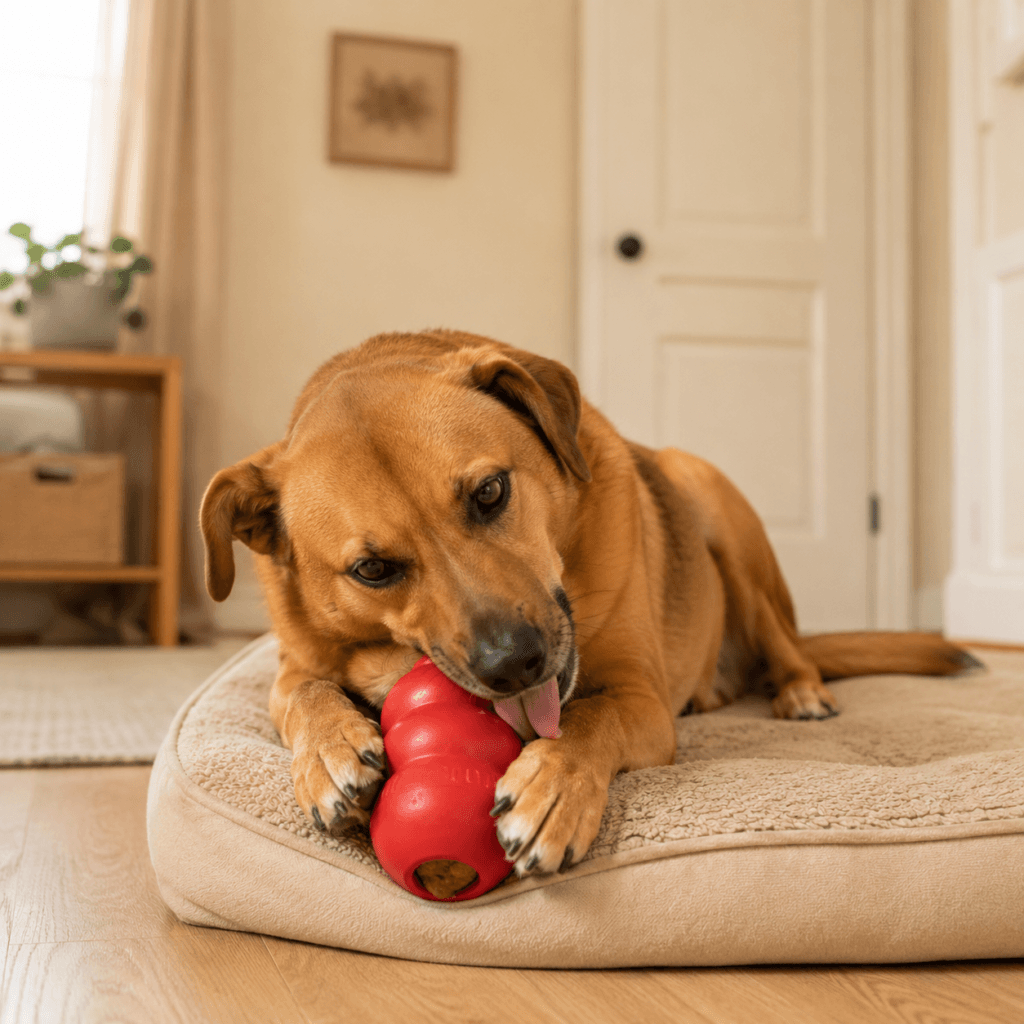
- Best options: Frozen Kong with peanut butter and banana, stuffed marrow bone, lick mat with wet food and soft cheese
- The conditioning: After dozens of repetitions, your dog hears the door and looks for their special treat. The emotional response to departure shifts from anxiety to anticipation.
- Important: Pick up the special treat when you return. It’s only valuable if it’s exclusive to alone time.
Fix #3: Independence Training, Learning to Be Calm Without You
- Dog in living room, you visible in kitchen. Reward calm behavior with occasional treats thrown from a distance.
- Dog in living room, you behind kitchen wall (not visible). Return every 5 seconds, reward calm. Extend gradually.
- Dog in living room, you out of sight for 30 seconds. Then 1 minute. Then 5 minutes.
- Dog briefly behind a baby gate or closed door while you’re still home. Reward calm on both sides.
Fix #4: Exercise Before Leaving
Twenty to thirty minutes of genuine physical exercise (walk, fetch, tug, nose work) before a planned absence significantly reduces anxiety responses. An exhausted dog has fewer cortisol resources to sustain panic.
- Best exercises: Long walk, fetch, tug game, 10-minute nose work session (hide treats around the house and let them find them)
- Note: This reduces severity but does not eliminate separation anxiety on its own. Use it alongside desensitization and counterconditioning.
| What NOT to Do: Punishing destruction (dog doesn’t connect punishment to the departure, they connect it to your return, making your return scarier)Leaving for hours ‘to let them get used to it’ (flooding increases anxiety, it doesn’t reduce it)Getting a second dog as a companion (separation anxiety is anxiety about YOUR absence, not loneliness) |
| When to Seek Professional Help If your dog is injuring themselves (broken teeth from door scratching, bloody paw pads from crate attempts), seek help immediately. If they are refusing all high-value food when left alone (indicating very high arousal), or if you’ve implemented desensitization consistently for 4+ weeks with no improvement, seek: • CSAT (Certified Separation Anxiety Trainer), csats.com • Veterinary behaviorist (DACVB) for medication evaluation alongside behavior modification |
| Section 6: Housebreaking 3 Positive Methods That Work Fast |
Puppies cannot fully control their bladders until 4–6 months of age. Accidents are physiologically inevitable before then, not defiance, not laziness, not spite. Punishment for housebreaking accidents teaches dogs to hide their bathroom behavior from you, not to go outside.
Method #1: The Non-Negotiable Potty Schedule
Puppies need to go out immediately upon waking, after every meal, after every nap, after every play session, and every 60–90 minutes during waking hours. For puppies under 4 months, once during the night as well.
| A simple rule: Puppy’s age in months = maximum hours they can hold it (approximately). An 8-week-old puppy = roughly 2 hours maximum. Use this to set your schedule. |
Method #2: Crate Training for Housebreaking
Dogs naturally avoid soiling their sleeping space if the crate is sized correctly. The crate should be just big enough for the puppy to stand up, turn around, and lie down. A crate that’s too large allows the puppy to potty in a corner.
- Protocol: Puppy in crate when you can’t supervise puppy out of crate go directly outside (no stops) wait for potty reward immediately
- Maximum crate time: 2 hours for puppies under 3 months, 3 hours for 3–5 months. Longer than this is too hard physically and psychologically.
- the crate training guidefor the complete positive crate training program
Method #3: The Potty Party
The second: the absolute second, your puppy finishes pottying outside, celebrate. High-pitched praise, 3–5 small treats, gentle petting, whatever your dog finds most reinforcing. This is called the Potty Party, and it works because it creates an unmistakable positive association with going outside.
- Critical timing: The reward must happen within 1–2 seconds of the puppy finishing, while you’re still outside. Waiting until you’re inside breaks the connection.
- Accidents inside: No reaction. No punishment. Clean immediately with an enzyme cleaner (regular cleaners leave scent traces that attract the puppy back to the same spot).
The 3 Most Common Housebreaking Mistakes:
- Waiting too long between potty breaks (puppies can’t hold it: the accident was preventable)
- Punishing accidents after the fact (the puppy connects the punishment to you, not to the accident location)
- Giving too much unsupervised freedom too soon (freedom is earned, not given at week one)
| ⏱ Realistic Timeline Most puppies are reliably housebroken by 5–6 months with a consistent schedule and crate use. Small breeds typically take 6–8 months. Adults adopted from shelters who were crated 24/7 require specific protocols, see FAQ below. |
| Section 7: Nervous Rescue Dogs 5 Gentle Training Tools for First-Time Owners |
Rescue dogs arrive with histories we don’t know and fears we didn’t cause. Punishment-based tools, prong collars, shock collars, choke chains, alpha rolls, are never appropriate for fearful dogs. Fear + pain = escalated fear, shut-down behavior, or redirected aggression. Every tool in this section is gentle by design.
| Tool #1: Front-Clip Harness (for pulling without pain) Why it’s gentle: No neck strain or discomfort. Redirects pulling by turning the dog toward you instead of choking them into compliance. Doesn’t add fear or aversion. Best for: Nervous dogs who pull away from scary things, dogs who’ve been hurt by collar corrections Price: $20–30, seeBest Training Gear Reviews 2026for specific product recommendations How to use: Fit snugly (2 fingers under the straps), clip the leash to the front chest ring, and let the physics do the work. |

| Tool #2: Long Line Leash (15–30 feet) Why it’s gentle: Gives your nervous dog freedom to move away from scary things, self-regulate their distance from triggers, and decompress, while remaining safe. No sudden leash tension from a short lead amplifying their fear. Best for: Recall training in open spaces, building confidence in new environments, giving fearful dogs agency to approach and retreat at their own pace Price: $10–20 for a basic long line How to use: Let the dog drag the line, don’t hold it taut. Use treats to call them back. The line is safety, not restraint. |

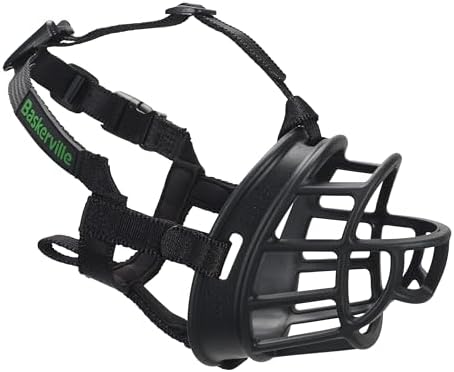
| Tool #3: Basket Muzzle (Yes, Really, It’s Gentle) Why it’s gentle: A properly fitted basket muzzle lets your dog pant, drink water, and take treats through the holes, while preventing bites. This keeps everyone safe during high-stress training scenarios, allowing you to train confidently without fear of escalation. Best for: Dogs with bite history, severe fear aggression, or any situation where a fearful dog might snap Price: $20–40 for a quality basket muzzle (Baskerville Ultra is the gold standard) How to use: Condition the muzzle positively: place peanut butter inside and let dog put their nose in voluntarily. Feed treats through the front. Clip it closed for 1 second, then reward. Gradually extend duration over 5–7 days before using in a real situation. |
| Tool #4: Enrichment Tools (Kong, Lick Mat, Snuffle Mat) Why it’s gentle: Licking and sniffing are parasympathetic nervous system activities, they literally activate the calming branch of the nervous system and release endorphins. These activities are incompatible with anxiety. Best for: Building positive associations with alone time, crate introduction, reducing generalized anxiety during stressful events (storms, vet visits) Price: $5–15 each How to use: Fill with peanut butter, plain yogurt, or wet food mixed with kibble. Freeze for 4–6 hours for a longer-lasting session. Offer only during situations you want your dog to associate positively. |

| Tool #5: Calming Supplements (With Vet Approval) Why it’s gentle: Some dogs have anxiety that is too severe to address with behavior modification alone. Calming supplements can reduce the baseline anxiety level enough that training can actually reach the dog. Best for: Dogs with severe generalized anxiety as a component of a behavior modification plan, not a substitute for training Price: $20–40/month; veterinary prescribed options also available How to use: Ask your vet before starting. Look for: L-theanine, L-tryptophan, melatonin, or casein. Brands: VetriScience Composure, Solliquin, Zesty Paws Calming Bites. Allow 4–6 weeks for full effect. (see picks below) |

| 3 Rules for Nervous Rescue Dogs Rule 1: Always go at the dog’s pace. If they’re moving away from something, let them. Never force proximity to a trigger. Rule 2: Set up for success by avoiding triggers during early training. You cannot train around triggers you haven’t desensitized yet. Rule 3: Celebrate tiny wins out loud. Eye contact is progress. A tail wag is progress. Choosing to approach you is enormous progress. Narrate those wins in your training log. |
| When to Seek Professional Help Consult an IAABC-certified behavior consultant or veterinary behaviorist if your dog is: • Growling, snarling, snapping, or biting • Freezing, hiding, or shaking consistently • Unable to eat even high-value treats in daily life (indicates severe anxiety) • Showing no improvement after 4 weeks of consistent gentle training Find an IAABC consultant: iaabc.org/referral |
FAQ: Hard Questions, Honest Answers
“My puppy bites harder when I try to redirect. What am I doing wrong?”
Your puppy is likely in an overtired state where redirection can’t reach them. When you try to redirect and they bite harder, end the interaction completely and immediately bring them to their crate for a nap. No redirect will work when a puppy is past their arousal threshold. Rest first, training after.
“How do I know if my dog has a food allergy or just a sensitive stomach?”
Food allergies typically cause chronic symptoms: recurring ear infections, itchy skin (especially paws and belly), loose stool that doesn’t resolve, or skin redness. A sensitive stomach tends to cause occasional loose stool that clears up. A proper food allergy diagnosis requires a veterinary-supervised elimination diet, one novel protein for 8-12 weeks with zero other foods. Over-the-counter allergy tests for dogs have limited validity; ask your vet.
“My dog pulls so hard he chokes himself. Will a front-clip harness fix this?”
A front-clip harness changes the mechanics of pulling by redirecting the dog’s forward momentum sideways: which reduces the force significantly. It won’t eliminate pulling on its own (you still need the Be a Tree and Engagement Walk training), but it immediately reduces the choking risk while you build the behavior. Pair the harness with the techniques in Section 3 above for the fastest results. SeeBest Training Gear Reviews 2026for harness recommendations.
“Can I train a deaf dog without a vibration collar?”
Yes, absolutely. The visual marker (a consistent hand signal) is sufficient for all training where your dog can see you: which is the vast majority of training scenarios. Many deaf dogs are trained entirely with hand signals and visual markers, with no tactile component at all. The vibration collar adds utility for distance work where the dog’s back is turned, but it’s optional, not essential.
“My dog has severe separation anxiety and destroys the crate. What do I do?”
Stop using the crate immediately for a dog with severe separation anxiety. A dog who is panicking in a crate will injure themselves trying to escape. These dogs need the desensitization protocol from Section 5, starting with the door, not the crate. Consider working with a CSAT (Certified Separation Anxiety Trainer) who specializes in this specific problem and can guide you week by week.
“How long should I wait between potty breaks for an 8-week-old puppy?”
Maximum 60–90 minutes during waking hours, immediately upon waking from any nap, within 10 minutes after every meal, and after any play session. An 8-week-old puppy physically cannot hold it longer than about 2 hours. Schedule preventatively rather than reactively, go out before they need to, not after the accident happens.
“My rescue dog is terrified of the leash. How do I start?”
Start by conditioning positive associations with the leash before you ever try to attach it. Leave the leash on the floor near the dog’s food bowl. Once they approach it calmly, pick it up near them and drop a treat. Let them sniff the leash and treat. Gently touch it to their body and treat. Clip it to the harness for 5 seconds, then remove and treat. Extend duration gradually over several sessions. Never force the leash on a dog who is actively retreating from it.
“What’s the difference between a behavior consultant and a regular trainer?”
A dog trainer teaches behaviors (sit, stay, heel). A behavior consultant or veterinary behaviorist treats behavioral disorders (separation anxiety, aggression, phobias, compulsive behaviors). If your problem is a trained skill, find a certified trainer (CPDT-KA). If your problem is anxiety, fear, or aggression, find an IAABC-certified behavior consultant or a veterinary behaviorist (DACVB). The distinction matters enormously for matching the right professional to the right problem.
“My dog only bites my husband, not me. Why?”
This usually means your husband’s interactions with the puppy are triggering more arousal, are less consistent in their responses to biting, or that the dog has learned biting produces a more exciting reaction from him. Have your husband implement the reverse time-out protocol (Section 1, Strategy #2) with zero exceptions for 5 days. Also check whether his play style (roughhousing, chasing, exciting vocalizations) is escalating the puppy’s arousal level before the biting begins.
“How do I housebreak a dog who was kept in a crate 24/7 before rescue?”
This dog has been forced to soil their living space and has lost the natural instinct to keep it clean. You’re starting from scratch. Skip the crate entirely for housebreaking, it won’t work with this history. Use leash tethering (dog on leash attached to your belt so they can’t sneak away to potty indoors), take them outside every 45–60 minutes with no exceptions, and throw a Potty Party every successful outdoor potty. Expect 4–8 weeks longer than a typical puppy.
One Problem. Two Weeks. Then the Next One.
Every problem in this article has a positive, force-free solution. Puppy biting responds to redirection, reverse time-outs, and enforced naps. Leash pulling dissolves with Be a Tree, Turn and Go, and Engagement Walks. Separation anxiety yields to systematic desensitization and counterconditioning. Nervous rescue dogs blossom under the right gentle tools and enormous patience.
The most important thing you can do right now is pick one problem, just one. Work on it consistently for two weeks. Track your progress. Celebrate small wins. Then move to the next. You don’t have to solve everything simultaneously. You just have to keep showing up. Your dog is not broken. Every step you take together is building the relationship that makes all of this worth it.
| Download the Free Behavior Problem Solving Tracker Want a printable daily tracker to log your progress on each behavior problem, with spaces for what you tried, what worked, what didn’t, and your dog’s wins? Enter your email below, we’ll send the Behavior Problem Solving Tracker straight to your inbox along with the complete Positive Reinforcement 101 starter kit. Print it. Use it. Celebrate every small win. |
Resources & Series Links
Positive Reinforcement 101 Series
- 5 Reasons Positive Reinforcement Works Better Than Punishment
- What Is Positive Reinforcement? 3 Simple Examples
- The Beginner’s Toolkit: Essential Gear
- First Commands & Daily Routines
- Best Training Gear Reviews 2026
- Treats vs. Toys vs. Praise: What Motivates Your Dog?
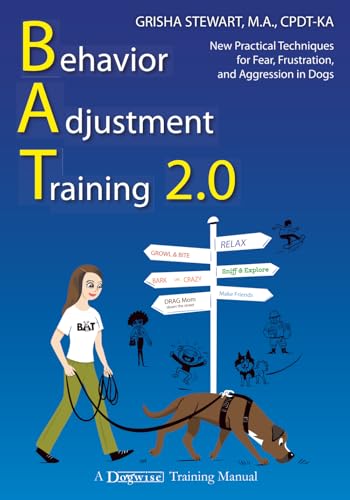
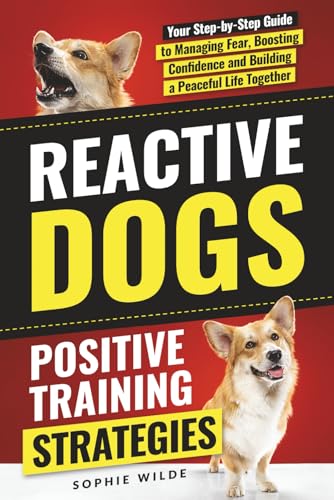
Recommended Books on Behavior Modification
Professional Resources
- IAABC Referral Directory: iaabc.org/referral, Find a certified behavior consultant near you
- CSAT Directory: csats.com, Certified Separation Anxiety Trainers who specialize exclusively in SA
- DACVB Directory: dacvb.org, Find a veterinary behaviorist for severe cases
Recommended Tools (Affiliate Links)

9 Comments